- Why Is It Important to Distinguish Between RLAF and LAF Before Selecting Equipment?
- What Is Standard LAF and What Is It Used For?
- What Is RLAF and How Is It Fundamentally Different from LAF?
- The Most Important Question: Where Does the Contamination Source Come From?
- When Should Standard LAF Be Used?
- When Does a Factory Need to Use RLAF Instead of LAF?
- Comparing Protection Objectives: Product, Operator, and Environment
- Comparing the Airflow Principles of RLAF and LAF
- Comparing Construction: HEPA Filter, Fan, Working Zone, and Return Air
- Practical Applications: Raw Material Weighing, Sampling, Laboratories, and Active Ingredient Handling
- When Should Neither RLAF nor LAF Be Used, and Another Solution Be Considered?
- Technical Criteria for Deciding Between RLAF and LAF
- Common Mistakes When Using LAF Instead of RLAF
- Common Mistakes When Using RLAF Instead of LAF
- Selection Process for RLAF or LAF in GMP Cleanroom Projects
- FAQ – Frequently Asked Questions About Using RLAF Instead of LAF
- Conclusion: Use RLAF When Dust Is Generated at the Source, and Use LAF When Clean Air Is Needed to Protect Samples or Products
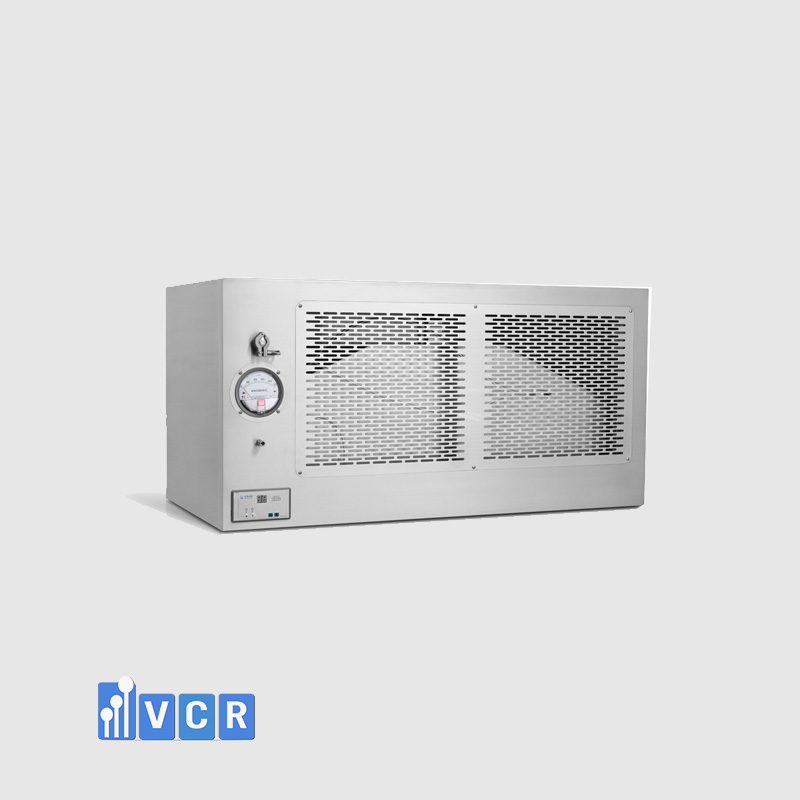
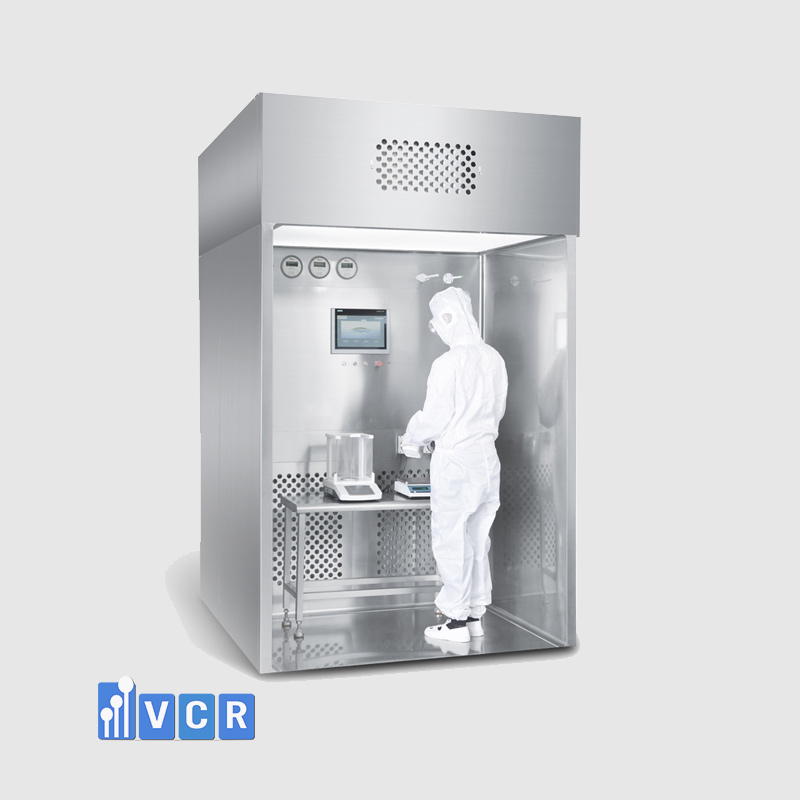
RLAF and LAF are both airflow-control devices used in cleanrooms, but their operating objectives are not the same. LAF is usually used to supply clean airflow through a HEPA Filter to protect samples, products, or tools from dust in the surrounding environment. In contrast, RLAF is more suitable when the factory needs to control dust, particles, or contaminants generated from the working zone itself, especially in processes such as powder weighing, raw material bag opening, material sampling, active ingredient handling, or powdered chemical processing.
In GMP cleanrooms, choosing between RLAF and LAF should not be based on the feeling that one device is “cleaner” than the other, nor should it be based only on whether the device has a HEPA Filter. The more important questions are where the contamination source comes from, who or what needs to be protected, which direction dust will move, and whether the device controls the correct process risk. If LAF is used in an area that generates a large amount of dust from raw materials, clean airflow may unintentionally spread dust more widely. Conversely, if RLAF is used for an operation that only needs to protect samples from environmental dust, it may not be the optimal choice.
Why Is It Important to Distinguish Between RLAF and LAF Before Selecting Equipment?
In many cleanroom projects, RLAF and LAF are often confused because both are related to laminar airflow, fan systems, HEPA Filters, and controlled working zones. However, if the factory only looks at the equipment name or external construction, it is very easy to choose the wrong device. A device that provides clean airflow does not automatically suit every cleanroom operation. Likewise, a device that controls dust at the source is not necessarily the best choice for every case requiring product protection.
The difference between RLAF and LAF begins with the operating objective. Standard LAF is usually used to create a localized clean-air zone where products, samples, or tools are protected from dust and particles in the surrounding environment. This device is suitable when the main contamination source is outside the working zone and may enter the product. RLAF, on the other hand, is used when the contamination source is generated directly inside the working zone, such as dust from powder raw materials, pharmaceutical active ingredients, granular chemicals, or easily dispersed materials.
If this distinction is not understood correctly, the factory may encounter many operational problems. For example, if a powder raw material weighing area uses standard LAF, the device may not control dust generated when bags are opened or powder is poured. Clean airflow may pass through the working zone and spread dust into the surrounding area, depending on airflow direction and equipment arrangement. In that case, the device may have a HEPA Filter but still fail to address the main risk.
Conversely, if a laboratory only needs to protect clean samples from environmental dust and the samples do not generate hazardous dust, LAF may be more suitable. If RLAF is used in this case, the factory may invest in a more complex device than necessary, while the main objective is simply to create a clean-air zone for sample protection.
In GMP cleanrooms, equipment must be selected based on risk analysis. GMP stands for Good Manufacturing Practice. The contamination source, airflow direction, protection objective, material type, operating process, layout, cleanliness class, and qualification criteria must all be considered. When contractors and factories clearly understand the difference between RLAF and LAF, they can select more suitable equipment, reduce cross-contamination risks, improve operator protection, and avoid costly modifications after installation.
What Is Standard LAF and What Is It Used For?
LAF stands for Laminar Air Flow. Laminar airflow is airflow organized in a relatively stable direction, limiting turbulence and helping create a cleaner working zone. In cleanrooms, LAF commonly uses a HEPA Filter to supply clean air into the working area, thereby reducing the risk of dust and particles from the environment contacting samples, products, or tools.
HEPA Filter stands for High Efficiency Particulate Air. Air passing through a HEPA Filter has most fine particles removed according to the appropriate filter grade. As a result, LAF creates a localized clean-air zone and is commonly used in operations that require product or sample protection from environmental dust.
The main objective of LAF is usually product protection or sample protection. Product protection means protecting the product. Sample protection means protecting the sample. For example, in a laboratory, LAF may be used when handling clean samples, clean tools, or materials that must be protected from environmental particles. In production, LAF may help protect product surfaces, components, or tools from airborne particles.
The important point is that LAF is most suitable when the main contamination source comes from the external environment, not from the material being handled. If the sample or product does not generate significant dust, clean airflow supplied through a HEPA Filter can help maintain a cleaner localized working environment. This is why LAF is widely used in many cleanrooms, laboratories, clean assembly areas, and areas that require unidirectional clean airflow.
However, LAF is not the optimal device for every process. If the operation generates dust from the material itself, such as powder weighing, raw material bag opening, active ingredient pouring, powdered chemical dispensing, or handling easily dispersed materials, LAF may not be sufficient to control dispersion. In some cases, clean airflow from LAF may carry dust out of the working zone and spread it more widely. Therefore, when evaluating LAF, the factory must clearly determine whether the objective is to supply clean air for product protection or to control dust generated from the operation.
What Is RLAF and How Is It Fundamentally Different from LAF?
RLAF stands for Reverse Laminar Air Flow. In this term, “reverse” means opposite or reversed, while “Laminar Air Flow” means laminar airflow. RLAF is designed to control air carrying dust, particles, or contaminants generated at the working zone, then direct this airflow toward the return-air area or filtration system.
The core function of RLAF is source dispersion control. When operators handle powders, active ingredients, chemicals, or easily dispersed materials, dust may be generated directly at the working zone. RLAF helps organize airflow so that dust-laden air does not spread freely into the surrounding environment, but is instead drawn toward the return-air area and treated through the filtration system. Return air means air drawn back into the system after passing through the working zone.
The key difference between LAF and RLAF lies in the direction of risk. LAF usually protects products from environmental dust. RLAF usually protects operators and the surrounding environment from dust generated by the handled material. Operator protection means protecting the person performing the operation. Environmental protection means protecting the surrounding environment. These are two common objectives when selecting RLAF for GMP cleanrooms.
For example, if a factory handles fine powder raw materials, dust may become airborne when bags are opened or powder is poured. If standard LAF is used, clean airflow may pass through the powder area and move dust in an undesirable direction. But if a properly designed RLAF is used, generated dust can be drawn toward the return-air area, reducing the risk of dust moving toward the operator or spreading into the room.
In terms of construction, RLAF often places more emphasis on the return-air area, return-air path, operator position, air velocity, airflow volume, and dust-collection capability at the working zone. LAF usually focuses more on the clean-air supply area and its ability to protect samples or products from the environment. Both devices may use HEPA Filters, but the HEPA Filter does not define the entire difference. The decisive factor is how airflow is organized, what it is designed to protect, and which contamination source it controls.
In simple terms, LAF is suitable when clean air is needed to protect samples or products. RLAF is suitable when dust generated from the operation needs to be collected to protect operators, the environment, and reduce cross-contamination risk.
The Most Important Question: Where Does the Contamination Source Come From?
When choosing between RLAF and LAF, the most important question is: where does the contamination source come from? If this question is answered incorrectly, the factory can easily select equipment that does not match the control objective. In cleanrooms, not all contamination risks are the same. In some cases, contamination comes from the surrounding environment and may enter the product. In other cases, contamination is generated from the material or operation itself and spreads outward.
If the main contamination source comes from the external environment, LAF is usually more suitable. For example, when handling clean samples, clean tools, or products that need to be protected from dust in the surrounding room, LAF creates a localized clean-air zone by supplying air through a HEPA Filter. In this case, the objective is to introduce clean air into the working zone to reduce particle contact with the sample or product.
If the contamination source is generated by the material being handled, RLAF should be considered. For example, when weighing powder, opening raw material bags, pouring active ingredients, sampling powdered raw materials, or handling granular chemicals, dust is generated directly in the working area. The objective is no longer only to supply clean air, but to collect generated dust before it spreads outward. This is where RLAF is usually more suitable than standard LAF.
A simple example is clean sample handling in an environment where the sample must be protected from dust. If the sample does not generate dust, LAF can create a clean-air zone to protect it. But if the operation involves opening a powder raw material bag in a weighing area, dust generated from the powder is the main risk. In that case, using LAF may not solve the actual problem, because clean airflow does not necessarily mean source dust collection.
In GMP cleanrooms, the contamination source must be analyzed together with the airflow path. Does dust tend to move toward the operator? Can dust escape from the working zone? Can dust settle on room surfaces or surrounding equipment? If the answer is yes, dispersion-control solutions such as RLAF or a Dispensing Booth should be prioritized depending on the process.
The correct approach is not to ask which device is more advanced, but which device controls the correct risk source. When contamination comes from the environment, LAF may be suitable. When contamination comes from the handled material, RLAF should usually be prioritized.
When Should Standard LAF Be Used?
Standard LAF should be used when the factory needs to create a localized clean-air zone to protect samples, products, or tools from dust and particles in the surrounding environment. This is the case when the main contamination source is outside the working zone, while the material or sample being handled does not generate significant dust.
One common application of LAF is in laboratories, where technicians need to handle clean samples, clean tools, or materials that are sensitive to environmental dust. LAF supplies clean air through a HEPA Filter into the working zone, helping reduce the risk of airborne particles in the room contacting the sample. In this case, LAF supports sample protection.
LAF is also suitable for some production operations that require product-surface protection from dust. Examples include clean component assembly, preparation of clean tools, handling materials that do not generate dust, or processes requiring unidirectional clean airflow. If the goal is to prevent environmental particles from settling on the product, LAF can be a simple and effective choice.
A key point is that LAF is suitable when there is no major dust source generated from the handled material. If the operation does not create dust, clean airflow from LAF can protect the working zone well. However, if the operation generates dust, especially powder dust, LAF may not be the optimal solution. Clean airflow may pass through the dust-generation area and carry dust outside the working zone, depending on airflow direction and equipment arrangement.
LAF should also not be understood as a device for protecting operators from powder dust. In many configurations, LAF prioritizes product protection rather than collection of dust generated from the product or raw material. If operators handle dispersible materials, the factory must evaluate whether the device has an extraction or return-air mechanism to collect dust. If not, operators may still be exposed.
Therefore, factories should use LAF when the main objective is to create a clean-air zone to protect samples, products, or tools from the environment. If the objective shifts to controlling dust generated by the operation, especially in powder raw material weighing areas, RLAF should be considered instead of standard LAF.
When Does a Factory Need to Use RLAF Instead of LAF?
A factory needs to use RLAF instead of LAF when the main risk is dust, particles, or contaminants generated from the working zone itself. This situation commonly occurs in areas handling powder raw materials, pharmaceutical active ingredients, granular chemicals, color powders, additives, powdered extracts, or easily dispersed materials. In these processes, the objective is not only to supply clean air, but to collect dust at the source before it spreads outward.
The first case where RLAF should be used is powder raw material weighing. When operators open bags, scoop powder, pour powder into containers, weigh materials, or divide materials by batch, dust can become airborne very quickly. If standard LAF is used, clean airflow may not collect dust and may even move dust in an undesirable direction. RLAF is more suitable because the device is designed to draw dust-laden air toward the return-air area and filtration system.
The second case is powdered raw material sampling. When bags are opened or samples are taken from containers, dust may be generated at the sampling point. If the area handles many different raw materials, residual dust may also create cross-contamination risk. RLAF helps control dispersion at the operation point and reduces dust spreading into the surrounding environment.
The third case is handling pharmaceutical active ingredients. API stands for Active Pharmaceutical Ingredient. Some active ingredients require stricter exposure control than ordinary materials. RLAF can support operator protection by collecting API dust at the working zone. However, for high-risk active ingredients, containment must also be evaluated. Containment means the ability to control contaminants within an acceptable boundary. In some cases, an isolator or closed system may be more suitable than standard RLAF.
The fourth case is powdered chemical preparation. If the chemical is in powder form and the main risk is dust or particles, RLAF may be more suitable than LAF. However, if the chemical generates toxic vapor, volatile gas, or solvent vapor, a Fume Hood may be more suitable. A Fume Hood is a chemical fume hood or toxic gas extraction hood. This shows that equipment selection must be based on the nature of the contaminant.
The fifth case involves materials that are adhesive, colored, odorous, or prone to cross-contamination. With color powders, fragrances, powdered extracts, or easily airborne additives, RLAF helps reduce dust dispersion into the room and supports cleaning after operation. If LAF is used, dust may not be collected properly.
In summary, RLAF should be used instead of LAF when the dust source is within the operation itself and the main objective is to reduce dispersion, protect operators, protect the surrounding environment, and reduce cross-contamination risk. This is the most important principle when selecting equipment for GMP cleanrooms.
Comparing Protection Objectives: Product, Operator, and Environment
To choose correctly between RLAF and LAF, it is necessary to clearly identify who or what needs to be protected. In cleanrooms, three objectives are commonly mentioned: product protection, operator protection, and environmental protection. Product protection means protecting the product. Operator protection means protecting the person performing the operation. Environmental protection means protecting the surrounding environment.
LAF usually focuses on product protection or sample protection. It supplies clean air through a HEPA Filter into the working zone to reduce the risk of environmental dust contacting the sample or product. If the product needs protection from airborne particles in the room, LAF may be suitable. For example, handling clean samples, clean tools, or clean components usually requires a localized clean-air zone.
RLAF usually focuses on operator protection and environmental protection. When operators handle powder materials, generated dust may move toward the operator or spread into the room. RLAF organizes airflow to collect dust at the source and draw it toward the return-air area and filtration system. This helps reduce the risk of operators inhaling dust and reduces dust settlement in the surrounding environment.
However, it should not be assumed that LAF only protects products and RLAF only protects operators. In some designs, RLAF may also support product protection if the air zone is properly controlled. LAF may also reduce dust in the working zone if the operation does not generate dust. Still, the design focus of the two devices is different, and this difference should be clearly understood.
If all three protection objectives exist at the same time, the specific design must be evaluated. For example, in an active ingredient weighing area, the factory may need to protect operators from API dust, protect the environment from cross-contamination, and still ensure that the material is not contaminated by external dust. In that case, the device must be designed according to the combined risk, not selected only by the name RLAF or LAF.
Equipment should not be selected simply because the factory wants “cleaner air.” Cleaner air does not necessarily control generated dust correctly. The right device is the one that protects the correct target. If the product needs protection from environmental dust, LAF may be suitable. If operators and the environment need protection from raw material dust, RLAF should be prioritized.
Comparing the Airflow Principles of RLAF and LAF
Airflow is the key factor that determines the difference between RLAF and LAF. Both devices may use fans and HEPA Filters, but their airflow organization and control objectives differ.
In LAF, clean air is usually supplied through a HEPA Filter into the working zone in a stable direction. The objective is to create a clean air zone to limit environmental dust from contacting the product or sample. Depending on the design, LAF may use horizontal airflow or downward airflow. Downflow means airflow from top to bottom. When the material does not generate significant dust, this clean-air supply pattern can protect the working zone effectively.
In RLAF, the focus is to collect dust-laden air generated at the working zone. When dust appears, airflow needs to draw it toward the return-air area. Return air means air drawn back into the system. The return-air system in RLAF helps bring dust-laden air into the filter instead of allowing dust to escape into the room. This is why RLAF is suitable for powder handling, active ingredient handling, or easily dispersed materials.
If LAF blows clean air through a zone where dust is being generated, dust may be carried along by the airflow. Depending on airflow direction, dust may move toward the operator or outside the working zone. In contrast, if RLAF has proper return air, dust can be drawn toward the collection area. This shows that airflow direction is more important than simply feeling that the device supplies clean air.
Smoke testing uses smoke to observe airflow direction. This is useful when evaluating both RLAF and LAF. For LAF, smoke testing helps determine whether clean airflow passes stably through the area to be protected. For RLAF, smoke testing helps determine whether smoke is drawn toward the return-air area, whether dead zones exist, whether turbulence appears, and whether air escapes outward. A dead zone is an area where airflow is weak or poorly exchanged. Turbulence means disturbed airflow.
In practice, two devices may both have HEPA Filters but perform very differently depending on airflow organization. Therefore, when choosing RLAF or LAF, the airflow diagram, supply-air direction, return-air position, operator position, dust-generation zone, and airflow test results must be reviewed. The equipment name is only the starting point; airflow principle determines whether the device controls the correct risk.
Comparing Construction: HEPA Filter, Fan, Working Zone, and Return Air
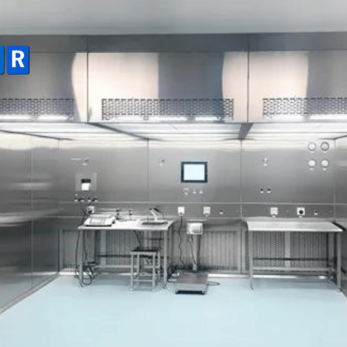
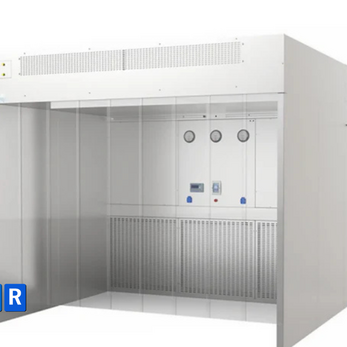
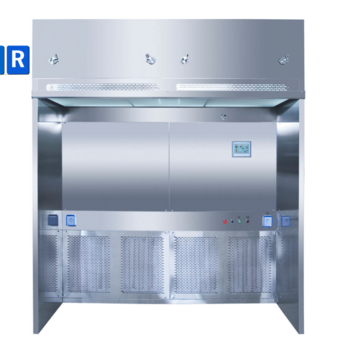
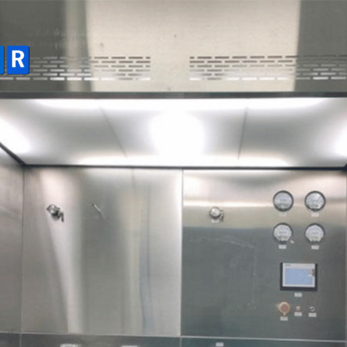
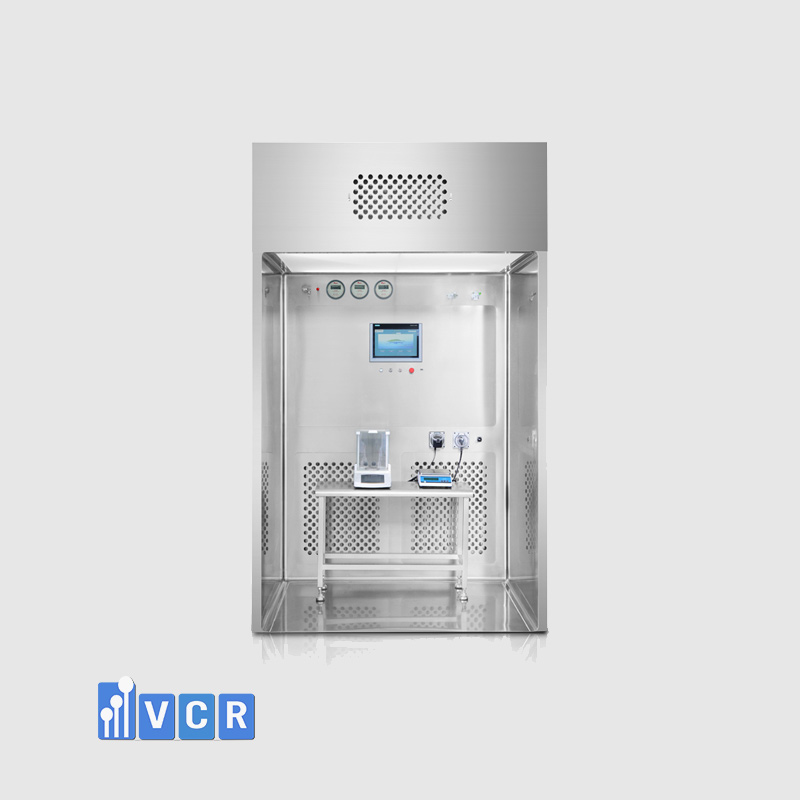
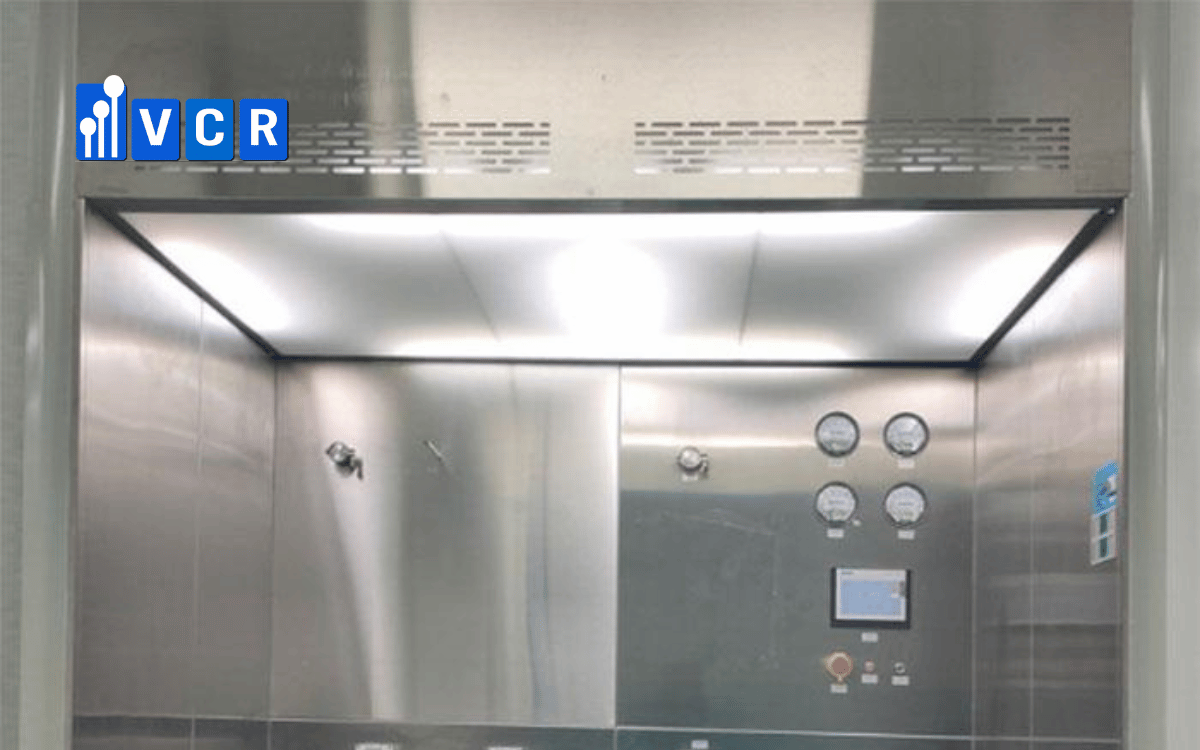
Both LAF and RLAF may use similar components such as the equipment body, fan, HEPA Filter, working zone, lighting, control panel, and differential pressure gauge. However, the design focus of the two devices is different.
LAF usually focuses on the clean-air supply area. The HEPA Filter is used to filter air before it is supplied into the working zone. The fan drives air through the filter and delivers clean air to the area that needs protection. The working zone is where samples, products, or tools are placed inside the clean airflow. The objective is to reduce the impact of dust from the surrounding environment on this zone.
RLAF also has a fan, HEPA Filter, and working zone, but its construction must focus more on the return-air area and return-air path. Return air means air drawn back into the system. If dust is generated at the working zone, the return-air system must be capable of drawing dust-laden air into the filter. If the return-air area is blocked or poorly positioned, the equipment may lose dust-control effectiveness.
The fan is important in both LAF and RLAF because it determines airflow volume and the ability to overcome filter resistance. However, with RLAF, the fan should be evaluated more carefully according to dust-collection capability and stable airflow direction. If the fan is too weak, dust will not be drawn into return air. If the fan is too strong, powder materials may be disturbed and dispersed more aggressively.
The HEPA Filter is important in both devices, but it should not be treated as the only factor. An LAF with a good HEPA Filter but poor placement may fail to protect the product correctly. An RLAF with a good HEPA Filter but blocked return air may fail to control dust effectively. The entire system must be reviewed, including filtration, fan, working zone, airflow direction, and operation.
If RLAF is selected, it is necessary to evaluate whether the return-air area may be blocked by raw material bags, containers, trays, or tools. If LAF is selected, it is necessary to evaluate whether the clean-air supply area properly covers the product or sample. This is a very important practical difference in cleanroom design and qualification.
Practical Applications: Raw Material Weighing, Sampling, Laboratories, and Active Ingredient Handling
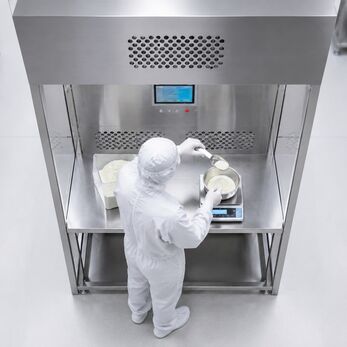
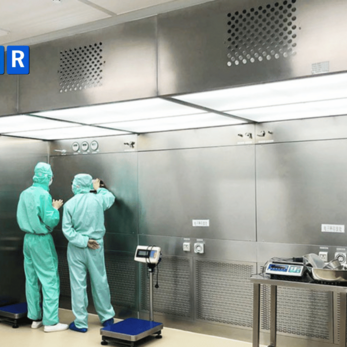
In powder raw material weighing areas, factories should usually consider RLAF or a Dispensing Booth instead of standard LAF. A Dispensing Booth is a raw material weighing and dispensing booth. When operators open bags, pour powder, weigh materials, or divide raw materials, dust is generated directly from the material. The main objective is source dust control, so RLAF or equipment with a similar dust-control principle is usually more suitable.
In powdered raw material sampling areas, the risk also comes from the material. When bags are opened or samples are taken from containers, dust may become airborne and spread to the surrounding area. If the sampling area handles many different materials, residual dust may create cross-contamination risk. RLAF helps collect dust-laden air at the operation point, while standard LAF may not address the dispersion risk correctly.
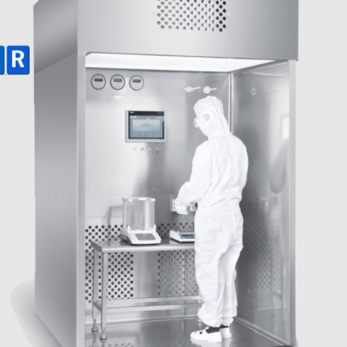
In laboratories, the choice depends on the operation. If technicians handle clean samples and need to protect them from environmental dust, LAF may be suitable. If they handle powder samples, divide easily dispersed samples, or work with materials that may generate particles, RLAF may be more suitable. Therefore, it is not correct to say that laboratories should always use LAF or always use RLAF. The decision depends on whether the sample generates dust and what the protection objective is.
In pharmaceutical active ingredient handling areas, selection must be more careful. API stands for Active Pharmaceutical Ingredient. If operators handle powdered APIs, API dust may affect operators and the environment. RLAF can support source dust control. However, if the active ingredient has high toxicity or very low exposure limits, containment must be evaluated. In that case, an isolator or closed system may be required.
In chemical preparation areas, the contaminant form must be distinguished. If the chemical is powder and the main risk is particle dispersion, RLAF may be suitable. If the chemical generates toxic vapor, gas, or solvent vapor, a Fume Hood or exhaust treatment system should be considered. RLAF or LAF should not be used to replace equipment designed specifically for chemical vapor control if the actual risk is vapor or gas.
These examples show that the choice between RLAF and LAF cannot be applied uniformly to every area. Even within the same cleanroom, each process has different contamination sources and protection objectives. Suitable equipment is equipment that addresses the specific risk of that process.
When Should Neither RLAF nor LAF Be Used, and Another Solution Be Considered?
RLAF and LAF are important cleanroom devices, but they are not solutions for every risk. In many cases, factories should consider other equipment instead of trying to choose between RLAF and LAF.
If the main contaminant is toxic chemical vapor, volatile gas, or solvent vapor, a Fume Hood is usually more suitable. A Fume Hood is a chemical fume hood or toxic gas extraction hood. This equipment is designed to extract and direct hazardous gases to an appropriate treatment system. RLAF is mainly suitable for dust or particles, while LAF is mainly suitable for clean-air supply to protect samples. Neither should be used as a replacement for a Fume Hood when the main risk is vapor or toxic gas.
If the operation involves biological agents, a Biological Safety Cabinet should be considered. A Biological Safety Cabinet is designed according to different biosafety levels and may protect the operator, sample, and environment depending on cabinet type. Standard LAF is not a biological safety cabinet, and RLAF does not replace a biological safety cabinet in applications requiring specific microbiological control.
If the active ingredient requires very high containment, an isolator or closed system may be more suitable than RLAF. An isolator is equipment used to separate the operation from the surrounding environment at a higher control level. For potent or highly toxic active ingredients with very low exposure limits, standard RLAF may not be enough to protect operators. Toxicity, exposure limits, filter replacement procedures, exhaust treatment, and maintenance safety must all be evaluated.
If the only objective is to protect the product from environmental dust but the product is extremely sensitive or requires special conditions, more specialized equipment than standard LAF may be needed. For example, some processes may require an isolator, RABS, or a dedicated environmental control system. RABS stands for Restricted Access Barrier System.
The important point is to select equipment according to the nature of the contaminant: dust/particles, vapor/gas, microorganisms, toxicity, odor, dispersion potential, and protection requirements. If equipment is chosen only by habit or one device is forced to address every risk, the factory may invest incorrectly and fail to meet the control objective.
Technical Criteria for Deciding Between RLAF and LAF
The first criterion for deciding between RLAF and LAF is the contamination source. If contamination comes from the environment and may affect the sample or product, LAF is usually suitable. If contamination is generated by the handled material and may spread outward, RLAF is usually more suitable.
The second criterion is the protection objective. If the main objective is product protection or sample protection, LAF should be considered. If the main objective is operator protection and environmental protection, RLAF should be considered. If multiple objectives exist together, the specific design must be evaluated instead of selecting equipment only by name.
The third criterion is material type. Fine powders, lightweight powders, color powders, active ingredients, granular chemicals, or adhesive raw materials usually require source dispersion control. In these cases, RLAF or a Dispensing Booth is usually more suitable than standard LAF. For samples that do not generate dust and only need protection from environmental particles, LAF may be appropriate.
The fourth criterion is airflow direction. It is necessary to evaluate where air is supplied from, where air returns, where the operator stands, which direction dust may move, and whether dead zones or turbulence exist. Smoke testing can help confirm actual airflow. This criterion is very important because a device with good specifications but poor airflow direction may still perform poorly.
The fifth criterion is airflow parameters. Air velocity is airflow speed. Airflow volume is the amount of air processed per unit of time. Air velocity that is too low may fail to collect dust, while air velocity that is too high may disperse powder more strongly. Airflow volume must match the working-zone size and filtration system. Equipment should not be selected merely because the airflow feels strong.
The sixth criterion is the filtration system and differential pressure. Differential pressure means pressure difference. The HEPA Filter must match particle-control requirements, but pre-filters, medium filters, filter sealing, HEPA leak testing capability, and maintenance schedules should also be reviewed. For RLAF, return-air and filtration systems must work together. For LAF, the clean-air supply zone must protect the correct target.
The final criterion is cleaning, maintenance, and qualification. The equipment must be easy to clean, easy to replace filters in, have sufficient maintenance space, clear technical documentation, and appropriate test criteria. In GMP cleanrooms, equipment must not only be operational but must also demonstrate controlled performance.
Common Mistakes When Using LAF Instead of RLAF
The most common mistake is using LAF for powder weighing areas. Many people assume that because LAF has a HEPA Filter and clean airflow, it is suitable for all cleanroom operations. However, in powder weighing areas, the main risk is dust generated from the material. If LAF only supplies clean air without collecting dust at the source, dust may be carried outside the working zone.
The second mistake is focusing only on HEPA grade while ignoring airflow direction. A good HEPA Filter does not guarantee that generated dust is controlled correctly. If airflow passes through the dust-generation area and pushes dust toward the operator or outside the equipment, actual performance remains poor. Airflow direction must be checked through design review and smoke testing.
The third mistake is assuming that LAF is always safer because it supplies clean air. Clean air is meaningful when the objective is to protect products from the environment. But if the material generates dust, clean air may become a carrier that moves dust farther away. This is especially important with fine powders, lightweight powders, active ingredients, or granular chemicals.
The fourth mistake is failing to evaluate operator exposure. Standard LAF is not primarily designed to protect operators from dust generated by materials. If dust moves toward the operator, exposure may occur even though the device still produces clean airflow.
The fifth mistake is failing to consider the return-air system. For dust-generating operations, the return-air area and dust-collection mechanism are very important. If the device does not have suitable return air, dust is difficult to collect. This is why RLAF is usually more suitable for powder weighing, powder sampling, and active ingredient handling.
These mistakes may cause a device to look suitable for cleanroom use while failing to control the real risk. In GMP environments, selecting the wrong equipment not only affects operation but may also increase cross-contamination risk and make qualification more difficult.
Common Mistakes When Using RLAF Instead of LAF
The reverse situation can also happen: using RLAF when standard LAF would be more suitable. This mistake often occurs when users assume that because RLAF is more complex, it must be better than LAF. In reality, RLAF is not always better. It is better only when the main risk is dust generated from the working zone.
If the operation only requires sample protection from environmental dust, LAF may be more suitable. For example, in a laboratory handling clean samples that do not generate dust, the main objective is to create a clean-air zone to protect the sample. In this case, LAF is simpler, more direct, and may meet the objective better.
The second mistake is using RLAF when there is no dust source from the handled material. If there is no dust to collect, RLAF’s advantage in dispersion control is not used. The device may become more complex than necessary, occupy more space, or increase maintenance costs.
The third mistake is failing to evaluate airflow effects on samples or products. RLAF is designed to collect dust, but if the main objective is product protection, the factory must confirm whether the airflow actually protects the product from the environment. Not every RLAF configuration creates an optimal clean-air zone for product protection like LAF.
The fourth mistake is choosing an RLAF that is too large for a small operation. A larger device does not automatically mean better performance. If the operation only requires a small clean-air zone, a suitable LAF may save space, investment cost, and operating cost.
The fifth mistake is confusing RLAF with a simple clean-air supply device. RLAF is a dispersion-control device with its own airflow principle, not just a box with a HEPA Filter and fan. If used for the wrong objective, the device may not deliver the expected value.
Therefore, factories should not assume that RLAF is more advanced than LAF. The best device is the one that best fits the risk. If the risk is dust from the material, RLAF has an advantage. If the risk is environmental dust affecting a sample or product, LAF may be the correct choice.
Selection Process for RLAF or LAF in GMP Cleanroom Projects
The selection process for RLAF or LAF should begin by identifying the application area and main operation. Will the equipment be used in a raw material weighing area, sampling area, laboratory, active ingredient handling area, or clean assembly area? Each area has different risks, so one device type should not be applied everywhere.
The next step is identifying the contamination source. If contamination comes from the environment and may affect the sample or product, LAF may be suitable. If contamination is generated from handled materials such as powders, active ingredients, or granular chemicals, RLAF should be considered. This is the most important step in the selection process.
Then, the protection objective must be defined. Does the factory need to protect the product, the operator, the environment, or a combination of these? If product protection is the focus, LAF may be suitable. If operator protection and dust dispersion reduction are the focus, RLAF is more suitable. If all three objectives exist together, a specific configuration design and possibly additional solutions may be needed.
The next step is evaluating material type and dust-generation level. Fine powders, lightweight powders, color powders, active ingredients, or adhesive materials usually require stronger dispersion control. For chemicals, dust/particles must be distinguished from vapors/gases. For high-risk active ingredients, containment must be evaluated. For biological agents, a Biological Safety Cabinet may be needed instead of standard LAF or RLAF.
Then layout, personnel flow, material flow, cleanliness class, room pressure, equipment location, and maintenance access must be evaluated. A device with the correct principle but the wrong installation position may still perform poorly. The equipment should be located at the correct risk point and not be disturbed by doors, personnel movement, or obstacles.
Finally, contractors and investors should work with the supplier to finalize equipment configuration, including working zone, filtration system, fan, air velocity, airflow volume, return air, construction material, cleanability, and qualification criteria. As a cleanroom equipment supplier for cleanroom contractors, VCR Cleanroom Equipment can support the selection of RLAF or LAF configurations suitable for each project’s layout, material type, cleanliness class, airflow direction, and qualification standards.
FAQ – Frequently Asked Questions About Using RLAF Instead of LAF
Question: What is the difference between RLAF and LAF?
RLAF differs from LAF in its control objective. LAF usually supplies clean air to protect samples or products from environmental dust. RLAF usually collects dust generated from the working zone to protect operators, the surrounding environment, and reduce cross-contamination risk.
Question: When should RLAF be used instead of LAF?
RLAF should be used instead of LAF when the operation generates dust from the material, such as powder weighing, raw material bag opening, powder sampling, active ingredient handling, or powdered chemical processing. In these cases, dust must be collected at the source instead of only supplying clean air.
Question: Can LAF be used for powder weighing areas?
LAF is not the optimal choice for powder weighing areas if it does not have a suitable dust-collection mechanism. Powder weighing areas usually generate dust from raw materials, so RLAF or a Dispensing Booth is often more suitable for dispersion control.
Question: Does RLAF protect products?
RLAF can support product protection in some designs, but its main focus is usually controlling dust generated at the working zone. If the main objective is to protect products from environmental dust, LAF may be more suitable.
Question: Does LAF protect operators from powder dust?
Standard LAF is not primarily designed to protect operators from powder dust generated by materials. If the operation generates dust, RLAF, a Dispensing Booth, or an appropriate containment solution should be evaluated.
Question: Should a raw material sampling area use RLAF or LAF?
If the raw material is powder and dust may be generated during bag opening or sampling, RLAF is usually more suitable. If the sample does not generate dust and the objective is only to protect the sample from the environment, LAF may be suitable.
Question: Should a laboratory use RLAF or LAF?
A laboratory should use LAF when clean samples need protection from environmental dust. It should use RLAF when handling powder samples or materials that may generate dust. The decision should be based on the operation, not only the room name.
Question: Should pharmaceutical active ingredients use RLAF or containment equipment?
If the active ingredient has ordinary dust risks, RLAF may support dispersion control. If the active ingredient has high toxicity or very low exposure limits, containment should be evaluated and an isolator or closed system may be required.
Question: Is smoke testing needed when selecting RLAF or LAF?
Yes. Smoke testing helps observe actual airflow direction. For RLAF, smoke testing shows whether simulated dust is drawn toward the return-air area. For LAF, smoke testing helps confirm whether clean airflow remains stable in the protected zone.
Question: What should contractors consider when advising on RLAF and LAF?
Contractors should identify the contamination source, protection objective, material type, dust-generation level, layout, airflow direction, HEPA filter grade, air velocity, return air, cleanability, and qualification criteria. Equipment should not be recommended based only on its name.
Conclusion: Use RLAF When Dust Is Generated at the Source, and Use LAF When Clean Air Is Needed to Protect Samples or Products
RLAF and LAF are both important devices in cleanrooms, but they serve different objectives. LAF is suitable when clean air needs to be supplied to protect samples, products, or tools from dust in the surrounding environment. RLAF is suitable when dust, particles, or contaminants are generated from the handled material and must be collected at the source.
Factories should use RLAF instead of LAF when the main risk comes from powder raw materials, active ingredients, powdered chemicals, or easily dispersed materials in the working zone. Conversely, if the main risk is environmental dust affecting samples or products, standard LAF may be a simpler, more effective, and more suitable choice.
The correct selection must be based on contamination source, protection objective, material type, airflow direction, layout, HEPA Filter, air velocity, return air, and GMP qualification criteria. When equipment is selected according to actual risk, the cleanroom can control dust more effectively, operate more stably, and reduce cross-contamination risks in production.
Hai VCR