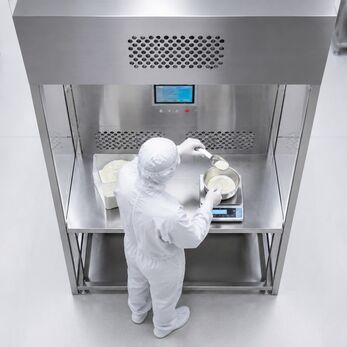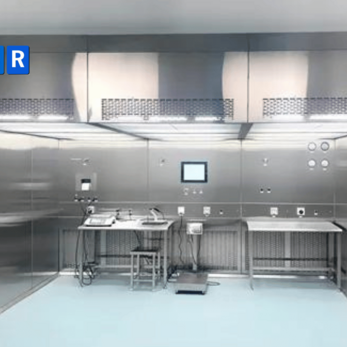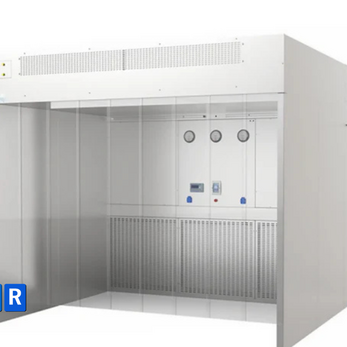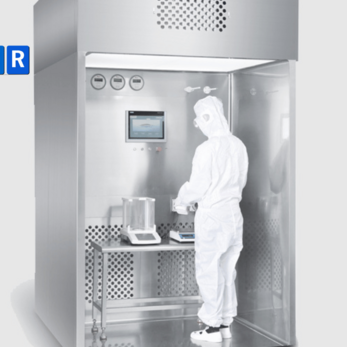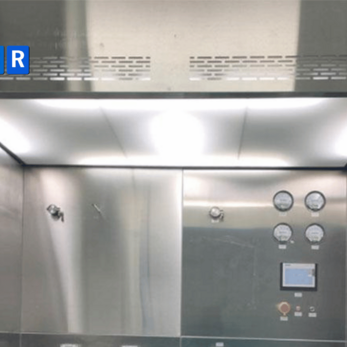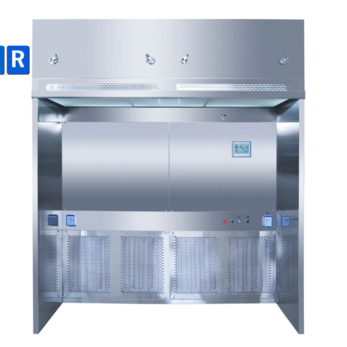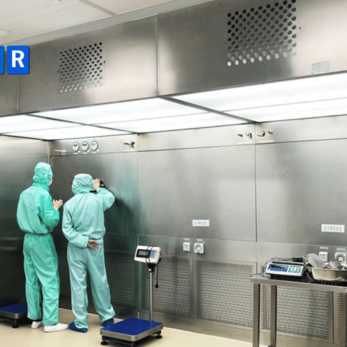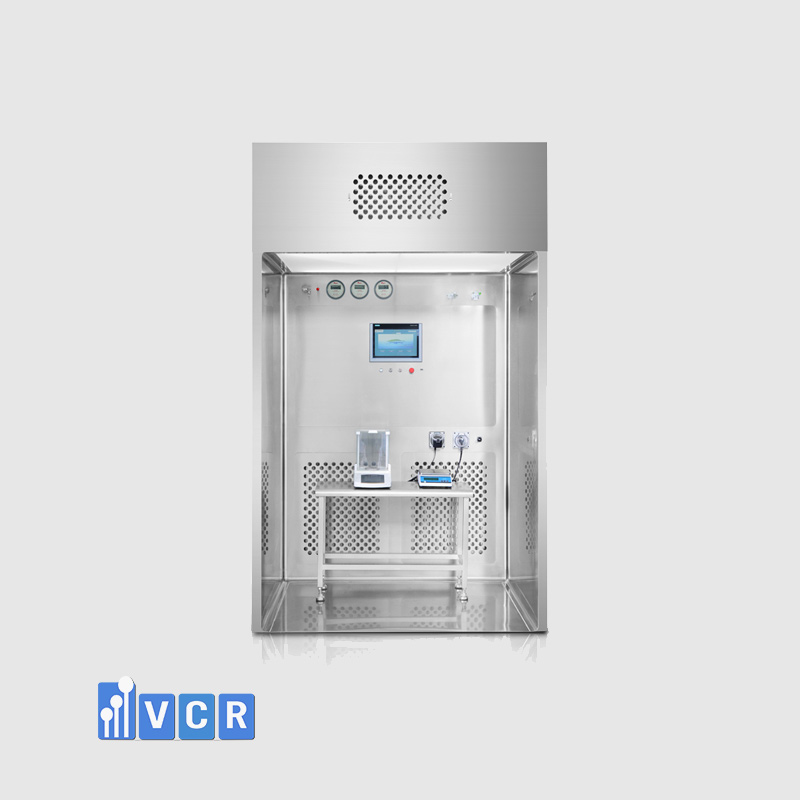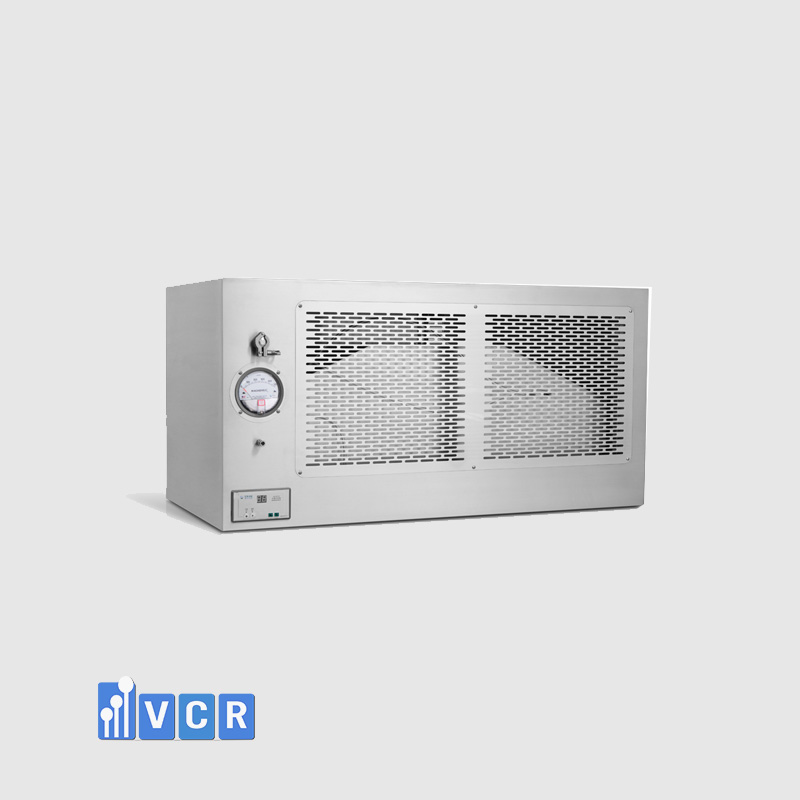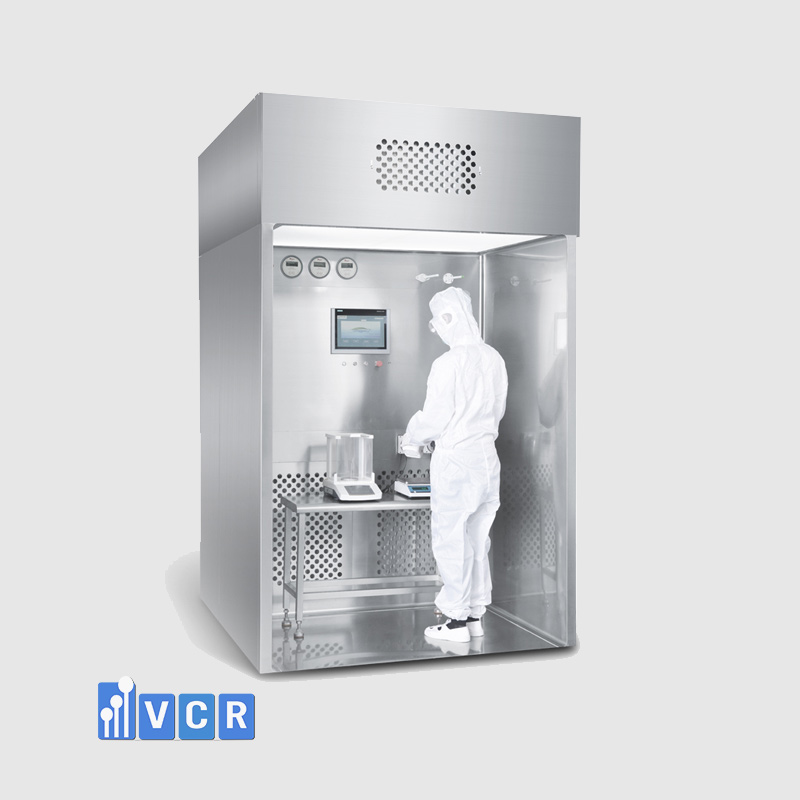
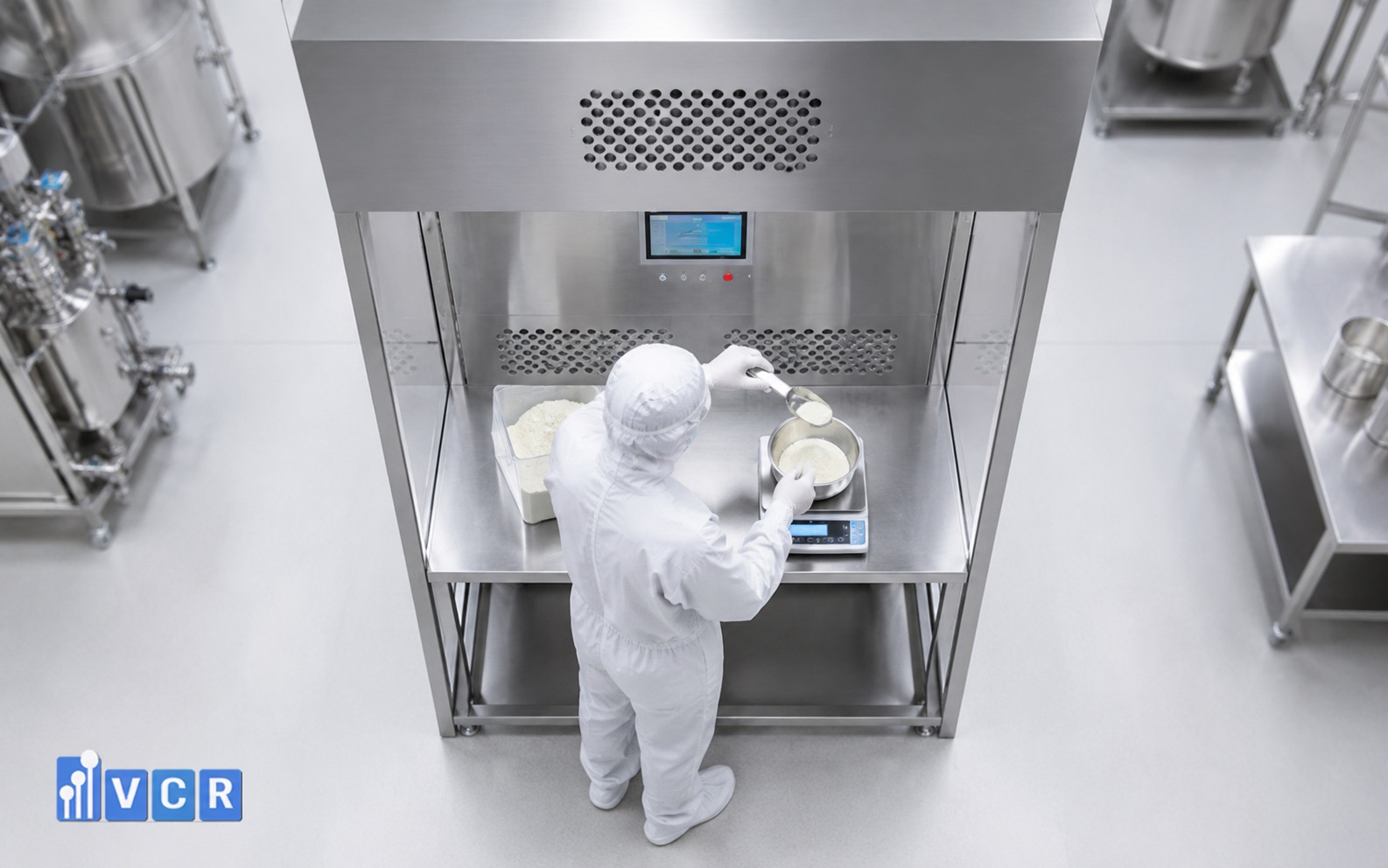
- VCR Weighing Booth body construction
- Negative pressure principle for dust containment
- Unidirectional airflow at 0.45 m/s ±20%
- Three-stage G4 – F8 – H14 filtration system
- H14 HEPA filter with GEL Seal
- H13 HEPA filtration on the exhaust air
- 85–90% recirculation air and 10–15% exhaust air
- 0.55 kW motor and 3.2 kW inverter
- PLC control system and Kunlun Tongtai display
- Airflow velocity sensor
- Three differential pressure gauges for filter monitoring
- Polymer airflow balancing membrane
- PAO test port as an important qualification feature
- Grade A cleanliness – how it should be understood
- Main advantages of the VCR Weighing Booth
- Limitations that should be considered
- Applications suitable for the VCR Weighing Booth
- Overall assessment of the VCR Weighing Booth
The VCR Weighing Booth is a localized environmental control system designed for weighing, dispensing, sampling, and handling raw materials that may generate airborne dust. The equipment operates through a combination of negative pressure, vertical unidirectional airflow, and multi-stage filtration to reduce dust dispersion into surrounding areas and minimize the risk of cross-contamination during production.
The VCR Weighing Booth is configured with a 1.2 mm thick SUS304 stainless steel body, G4 – F8 – H14 HEPA filtration, H13 HEPA exhaust filtration, a three-phase motor, PLC control system, inverter, airflow velocity sensor, differential pressure gauges, and a PAO test port. This configuration provides the main technical functions commonly required for a modern Weighing Booth or Dispensing Booth used in controlled environments.
However, evaluating whether a weighing booth is truly suitable for a pharmaceutical or cleanroom application requires more than simply reviewing a list of specifications. It is equally important to understand the technical meaning of each parameter, as well as the advantages, limitations, and appropriate applications of the system.
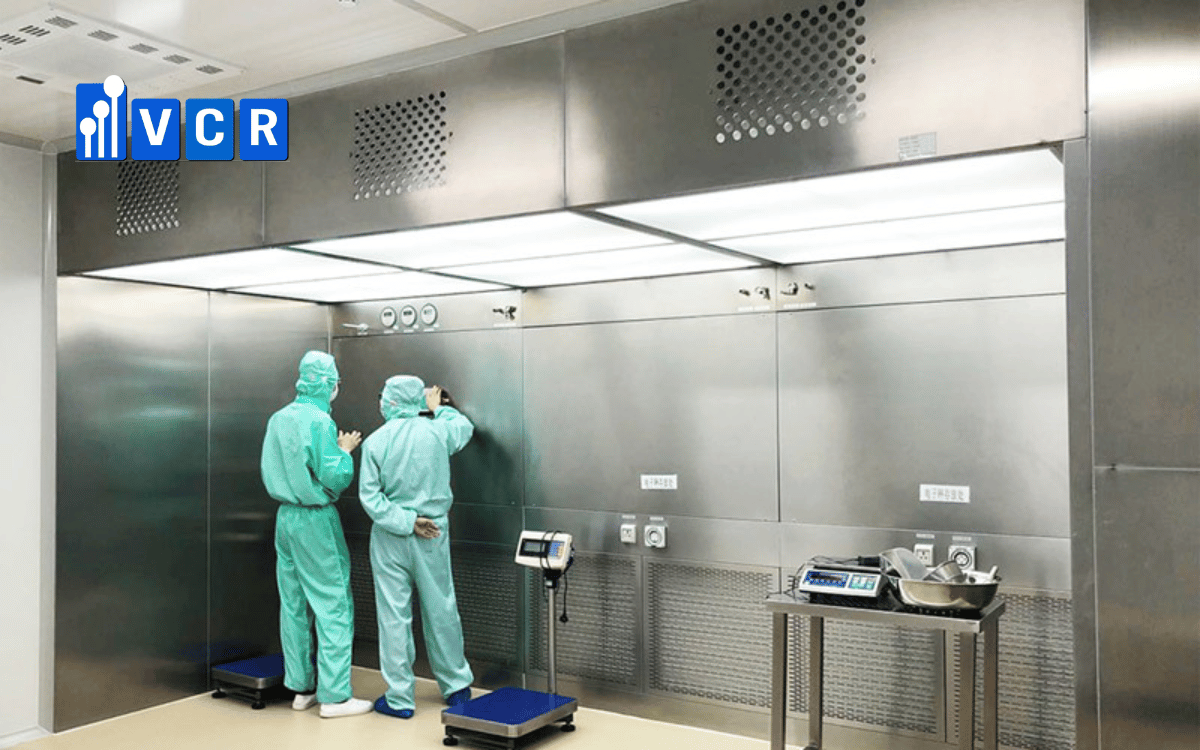
VCR Weighing Booth body construction
The main body of the equipment is manufactured from SUS304 stainless steel with a thickness of 1.2 mm.
SUS304 is widely used in cleanroom equipment because of its relatively smooth surface, good corrosion resistance, durability, and ease of cleaning. A thickness of 1.2 mm provides sufficient structural rigidity while keeping the overall equipment weight within a practical range.
For conventional raw material weighing applications in pharmaceutical, nutraceutical, cosmetic, and related industries, SUS304 offers a reasonable balance between performance and investment cost.
One major advantage of this material is that it is easier to clean and more suitable for hygienic applications than powder-coated mild steel.
However, SUS304 is not necessarily the optimum material for every environment. If the equipment is regularly exposed to aggressive chemicals, high chloride concentrations, or demanding cleaning agents, SUS316L stainless steel may be more appropriate.
Therefore, the selection between SUS304 and SUS316L should be based on the characteristics of the process and cleaning chemicals rather than assuming that a higher material grade is always necessary.
Negative pressure principle for dust containment
The working chamber of the VCR Weighing Booth is designed to operate under negative pressure relative to the surrounding environment.
This is one of the most important operating principles of a Dispensing Booth or Weighing Booth.
During activities such as opening raw material bags, scooping powder, weighing, or dispensing ingredients, airborne particles may be generated. Without adequate containment, these particles can migrate into adjacent corridors or production areas.
Negative pressure causes air to move from the surrounding environment toward the controlled working zone rather than allowing contaminated air to escape outward.
As a result, airborne dust can be maintained within the booth and directed toward the return-air filtration system.
This is a major advantage of the VCR Weighing Booth design.
However, negative pressure must be properly balanced. Excessive negative pressure may disturb the airflow pattern, increase turbulence, or negatively affect operator comfort.
Therefore, the actual pressure differential should be established during system design, airflow balancing, commissioning, and qualification.
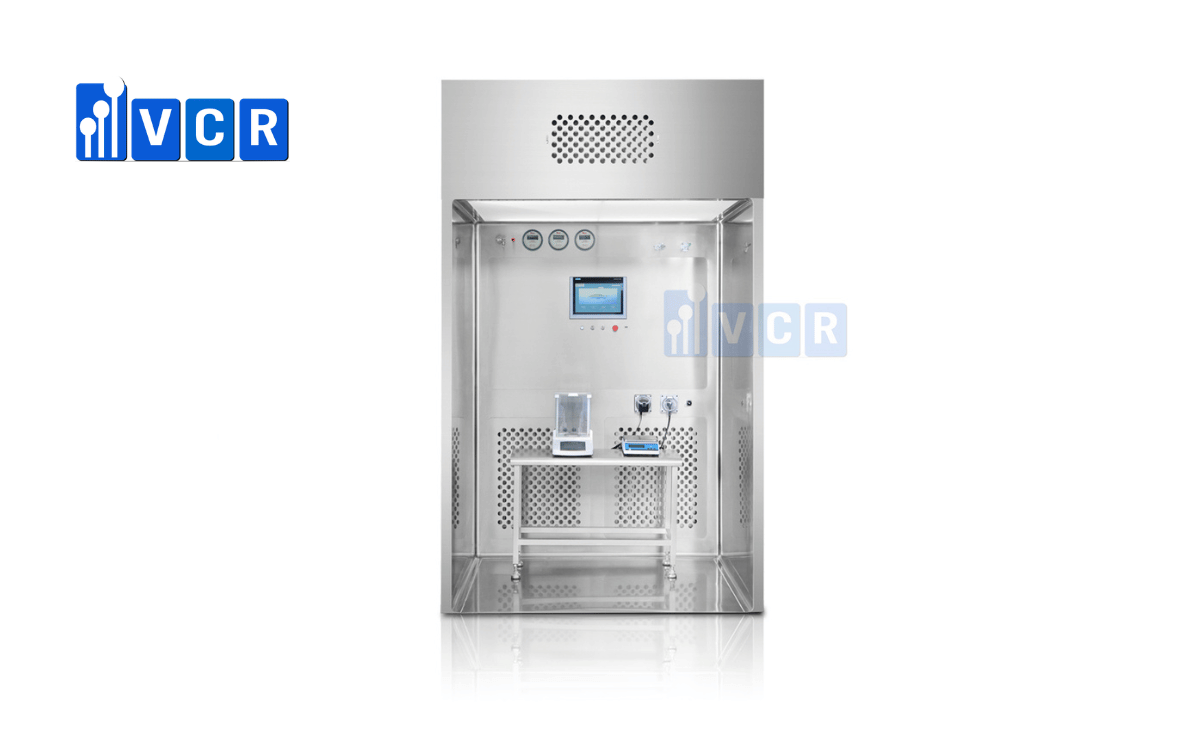
Unidirectional airflow at 0.45 m/s ±20%
Clean air passing through the H14 HEPA filter is distributed vertically from the ceiling toward the working zone.
The nominal airflow velocity is:
0.45 m/s ±20%.
The airflow is designed according to the principle of unidirectional airflow, commonly referred to as laminar airflow, moving vertically downward.
The objective is to create a relatively uniform airflow field that minimizes turbulence and continuously drives airborne particles away from the critical working area toward the return-air section.
One of the key advantages of this design is that dust can be captured close to the source of generation rather than being allowed to disperse throughout the room.
However, achieving a nominal value of 0.45 m/s alone does not guarantee satisfactory performance.
Airflow uniformity, measurement locations, equipment positioned inside the booth, operator movements, weighing scales, containers, and other obstructions may significantly influence the actual airflow pattern.
For this reason, booth performance should be evaluated not only by airflow velocity measurements but also by airflow uniformity testing and smoke studies.
Three-stage G4 – F8 – H14 filtration system
The VCR Weighing Booth uses a multi-stage air filtration system consisting of G4 pre-filters, F8 medium-efficiency filters, and H14 HEPA final filters.
The G4 filter captures relatively large airborne particles before the air enters the main filtration system.
The F8 filter provides an additional intermediate filtration stage, removing smaller particles and reducing the particulate load reaching the HEPA filter.
The final supply air is filtered through an H14 HEPA filter before entering the working zone.
The main advantage of this multi-stage filtration arrangement is the protection it provides to the HEPA filter. G4 and F8 filters are significantly less expensive to replace than HEPA filters, so using pre-filtration can extend HEPA service life and reduce long-term maintenance costs.
The disadvantage is that each additional filtration stage adds pressure resistance to the airflow system.
As filter resistance increases, the fan must provide sufficient static pressure to maintain the required airflow volume and velocity.
Maintenance requirements are also higher because multiple filter stages must be inspected and replaced at appropriate intervals.
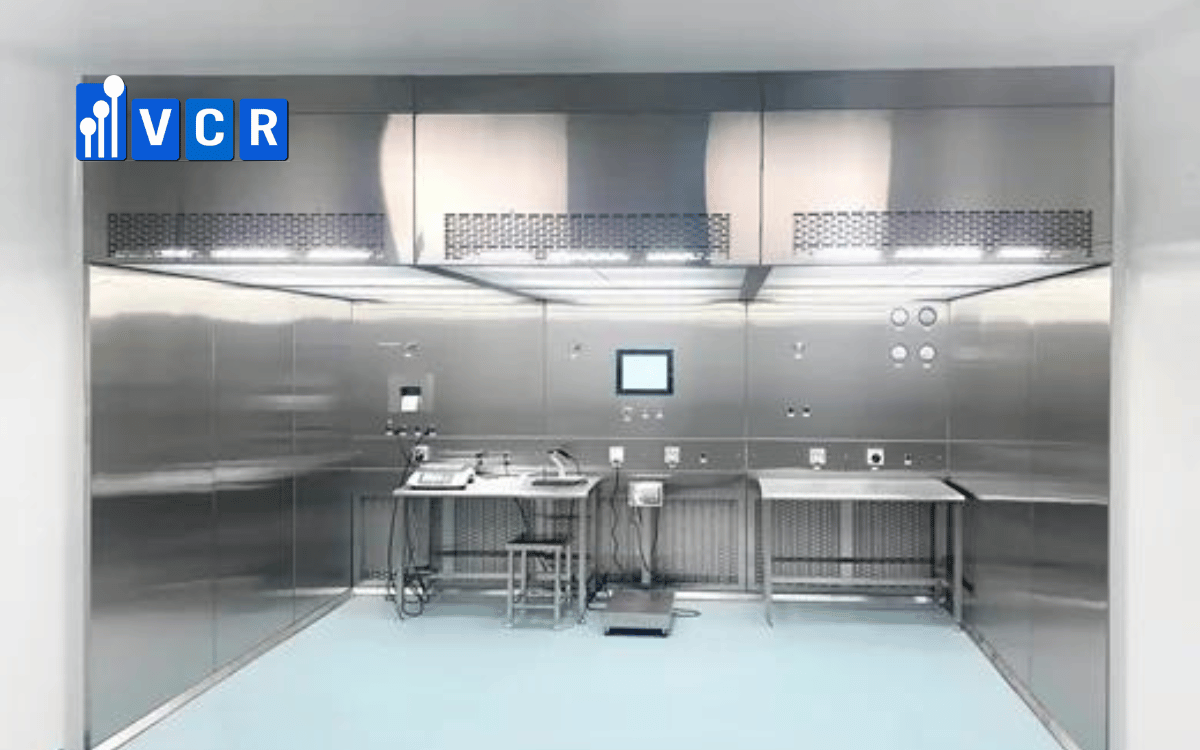
H14 HEPA filter with GEL Seal
The H14 HEPA filter in the VCR Weighing Booth uses a GEL Seal design.
A GEL Seal uses a flexible polyurethane gel interface between the HEPA filter and the mounting frame to create a highly effective airtight seal.
This design helps minimize bypass leakage, where unfiltered air passes around the HEPA filter rather than through the filter media.
The GEL Seal configuration is therefore an important advantage of the VCR Weighing Booth.
Even if a HEPA filter has a high filtration efficiency, contamination control can still be compromised if leakage occurs between the filter frame and its housing.
A GEL Seal helps reduce this risk and can also facilitate reliable HEPA integrity testing.
The main disadvantage is that GEL Seal HEPA systems may cost more than conventional gasket-sealed filters.
Maintenance personnel must also follow proper procedures during filter removal and replacement to avoid damaging the gel channel, sealing surface, or filter frame.
H13 HEPA filtration on the exhaust air
The exhaust air from the VCR Weighing Booth passes through a non-separator H13 HEPA filter before being discharged from the system.
This is an important feature because the function of a weighing booth is not limited to providing clean air to the working zone. It must also control potentially contaminated air generated during powder handling.
Installing an H13 HEPA filter on the exhaust path provides an additional containment barrier before air leaves the booth.
The main advantage is improved dust containment and reduced risk of releasing airborne particulate contamination into the surrounding environment.
However, for hazardous compounds, highly potent active pharmaceutical ingredients, or HPAPI applications, an H13 exhaust HEPA filter alone is not sufficient to demonstrate that the system provides adequate containment.
Such applications normally require a dedicated risk assessment based on parameters such as OEL – Occupational Exposure Limit and OEB – Occupational Exposure Band.
Additional containment strategies may also be necessary depending on the toxicity and potency of the material.
85–90% recirculation air and 10–15% exhaust air
The VCR Weighing Booth is designed with an approximate airflow ratio of:
Recirculated air: 85–90%.
Exhaust air: 10–15%.
Recirculating most of the air helps reduce the amount of conditioned replacement air required, thereby lowering energy consumption and maintaining stable airflow conditions within the booth.
The exhaust portion contributes to maintaining negative pressure inside the working area.
This is a practical configuration for many powder weighing and dispensing applications.
However, high air recirculation ratios must be carefully evaluated if the process releases solvent vapors, chemical gases, or contaminants that cannot be effectively removed by particulate filters.
HEPA filters are designed primarily for particulate filtration and cannot remove all gaseous or vapor-phase contaminants.
In such situations, the exhaust-air ratio or the air-treatment system may need to be redesigned.
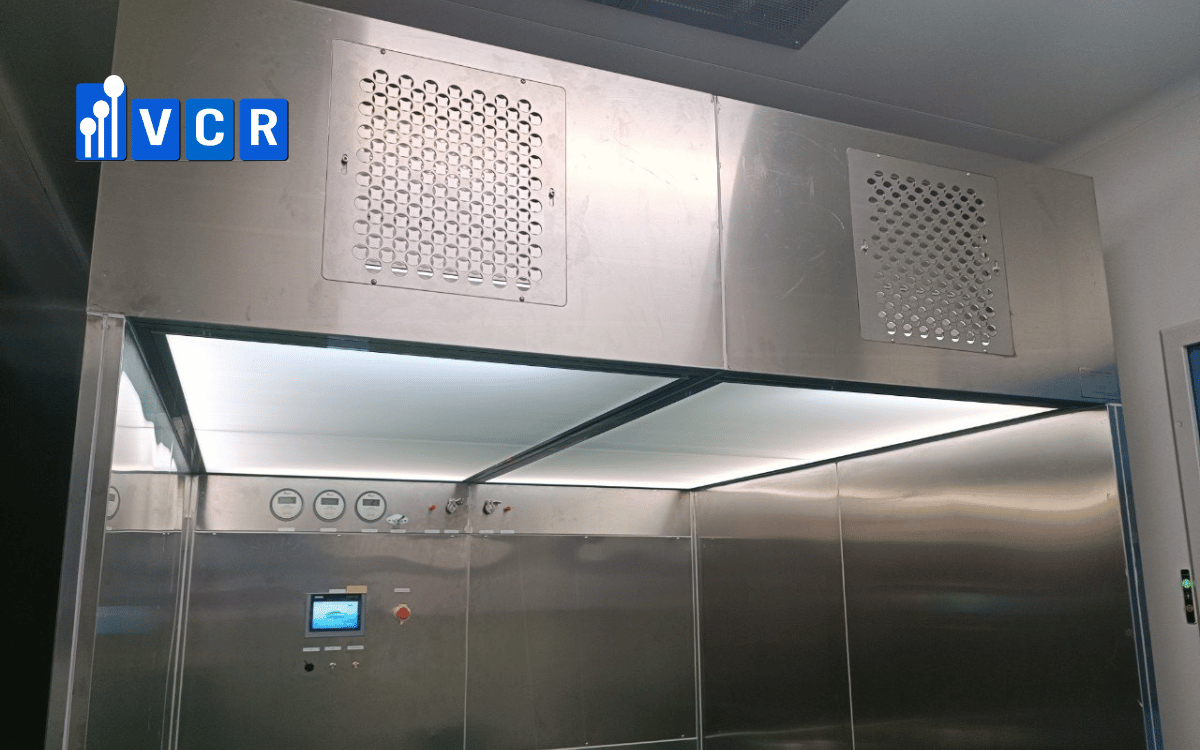
0.55 kW motor and 3.2 kW inverter
The VCR Weighing Booth uses a high-speed three-phase motor with the following specifications:
Motor power: 0.55 kW
Voltage: 380 V
Frequency: 50 Hz
The system is equipped with a 3.2 kW inverter.
The use of an inverter is beneficial because the fan speed can be adjusted according to the required airflow volume and system resistance.
As HEPA and pre-filters gradually accumulate particles, their resistance increases. If the fan operates at a fixed speed, airflow velocity in the working zone may decrease over time.
An inverter allows fan speed to be adjusted to compensate for this change and maintain the required airflow conditions.
However, motor power should not be evaluated independently.
A 0.55 kW rating must be considered together with airflow volume, static pressure, fan performance curves, booth dimensions, and total filter resistance.
For larger weighing booths, the fan and motor capacity should therefore be calculated specifically for the required design conditions.
PLC control system and Kunlun Tongtai display
The VCR Weighing Booth is equipped with a PLC-based control system together with a Kunlun Tongtai operator interface.
A PLC – Programmable Logic Controller allows automated control of functions such as system start-up, shutdown, fan operation, and other programmed sequences.
Compared with a basic relay-based control system, PLC control provides greater flexibility for upgrading functions and integrating additional sensors or alarms in the future.
However, the standard configuration does not automatically indicate whether advanced functions such as historical data recording, user access control, audit trails, or BMS/SCADA integration are included.
If the weighing booth is intended for a pharmaceutical facility with demanding data management requirements, these functions should be clearly defined in the URS – User Requirement Specification during the project design stage.
Airflow velocity sensor
The equipment is fitted with one airflow velocity sensor to monitor the operating condition of the airflow system.
This is useful because operators can identify changes in airflow caused by increasing filter resistance, fan abnormalities, or other system variations.
However, a single fixed sensor represents airflow velocity only at its installation location.
During qualification, airflow velocity should therefore be measured at multiple points across the entire working area to evaluate airflow uniformity.
The installed sensor is suitable for operational monitoring but should not replace comprehensive airflow mapping during qualification.

Three differential pressure gauges for filter monitoring
The VCR Weighing Booth is equipped with three Macroscopic differential pressure gauges with the following measuring ranges:
0–500 Pa
0–250 Pa
0–125 Pa
Differential pressure monitoring is a simple but effective method for evaluating filter resistance.
As dust accumulates on the filter surface, the pressure drop across the filter generally increases.
Monitoring this change allows maintenance personnel to assess filter condition and determine when inspection or replacement may be required.
The advantage of mechanical differential pressure gauges is that they are easy to read, simple to operate, and independent of complex electronic control systems.
The limitation is that mechanical gauges do not automatically record historical data.
If continuous monitoring, trend recording, or remote alarms are required, electronic differential pressure transmitters connected to the PLC or BMS should be considered.
Polymer airflow balancing membrane
A Polymer airflow balancing membrane is installed beneath the HEPA filtration section.
Its primary function is to improve airflow distribution across the working area and reduce local zones of excessively high or low airflow velocity.
This can be particularly beneficial in weighing booth applications because airflow uniformity directly affects dust-capture performance.
However, the polymer membrane also becomes a component that requires routine inspection and cleaning.
If the membrane becomes contaminated, damaged, deformed, or partially blocked, airflow distribution may become uneven.
PAO test port as an important qualification feature
The VCR Weighing Booth includes a dedicated PAO test port.
PAO, or Polyalphaolefin, is an aerosol commonly used for HEPA filter integrity testing after installation.
The PAO port supports inspection of the HEPA filter media, filter frame, GEL Seal area, and other potential leakage locations.
This is an important technical feature that is sometimes overlooked when comparing weighing booth quotations.
Using an H14 HEPA filter alone does not guarantee that the complete installed filtration system is leak-free.
PAO testing helps confirm the integrity of the installed HEPA filtration system during commissioning, qualification, and periodic requalification.
Grade A cleanliness – how it should be understood
According to the design concept, the working zone of the VCR Weighing Booth is intended to provide a Grade A environment under at-rest conditions.
The H14 HEPA filtration system and unidirectional airflow are important elements supporting a high level of particulate cleanliness.
However, installing an H14 HEPA filter does not automatically mean that a booth is Grade A.
The actual environmental classification must be demonstrated through appropriate testing and qualification after installation.
Depending on the project requirements, this may include airborne particle counting, airflow velocity testing, airflow uniformity testing, HEPA integrity testing, smoke studies, and other qualification activities.
This distinction is particularly important when comparing equipment from different suppliers.

Main advantages of the VCR Weighing Booth
From an overall system perspective, one of the main strengths of the VCR Weighing Booth is its relatively comprehensive dust-control configuration.
Negative pressure combined with vertical unidirectional airflow provides a localized containment mechanism directly within the material-handling zone.
The multi-stage G4 – F8 – H14 filtration arrangement reduces the particulate load on the final HEPA filter, while the H14 GEL Seal supply filter improves sealing reliability.
The H13 exhaust HEPA filter provides an additional level of protection before air is discharged.
PLC control and inverter-based fan regulation provide greater flexibility compared with simple fixed-speed systems.
The airflow velocity sensor and three differential pressure gauges provide operators with basic information for monitoring airflow and filter conditions.
The integrated PAO test port is another important advantage because it supports commissioning and periodic HEPA integrity testing.
Limitations that should be considered
The VCR Weighing Booth should not be considered a universal configuration suitable for every process.
SUS304 stainless steel is adequate for many conventional applications, but SUS316L may be preferable in highly corrosive or aggressive chemical environments.
A high air recirculation ratio improves energy efficiency but may not be suitable for processes that generate hazardous vapors or gases.
One airflow velocity sensor is appropriate for routine operational monitoring but cannot replace full airflow mapping during qualification.
Mechanical differential pressure gauges provide simple visual indication but do not provide automatic data logging or alarm functions.
The PLC system may also require upgrades if the project needs audit trails, user access management, historical records, remote monitoring, or integration with a building management system.
Most importantly, for HPAPI or other highly potent materials with very low OEL values, equipment selection should not be based solely on HEPA grade and negative pressure.
A dedicated containment assessment should be performed.
Applications suitable for the VCR Weighing Booth
With its current configuration, the VCR Weighing Booth is suitable for weighing, dispensing, sampling, and other operations involving powder materials where localized dust control is required.
Typical applications include pharmaceutical factories, nutraceutical facilities, cosmetic manufacturing plants, and other controlled production environments.
However, the booth dimensions, airflow volume, fan capacity, number of HEPA filters, return-air arrangement, cleanliness requirements, and control functions should be selected according to the actual process.
Using a single standard configuration for every project is not recommended.
Overall assessment of the VCR Weighing Booth
From a technical perspective, the VCR Weighing Booth incorporates most of the key components expected in a modern Weighing Booth or Dispensing Booth, including SUS304 construction, negative pressure, H14 GEL Seal HEPA filtration, pre-filtration, H13 exhaust filtration, unidirectional airflow, airflow velocity sensing, differential pressure monitoring, PLC control, inverter control, and a PAO test port.
Its main strength lies in the combination of clean-air protection and localized dust containment within the operator working zone.
Its main limitation is that the standard technical configuration alone does not guarantee suitability for every pharmaceutical process.
Actual system performance depends on booth dimensions, return-air design, raw material characteristics, operator activities, pressure balancing, airflow distribution, and qualification after installation.
For this reason, buyers and cleanroom contractors should not evaluate a Weighing Booth only by asking questions such as “What HEPA grade does it use?” or “What is the motor power?”
A more appropriate evaluation should consider the complete airflow system, contamination-control strategy, containment requirement, maintenance approach, and qualification capability.
Vietnam Cleanroom Equipment – VCR Cleanroom supplies Weighing Booths, Dispensing Booths, Sampling Booths, and other cleanroom equipment for cleanroom contractors and manufacturing facilities. Equipment configurations can be customized according to working-area dimensions, cleanliness requirements, raw material characteristics, dust containment targets, airflow requirements, and project qualification specifications.
Refer to the VCR Raw Material Weighing Booth Design
DAP