- Why Is It Necessary to Compare LAF Weighing Booth, Dispensing Booth, and RLAF?
- What Is a LAF Weighing Booth?
- What Is a Dispensing Booth?
- What Is RLAF?
- Similarities Between LAF Weighing Booth, Dispensing Booth, and RLAF
- Differences in Terminology
- Differences in Application Objectives
- Differences in Airflow Principle and Return-Air Direction
- Differences in Equipment Construction
- Differences in Operator, Product, and Environmental Protection
- Comparison by Practical Applications in Cleanrooms
- When Should a LAF Weighing Booth Be Selected?
- When Should a Dispensing Booth Be Selected?
- When Should RLAF Be Selected?
- Quick Comparison Table: LAF Weighing Booth, Dispensing Booth, and RLAF
- Criteria for Selecting Suitable Equipment for Cleanroom Dust Control
- Key Considerations During Qualification of LAF Weighing Booth, Dispensing Booth, and RLAF
- Common Mistakes When Confusing These Three Devices
- FAQ – Frequently Asked Questions About LAF Weighing Booth, Dispensing Booth, and RLAF
- Conclusion: Select by Risk and Airflow Principle, Not Only by Name
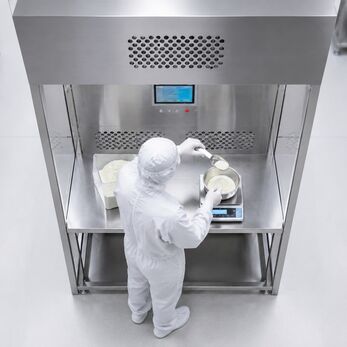
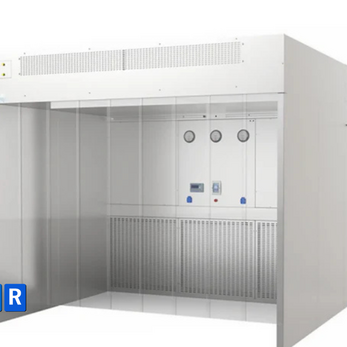
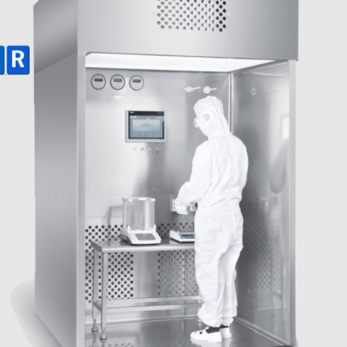
LAF Weighing Booth, Dispensing Booth, and RLAF are terms commonly used in cleanroom projects involving powder raw materials, active ingredients, excipients, granular chemicals, or easily dispersed materials. All three are related to dust control, airborne particle control, and dispersion-risk reduction at the working zone. However, they are not completely the same in terms of terminology, airflow principle, application scope, and protection objectives.
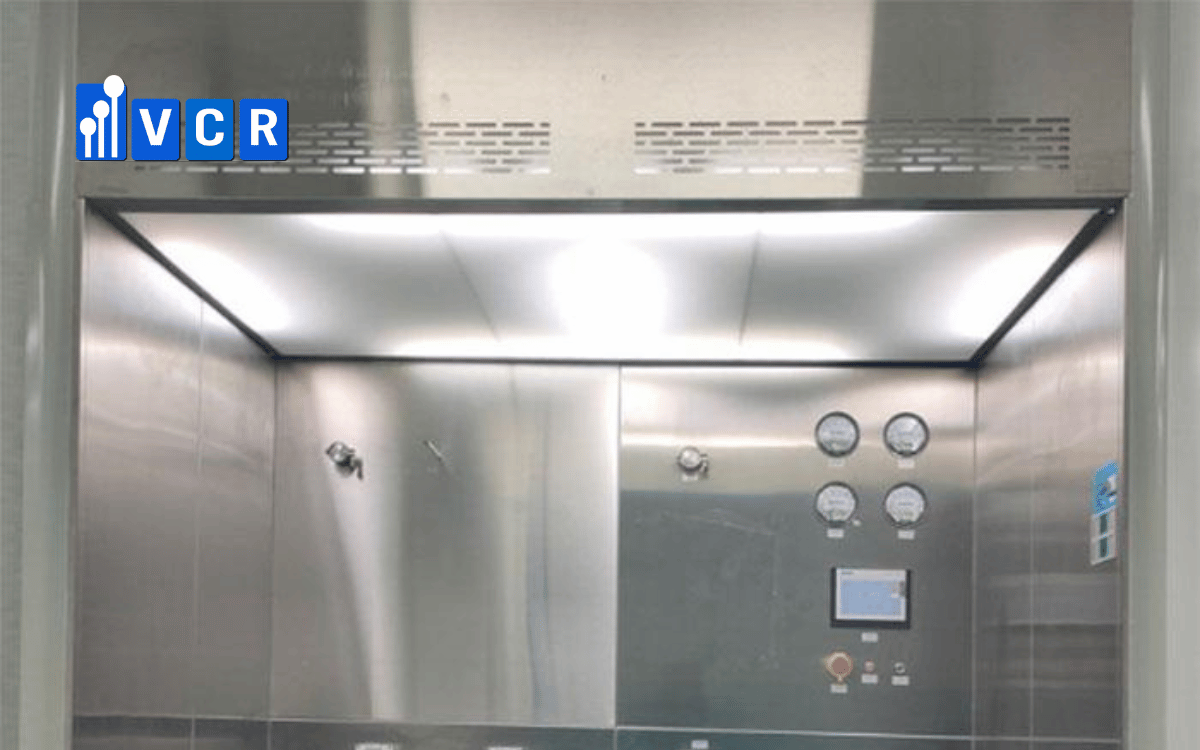
In practice, many factories generally refer to these devices as weighing booths. Some contractors call them Dispensing Booths because the equipment serves raw material dispensing areas. Some technical documents use the term RLAF or Reverse Laminar Air Flow to emphasize the reverse laminar airflow principle. Without a clear distinction, equipment selection, layout design, quotation, qualification, and operation may be understood differently by the investor, contractor, and supplier.
This article compares LAF Weighing Booth, Dispensing Booth, and RLAF in cleanroom dust control, helping factories and contractors select a more suitable solution for raw material weighing areas, sampling areas, active ingredient handling, laboratories, or areas with dust-generation risks in GMP cleanrooms.
Why Is It Necessary to Compare LAF Weighing Booth, Dispensing Booth, and RLAF?
In cleanroom projects, especially pharmaceutical, nutraceutical, cosmetic, and chemical cleanrooms, the terms LAF Weighing Booth, Dispensing Booth, and RLAF are often used interchangeably. A factory may request a “LAF weighing booth,” the contractor may quote a “Dispensing Booth,” while the supplier’s drawing or catalogue may state “RLAF.” This is not always wrong, but if the understanding is not aligned, each party may imagine a different equipment configuration for the same area.
This confusion often comes from the fact that all three devices appear in dust-generating areas. When operators handle powder, open raw material bags, weigh materials, take samples, or transfer materials into containers, dust may spread outside the working zone. Therefore, factories need equipment with a fan, filtration system, working zone, HEPA Filter, and controlled airflow. The external appearance of these devices may be similar, but their technical objectives and internal airflow principles may differ.
The purpose of comparing these three concepts is not to determine which device is absolutely better. A LAF Weighing Booth is not always better than a Dispensing Booth. RLAF is also not always more advanced than every weighing booth. The most suitable device is the one that controls the actual process risk. That risk may be dust generated from raw materials, environmental dust affecting products, operator exposure to active ingredients, or cross-contamination between production batches.
If equipment is selected only by name, the factory may encounter many problems. For example, a device called LAF that only supplies clean air but does not have suitable dust-collecting return air may not meet the needs of a powder weighing area. A Dispensing Booth with suitable dimensions but an unclear airflow diagram may also be difficult to qualify. An RLAF with a good airflow principle but a working zone that is too small may be inconvenient during actual raw material weighing.
Therefore, LAF Weighing Booth, Dispensing Booth, and RLAF should be compared based on terminology, application objective, airflow principle, construction, practical application, selection criteria, and qualification method. This helps factories, investors, and contractors avoid selecting equipment based only on assumptions and ensures that the equipment matches GMP cleanroom requirements.
What Is a LAF Weighing Booth?
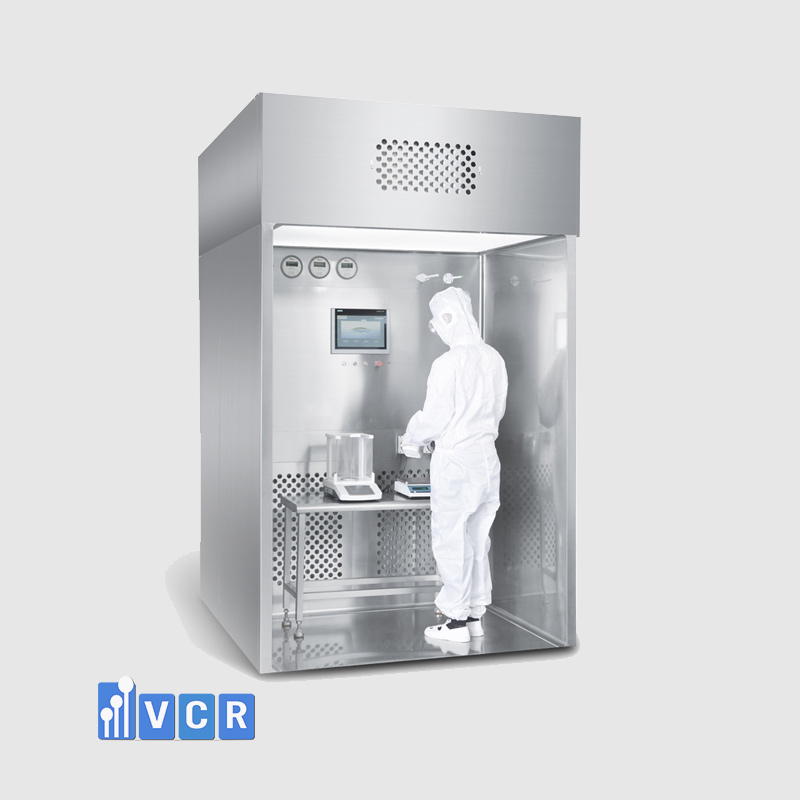
A LAF Weighing Booth is a common term for equipment that creates a controlled working zone using filtered airflow, often used in cleanroom weighing, sampling, or powder-handling areas. LAF stands for Laminar Air Flow. Laminar airflow can be understood as airflow organized in a relatively stable direction, helping control the movement of air in the working area.
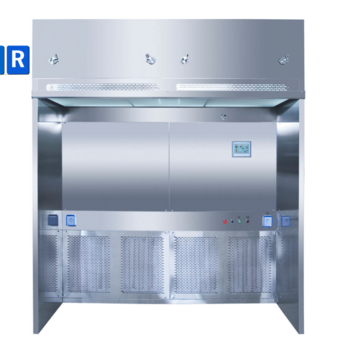
In many projects in Vietnam, the term LAF Weighing Booth is used quite broadly. Users may call it a raw material weighing booth, cleanroom weighing booth, powder weighing booth, or LAF weighing booth to refer to the same group of equipment with a working zone, fan, filtration system, HEPA Filter, and controlled airflow. This is a familiar term in practical communication, especially when factories need equipment for raw material weighing or sampling areas.
HEPA Filter stands for High Efficiency Particulate Air. In a LAF Weighing Booth, the HEPA Filter helps reduce particles in the airflow and supports maintaining a controlled working zone. However, a LAF Weighing Booth should not be understood simply as a standard LAF device. Standard LAF usually focuses on supplying clean air to protect products or samples from environmental dust. In contrast, a weighing booth used in a powder weighing area must also consider dust generated by the raw material itself.
If a weighing booth only blows clean air into the working zone without a suitable return-air direction, dust from powders may still be carried outward. Therefore, when discussing a LAF Weighing Booth for dust control, it is necessary to review whether the equipment has a mechanism for collecting dust-laden air, where the return-air area is located, where the operator stands, and which direction the dust will move.
A good LAF Weighing Booth does not only need a good filter. It also needs a suitable working zone, appropriate air velocity, sufficient airflow volume, easy-to-clean materials, an unobstructed return-air area, and clear qualification documentation. Because this term is used flexibly, contractors and investors should request drawings, airflow diagrams, and specific technical parameters instead of relying only on the name “LAF Weighing Booth.”
What Is a Dispensing Booth?
A Dispensing Booth is a booth used for weighing, dispensing, or distributing raw materials, commonly used in dispensing areas of pharmaceutical, nutraceutical, cosmetic, or chemical factories. “Dispensing” can be understood as weighing, measuring, distributing, or issuing raw materials according to a formula or production batch. “Booth” means an operating chamber or working enclosure.
Unlike LAF Weighing Booth, which is a more general term, Dispensing Booth is an application-based term. When a factory requests a Dispensing Booth, it usually needs equipment to support the raw material dispensing process. This equipment must suit operations such as opening bags, pouring powder, placing scales, weighing quantities, dispensing materials into containers, labeling, transferring weighed materials, and cleaning after operation.
In pharmaceutical factories, the dispensing area is very important because raw materials are weighed according to the production formula before moving to the next process. If dust is not well controlled during weighing, it may disperse into the environment, settle on equipment, mix with other materials, or increase cross-contamination risk. Therefore, a Dispensing Booth is usually designed to support dust control in raw material dispensing areas.
A Dispensing Booth may use different airflow principles depending on the design. Some devices use downflow, meaning airflow from top to bottom. Some have rear or lower return air. Some use a principle close to RLAF, meaning collection of dust generated at the working zone. Therefore, not every Dispensing Booth should automatically be assumed to have the same airflow diagram.
The important point of a Dispensing Booth is its suitability for real operating procedures. The equipment needs to provide enough space for scales, raw material bags, containers, trays, tools, and operators. If the working zone is too small, operators may work outside the controlled zone or place materials in a way that blocks the return-air area. If the equipment is difficult to clean, residual dust may create cross-contamination risks after each batch.
Therefore, when selecting a Dispensing Booth, the factory should evaluate not only the filtration system but also the weighing process, cleanroom layout, personnel flow, material flow, scale position, material type, dust-generation level, and GMP requirements. Dispensing Booth is a suitable term when the focus is the raw material dispensing operation in a factory.
What Is RLAF?
RLAF stands for Reverse Laminar Air Flow. This term emphasizes an airflow organization principle used to control dust, particles, or contaminants generated at the working zone. Instead of only supplying clean air into the working area, RLAF focuses on collecting dust-laden air into the return-air area or filtration system.
In powder-handling areas, dust is usually generated from the material being handled. When operators open bags, pour powder, take samples, weigh materials, or handle active ingredients, dust may become airborne and move toward the operator or the surrounding environment. RLAF helps organize airflow so that generated dust is drawn toward the collection area instead of freely spreading into the room.
Return air means air drawn back into the system. In RLAF, the return-air area plays a very important role. If dust-laden air is drawn into return air properly, dust will pass through the filtration system and dispersion will be limited. If return air is blocked or poorly arranged, dust-control performance will decrease even if the equipment still has a fan and HEPA Filter.
RLAF is often associated with two main protection objectives: operator protection and environmental protection. Operator protection means protecting the person performing the operation. Environmental protection means protecting the surrounding environment. When handling powders or active ingredients, the operator needs protection from dust dispersion, and the cleanroom needs protection from dust spreading to other areas.
Unlike Dispensing Booth, which is an application-based term, RLAF is an airflow-principle term. A device may be called RLAF even if it is not located in a dispensing area, as long as it uses reverse laminar airflow to collect dust at the working zone. Conversely, a Dispensing Booth may use the RLAF principle if it is designed to collect dust using reverse laminar airflow.
Therefore, when discussing RLAF, the important question is not where the equipment is used, but how the airflow works. Where is air supplied from? Where is dust generated? Where does air return? Is the operator located in the dust path? Can the airflow be verified by smoke testing? These are the questions that determine whether RLAF controls dust effectively.
Similarities Between LAF Weighing Booth, Dispensing Booth, and RLAF
LAF Weighing Booth, Dispensing Booth, and RLAF have many similarities, which is why they are often used interchangeably in practice. The first similarity is that all three are commonly used in cleanroom areas where dust, airborne particles, or contaminants may be generated at the working zone.
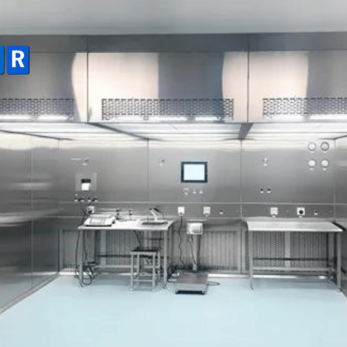
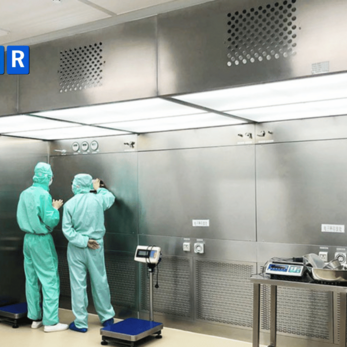
Common application areas include powder raw material weighing areas, raw material sampling areas, active ingredient handling areas, excipient preparation areas, color powder weighing areas, powdered chemical weighing areas, or laboratories handling powder samples. In these areas, the common objective is to reduce dust dispersion, support cross-contamination control, and maintain a more stable cleanroom environment.
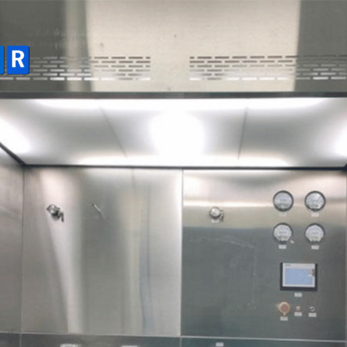
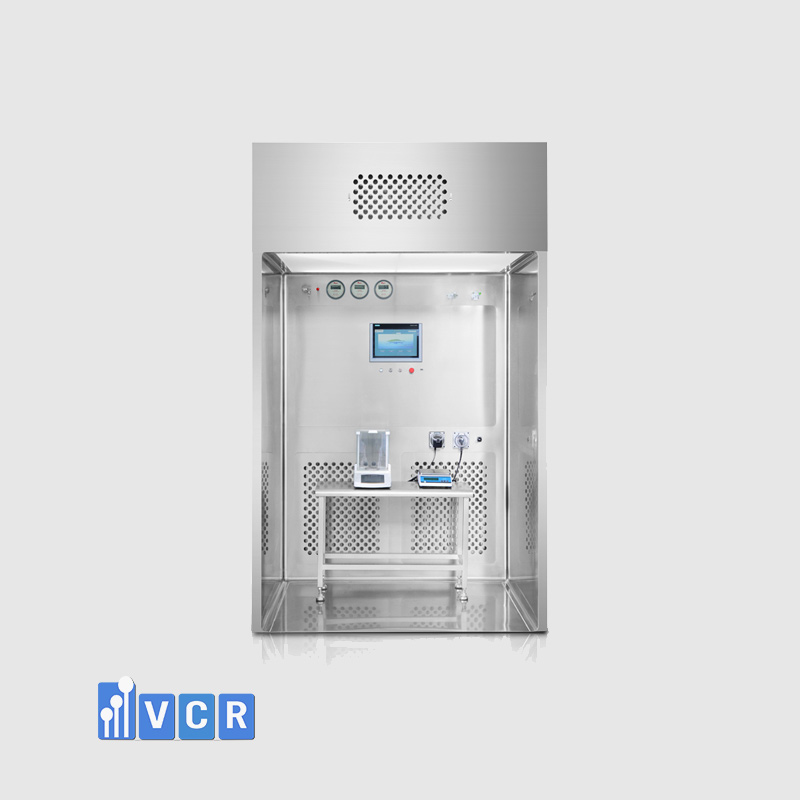
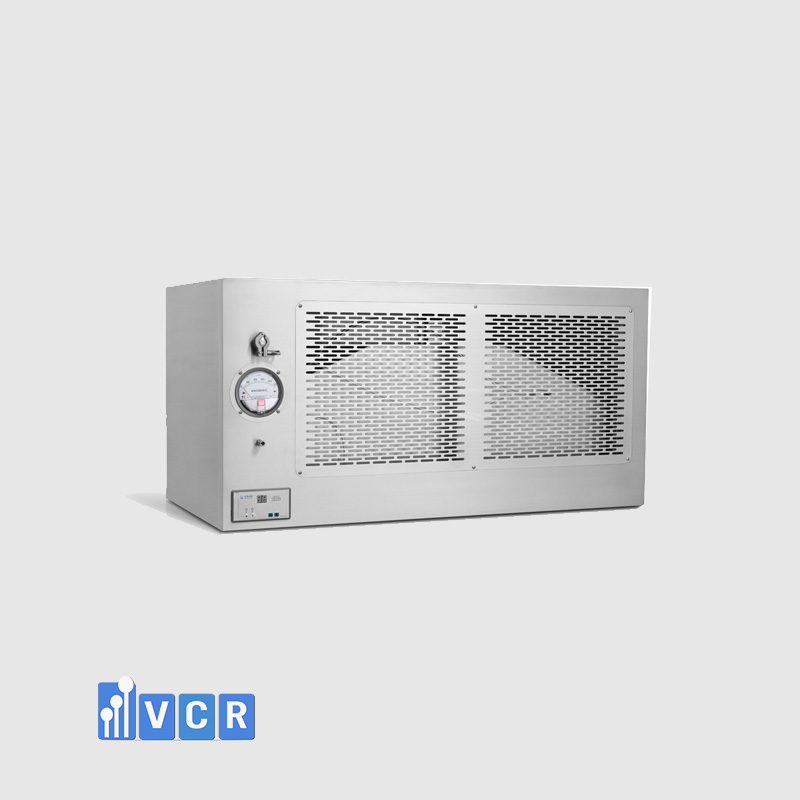
The second similarity is that these devices often contain similar components. A typical device may include a booth body, working zone, fan, filtration system, HEPA Filter, return-air area, differential pressure gauge, control panel, and lighting. Some devices may also include a pre-filter, medium filter, power socket for scales, doors, curtains, or utility ports.
The third similarity is that all three must be evaluated in the context of real operation. Equipment may meet catalogue specifications but still perform poorly if it is installed in the wrong location, the return-air area is blocked, operators work outside the controlled zone, or cleaning is not performed correctly. Therefore, effectiveness comes not only from the equipment itself, but also from layout, operating procedures, and maintenance.
The fourth similarity is that all three are related to qualification. After installation, visual condition, dimensions, construction material, power supply, fan, lighting, differential pressure, air velocity, airflow volume if required, HEPA leak testing, particle testing, and smoke testing may need to be checked depending on project requirements. Smoke testing is especially useful for observing airflow direction and dust-collection capability.
However, these similarities do not mean that the three concepts are completely the same. Similar appearance or application does not mean identical technical nature. The differences lie in terminology, application objective, and airflow principle. That is why each aspect should be analyzed before selecting equipment.
Differences in Terminology
The first and most important difference between LAF Weighing Booth, Dispensing Booth, and RLAF is their terminology. These three names do not belong to the same level of meaning. One term is commonly used in practical communication, one is based on application, and one is based on airflow principle.
LAF Weighing Booth is a common term for a cleanroom weighing booth with controlled airflow and filtration. In many projects, users call it a LAF Weighing Booth because the equipment is associated with Laminar Air Flow, has a HEPA Filter, and is used in a weighing area. However, this term can be broad and may cover different equipment configurations.
Dispensing Booth is an application-based term. When people say Dispensing Booth, the focus is equipment used for dispensing, meaning weighing, dosing, or distributing raw materials by batch. This equipment is usually installed in raw material weighing areas or material preparation areas before production. This term answers the question: what process is the equipment used for?
RLAF is an airflow-principle term. Reverse Laminar Air Flow emphasizes reverse laminar airflow and the ability to collect dust generated at the working zone. This term answers the question: how does the airflow control dust?
In simple terms, LAF Weighing Booth answers the question “what is a weighing booth with filtered airflow?”, Dispensing Booth answers “what process is the equipment used for?”, and RLAF answers “what airflow principle does the equipment use to control dust?” Therefore, one device may be described by multiple names if it is a weighing booth, used in a dispensing area, and uses the RLAF principle.
For example, a pharmaceutical factory may have a powder raw material weighing area. The equipment is installed in this area for batch dispensing, so it may be called a Dispensing Booth. If the equipment has a filtration system, HEPA Filter, fan, and working zone, many people may call it a LAF Weighing Booth. If its airflow diagram organizes reverse laminar airflow to collect dust at the source, it may also be described as using the RLAF principle.
Therefore, instead of debating which name is absolutely correct, technical documents should clearly define what process the equipment is used for, how the airflow works, what the protection objective is, and what qualification criteria apply. This approach helps avoid misunderstandings among the factory, contractor, and supplier.
Differences in Application Objectives
LAF Weighing Booth, Dispensing Booth, and RLAF overlap in many ways, but their application objectives differ. A LAF Weighing Booth is generally understood as equipment used for weighing, sampling, or powder handling in cleanrooms. The objective is to create a working zone with controlled airflow and filtration, helping reduce dust and support a cleaner working area.
A Dispensing Booth has a clearer process objective. It serves the dispensing area, meaning the area where raw materials are weighed or distributed by production batch. In this area, operators need to open bags, take materials, weigh quantities, dispense materials into containers, label them, and clean after completion. Therefore, a Dispensing Booth must match the actual dispensing process, not only provide clean airflow.
RLAF focuses on controlling dust generated at the source. If the process generates dust from the material being handled, such as powder raw materials, active ingredients, granular chemicals, or color powders, RLAF emphasizes drawing dust-laden air toward the return-air area. The main objective is usually to reduce dust moving toward the operator and reduce dust spreading into the surrounding environment.
If a factory needs equipment for a GMP raw material weighing area, Dispensing Booth is the term that closely matches the application. If the factory wants to describe the equipment by its dust-collection airflow principle, RLAF is suitable. If the discussion is in a general local-market context, LAF Weighing Booth may be the more familiar term.
However, application objectives cannot be separated from equipment configuration. A LAF Weighing Booth used for powder weighing must control dust generated at the source, not only supply clean air. A Dispensing Booth must provide enough working space, not only a HEPA Filter. An RLAF must have proper return air and airflow direction, not only the name “reverse laminar airflow.”
Therefore, when selecting equipment, the factory should begin by asking: what process needs to be performed? If it is batch raw material dispensing, a suitable Dispensing Booth or weighing booth should be considered. If the main risk is dust generated at the source, the equipment should be checked for RLAF principles or equivalent dust-collection mechanisms. If a common name is needed in purchase documents, LAF Weighing Booth may be used, but it must be accompanied by clear technical specifications.
Differences in Airflow Principle and Return-Air Direction
Airflow principle is the most important factor when comparing LAF Weighing Booth, Dispensing Booth, and RLAF in cleanroom dust control. Airflow means the movement of air. Return air means air drawn back into the system. Downflow means airflow from top to bottom. Regardless of equipment name, dust-control performance depends on where air comes from, where it goes, and how generated dust is collected.
A LAF Weighing Booth may use different airflow configurations depending on design. Some devices supply clean air through a HEPA Filter into the working zone. Some have rear or lower return air to collect dust-laden air. Some configurations are close to RLAF. Therefore, the name LAF Weighing Booth alone is not enough to conclude whether the equipment controls dust effectively. The actual airflow diagram must be reviewed.
A Dispensing Booth may also use different airflow configurations. Since this is an application-based device, suppliers may design downflow, rear return air, low-level return air, recirculating airflow, or a combination of airflow directions. If the Dispensing Booth is used in a powder weighing area, the design must ensure that dust generated when bags are opened, powder is poured, or materials are weighed is drawn toward the collection area instead of escaping outward.
RLAF emphasizes the reverse laminar airflow principle. The equipment organizes airflow to collect dust at the working zone. When dust is generated, dust-laden air is drawn into the return-air area or filtration system. Therefore, when discussing RLAF, special attention must be paid to return-air paths, return-air grille locations, dust-collection zones, and the airflow path around the operator.
The decisive factor is not the name, but the airflow diagram. The following questions must be answered: Where is clean air supplied from? Where is dust generated? Where does return air go? Where does the operator stand? Do raw material bags, containers, or scales block the return-air area? Does airflow push dust outward or draw dust into the collection area?
Smoke testing uses smoke to observe airflow. This is a useful method for observing actual airflow direction. During smoke testing, it is possible to see whether smoke is drawn toward return air, whether it moves toward the operator, whether it escapes outside the booth, and whether dead zones or turbulence exist. A dead zone is an area where airflow is weak or poorly exchanged. Turbulence means disturbed airflow.
If a device has the correct name but smoke testing shows smoke escaping outward, the equipment still needs to be reviewed. Conversely, a device simply called a weighing booth but with a good airflow diagram, proper return air, and successful smoke testing may control dust more effectively. Therefore, when comparing these three concepts, airflow principle should be prioritized over commercial naming.
Differences in Equipment Construction
LAF Weighing Booth, Dispensing Booth, and RLAF may have many similar components, but their design focus may differ depending on the intended purpose. A typical device usually includes a booth body, working zone, fan, filtration system, pre-filter, medium filter if applicable, HEPA Filter, return-air area, differential pressure gauge, control panel, and lighting.
A LAF Weighing Booth is generally understood as equipment with a working zone and filtered airflow for weighing or sampling operations in a cleanroom. Because this term is broad, the construction of a LAF Weighing Booth must be reviewed according to actual drawings and specifications. Some booths have simple designs, some have clear return air, and some have configurations close to a Dispensing Booth or RLAF.
A Dispensing Booth usually focuses on a working zone suitable for dispensing operations. The equipment must have enough space for scales, raw material bags, containers, trays, tools, and operators. In addition to filtration and fan systems, the design of a Dispensing Booth should support bag opening, powder pouring, material dispensing, container transfer, and cleaning after weighing. If the equipment is too small or poorly arranged, the dispensing process becomes difficult to operate.
RLAF usually focuses on return-air paths, dust-collection capability, and airflow direction. The return-air area must be arranged so that dust-laden air moves into the filtration system. Return-air grilles or return-air surfaces must not be easily blocked by materials during operation. If the main objective is source dust collection, return-air construction and airflow paths are key factors in RLAF design.
A pre-filter is a primary or coarse filter used to capture larger dust particles and reduce the load on downstream filters. A medium filter is an intermediate filter that captures smaller particles before air reaches the HEPA Filter. A HEPA Filter is a high-efficiency air filter used to capture fine particles in the airflow. These filtration stages must work with the fan and airflow path to maintain control performance.
Differential pressure means pressure difference. A differential pressure gauge helps monitor filter condition. When filters become dirty, differential pressure usually increases. If differential pressure is abnormal, filters, fan, or airflow path should be checked. All three equipment types should have appropriate filter-monitoring measures according to operating requirements.
Thus, the three devices may share many main components, but they differ in design focus. A Dispensing Booth focuses on dispensing operations. RLAF focuses on dust collection through airflow principle. A LAF Weighing Booth must be understood according to its actual configuration because the term may cover many design types.
Differences in Operator, Product, and Environmental Protection
When comparing LAF Weighing Booth, Dispensing Booth, and RLAF, it is necessary to consider three protection objectives: operator protection, product protection, and environmental protection. Operator protection means protecting the person performing the operation. Product protection means protecting the product. Environmental protection means protecting the surrounding environment. It should not be assumed that one equipment name always provides better protection, because protection level depends on design and operation.
A LAF Weighing Booth can support all three objectives if properly designed. If the equipment supplies clean air through a HEPA Filter into the working zone, it may support protection of products or materials from environmental dust. If the equipment has proper return air and collects dust in the correct direction, it may support operator and environmental protection from generated dust.
A Dispensing Booth usually focuses on raw material dispensing operations. Because dispensing can generate dust and cross-contamination risks, the equipment is usually expected to support dust control, reduce dust spreading into the room, support cleaning after weighing, and limit raw material residue. If well designed, a Dispensing Booth can support operator, product, and environmental protection within the same process.
RLAF usually emphasizes operator protection and environmental protection because its focus is collecting dust generated at the working zone. When powders or active ingredients generate dust, RLAF helps draw dust-laden air toward the return-air area. This helps reduce dust moving toward the operator and reduces dust dispersion into the surrounding area. However, the product protection level of RLAF must be reviewed according to the specific airflow configuration.
If the main objective is product protection from environmental dust, the clean-air zone, HEPA filter grade, particle testing, and product placement inside the working zone must be reviewed. If the main objective is operator protection from powder dust, return-air direction, operator position, smoke testing, and dust-collection capability must be reviewed. If the main objective is cross-contamination reduction, dust collection, cleanability, minimal dead corners, and cleaning procedures must all be reviewed.
This shows that equipment should not be selected by asking “which type protects better?” The correct question is “who or what needs protection from which risk?” Once this question is answered, the factory can determine whether to prioritize clean-air zones, dust-collecting return air, cleanability, or containment.
Comparison by Practical Applications in Cleanrooms
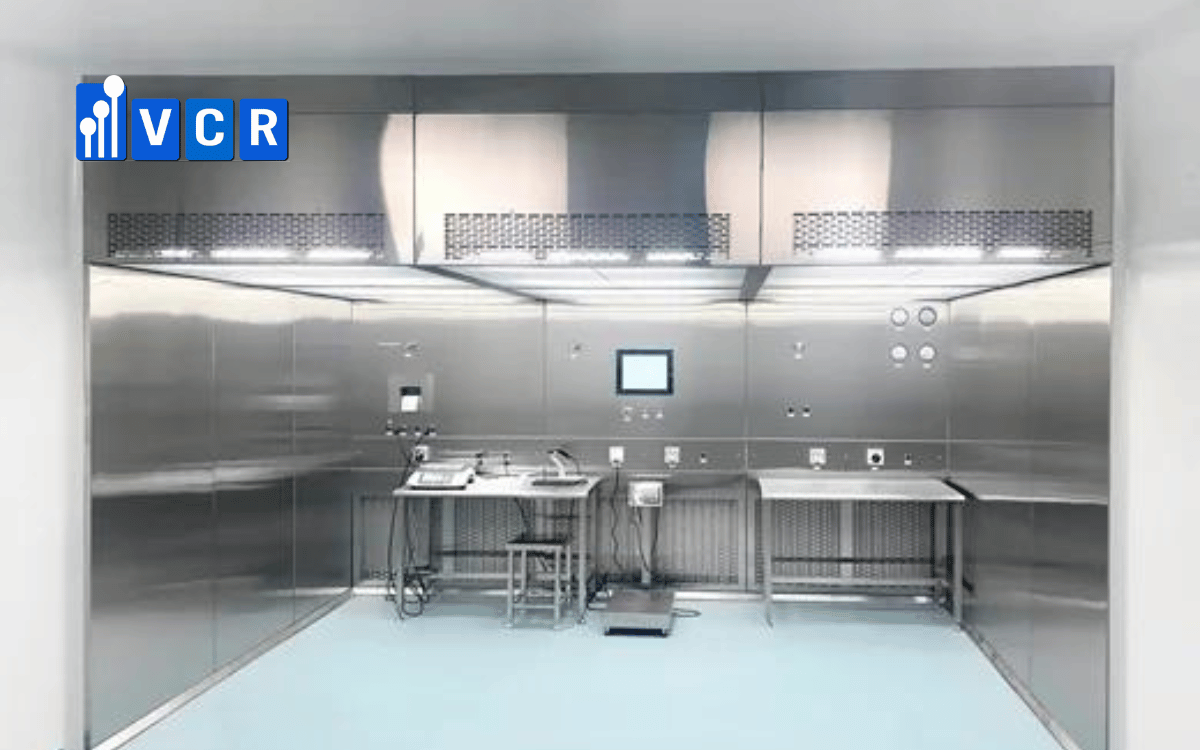
In powder raw material weighing areas, suitable equipment is usually a Dispensing Booth or a LAF Weighing Booth with effective return air, possibly using the RLAF principle. This area generates dust when bags are opened, powder is collected, powder is poured, and quantities are weighed. Therefore, the equipment needs both sufficient working space and source dust-control capability. If only clean-air supply is used without good dust collection, dust may still spread outward.
In raw material sampling areas, the choice depends on the scale of operation. If samples are taken from bags or small containers, a LAF Weighing Booth or Sampling Booth with a suitable configuration may be sufficient. If the material is easily dispersed or has exposure risks, the equipment should emphasize return air and dust collection, similar to the RLAF principle. If potent active ingredients are sampled, containment must also be evaluated.
In active ingredient handling areas, risk is usually higher. API stands for Active Pharmaceutical Ingredient. With powdered APIs, dust may affect operators and the environment. RLAF or a Dispensing Booth with a good dust-collection principle may be considered. However, if the active ingredient has high toxicity or a low exposure limit, more enclosed equipment such as an isolator or specialized containment system may be required.
In laboratories, if the main objective is to protect samples from environmental dust and the samples do not generate dust, standard LAF may be more suitable. However, if operators divide powder samples, grind samples, weigh powder samples, or handle easily dispersed materials, a LAF Weighing Booth or equipment with a dust-collection mechanism is more appropriate. Therefore, laboratories should not automatically use only one equipment type.
In cosmetics, weighing booths or Dispensing Booths are often used for color powders, base powders, powdered fragrances, or additives. With color powders, color residue and visual cross-contamination risks are relatively high. The equipment must be easy to clean and reduce dust spread into the room.
In nutraceutical production, the equipment may be used for powdered extracts, vitamins, minerals, enzymes, or probiotics. Enzymes are biological catalysts, while probiotics are beneficial microorganisms. These materials may be lightweight powders, easily airborne, or adhesive, so dust control and cleaning are important.
Thus, no single device is suitable for every area. LAF Weighing Booth, Dispensing Booth, or RLAF should be selected according to material type, dust-generation level, operating procedure, weighing scale, protection objective, and GMP requirements.
When Should a LAF Weighing Booth Be Selected?
A LAF Weighing Booth should be selected when the factory needs cleanroom weighing equipment for weighing, sampling, or handling powdered materials with controlled airflow and filtration. This term is suitable in general communication or when the equipment is designed as a cleanroom weighing booth with a HEPA Filter, fan, working zone, and return air.
A LAF Weighing Booth is suitable for areas such as raw material weighing rooms, sampling areas, powder preparation areas, excipient weighing areas, color powder weighing areas, or laboratories handling powder. However, because this term is broad, the equipment configuration should be clarified from the beginning. Purchase requirements should not simply state “LAF Weighing Booth” without describing the airflow diagram and inspection criteria.
When selecting a LAF Weighing Booth, information should be requested on the airflow diagram, supply-air direction, return-air direction, working-zone dimensions, HEPA Filter grade, pre-filter, medium filter if applicable, air velocity, airflow volume, differential pressure, construction material, noise level, illumination, and cleanability. If used for powder weighing, special attention should be given to whether return air is sufficient to collect generated dust.
A LAF Weighing Booth must also fit the layout. The equipment needs enough space for scales, raw material bags, containers, and operator movement. If the working zone is too small, operators may work outside the controlled zone. If return air is located where it is easily blocked, dust may not be collected effectively.
In other words, a LAF Weighing Booth is suitable when a weighing or sampling device is needed in a cleanroom, but the name must be accompanied by clear technical specifications. Selection should be based on airflow principle and process use, not only on terminology.
When Should a Dispensing Booth Be Selected?
A Dispensing Booth should be selected when the main operation is weighing, distributing, or preparing raw materials by batch in a dispensing area. This is a suitable choice for pharmaceutical, nutraceutical, cosmetic, or chemical factories that have a defined raw material weighing area and need equipment to support GMP-compliant dispensing operations.
A Dispensing Booth is suitable when operators need to open raw material bags, pour powder, weigh quantities, dispense materials into containers, label them, and transfer materials to the next process. Therefore, the equipment must be designed according to real operations. A good Dispensing Booth does not only need a HEPA Filter, but also a sufficiently large working zone, proper scale position, unobstructed return air, and easy-to-clean surfaces.
A Dispensing Booth should be selected when the application area is clearly a raw material weighing or material preparation area before production. This term helps all parties understand that the equipment is not merely a clean-air box but part of the dispensing process. This is especially important in pharmaceutical factories, where batch records, material dosing, post-weighing cleaning, and cross-contamination control are closely connected.
When selecting a Dispensing Booth, layout, personnel flow, material flow, raw material bag size, scale type, container size, dust-generation level, cleanliness class, return-air system, HEPA Filter, differential pressure, cleanability, and qualification criteria should be reviewed. If the material is a high-risk active ingredient, containment and safe filter replacement should also be evaluated.
A Dispensing Booth is suitable when the objective is not only dust control, but also supporting the whole raw material dispensing operation in an organized, controlled, and qualifiable way.
When Should RLAF Be Selected?
RLAF should be selected when the focus is controlling dust generated from the working zone and collecting dust at the source. RLAF is suitable when operators handle powder raw materials, active ingredients, granular chemicals, color powders, or easily dispersed materials, especially when the objective is reducing dust moving toward operators and reducing dust spreading into the surrounding environment.
RLAF is selected according to airflow principle rather than process name. This means RLAF can be used not only in dispensing areas but also in sampling areas, laboratories, powdered chemical handling areas, or localized dust-generation points. If an area has source dust risk but is not necessarily a batch raw material dispensing area, RLAF may still be suitable.
RLAF should be selected when the main project question is: how can generated dust be drawn into the return-air area? In this case, the airflow path, return-air grille position, operator position, dust-generation zone, and smoke testing capability should be reviewed. If smoke testing shows that smoke is properly drawn toward return air, the equipment has a stronger basis for effective operation.
However, RLAF is not a solution for every risk. If the main contaminant is chemical vapor, toxic gas, or solvent vapor, a Fume Hood or specialized exhaust treatment system should be considered. If operators handle high-risk active ingredients, containment, PPE, safe filter replacement, and possibly more enclosed equipment such as an isolator must be evaluated.
In short, RLAF should be selected when the main risk is dust generated at the working zone and the main objective is dust collection, operator protection, and environmental protection. If the equipment must also support batch raw material dispensing, a Dispensing Booth using the RLAF principle may be the suitable choice.
Quick Comparison Table: LAF Weighing Booth, Dispensing Booth, and RLAF
|
Criteria |
LAF Weighing Booth |
Dispensing Booth |
RLAF |
|
Terminology |
Common term for a weighing booth with controlled airflow and filtration |
Application-based term for raw material dispensing |
Principle-based term for Reverse Laminar Air Flow |
|
Main focus |
Weighing, sampling, or powder handling in cleanrooms |
Dispensing area, raw material weighing, batch material preparation |
Collecting dust generated at the working zone |
|
Main objective |
Dust control depending on configuration; support a cleaner working zone |
Support dispensing operations and reduce cross-contamination risk |
Protect operators and the environment from dust dispersion |
|
Airflow principle |
Depends on design; may supply clean air and/or include return air |
Depends on design; may use downflow, rear/lower return air, or RLAF-like configuration |
Emphasizes reverse laminar airflow and dust collection through return air |
|
Application areas |
Weighing area, sampling area, laboratory, powder handling |
Raw material weighing area, dispensing area, pre-production material preparation |
Localized dust-generation areas, powder weighing, sampling, active ingredient handling |
|
Common construction |
Booth body, working zone, fan, filters, HEPA, return air, control panel |
Similar, but focuses on space for scales, bags, containers, and dispensing workflow |
Similar, but focuses on return-air path and dust-collection airflow direction |
|
Advantages |
Familiar term, easy to use in project communication |
Closely matches raw material dispensing process |
Clear dust-control principle at the source |
|
Limitations |
Broad term; actual configuration must be checked |
Does not automatically define airflow principle without diagram |
Does not automatically define dispensing application if only named RLAF |
|
Selection note |
Require actual airflow diagram and qualification criteria |
Must match weighing process and layout |
Confirm return-air direction, smoke test, and containment level |
|
Qualification focus |
Air velocity, differential pressure, HEPA leak testing, particle testing, smoke testing if required |
Similar, plus realistic operation checks in weighing area |
Strong focus on smoke testing, return air, and dust-collection capability |
This table is for orientation only. In practice, one device may belong to several groups at once. For example, a device used in a raw material weighing area may be called a Dispensing Booth; if the local market commonly calls it a LAF Weighing Booth, that name may also be used; if the equipment uses reverse laminar airflow to collect dust, it may also be described as RLAF.
Therefore, the final selection must be based on the URS, layout, material type, dust-generation level, protection objective, and actual test results. The name is only the starting point, not the only basis for evaluating equipment performance.
Criteria for Selecting Suitable Equipment for Cleanroom Dust Control
When choosing between LAF Weighing Booth, Dispensing Booth, and RLAF, the first criterion is the dust source. If dust is generated from the material itself during bag opening, powder pouring, weighing, or sampling, the equipment needs source dust-collection capability. If the main risk is environmental dust affecting the sample or product, clean-air supply may be prioritized. Identifying the dust source helps avoid selecting the wrong principle.
The second criterion is material type. Fine powders, lightweight powders, color powders, active ingredients, excipients, granular chemicals, or adhesive materials have different dispersion levels. The more easily a material disperses, the higher the requirements for return air, air velocity, cleaning, and airflow testing. For high-risk active ingredients, containment must also be evaluated.
The third criterion is the protection objective. If operator protection from dust is prioritized, return air and smoke testing should be emphasized. If product protection from environmental dust is prioritized, the HEPA Filter and particle testing should be emphasized. If environmental protection of the cleanroom is prioritized, dust dispersion reduction and post-operation cleaning should be emphasized.
The fourth criterion is layout and operating procedure. The equipment must fit personnel flow, material flow, scale position, raw material bag size, containers, trolleys, and cleaning space. Equipment with good technical specifications may still perform poorly if installed in the wrong location. The equipment should be placed according to the dust-generation point, not merely in the remaining available space.
The fifth criterion is the working zone. The working zone must be large enough for real operations. If the booth is too small, operators may work outside the controlled area. If the return-air area is easily blocked by bags or containers, dust will not be collected effectively. Realistic operation should be simulated during evaluation.
The sixth criterion is the filtration system and airflow parameters. The HEPA Filter, pre-filter, medium filter, air velocity, airflow volume, differential pressure, HEPA leak testing capability, and filter-replacement plan should be reviewed. Airflow that is too weak cannot collect dust, while airflow that is too strong may disperse powder more.
The final criteria are construction material, cleanability, noise level, illumination, maintenance clearance, and qualification documentation. Cleanroom equipment should be easy to clean, have minimal gaps and dead corners, provide sufficient lighting, have acceptable noise levels, and include complete documentation.
As a cleanroom equipment supplier for cleanroom contractors, VCR Cleanroom Equipment can support consultation on LAF Weighing Booth, Dispensing Booth, or RLAF configurations suitable for each project, based on material type, layout, cleanliness class, control objective, and qualification criteria.
Key Considerations During Qualification of LAF Weighing Booth, Dispensing Booth, and RLAF
Qualification of LAF Weighing Booth, Dispensing Booth, and RLAF should not stop at confirming that the equipment runs. A running fan, working lights, and active control panel are not enough to prove effective dust control. Qualification should be based on criteria defined in the URS. URS stands for User Requirement Specification.
The first step is visual and installation inspection. Construction material, dimensions, surface finish, installation position, working zone, scale position, return-air position, maintenance clearance, and compliance with approved drawings should be checked. The equipment must fit the layout and must not obstruct personnel flow, material flow, or cleaning.
Next is functional testing. Power supply, control panel, fan, lighting, alarms if available, and differential pressure gauge should be checked. The fan must operate stably without abnormal vibration or noise. Lighting must be sufficient for weighing or sampling operations. The differential pressure gauge must display clearly so filter condition can be monitored.
Airflow parameters should then be tested. Air velocity should be measured at representative locations in the working zone. If airflow volume is required, it should be tested using an appropriate method. It is not appropriate to measure only one convenient point and conclude that the entire device passes.
HEPA leak testing checks for leakage in the HEPA Filter. If required by the qualification scope, this test confirms that the HEPA Filter, filter frame, and gasket have no leakage points. Particle testing measures airborne particles and helps evaluate particle levels in the working zone or related area while the equipment is operating.
Smoke testing uses smoke and is very important for dust-control equipment. This test helps observe whether smoke is drawn toward the return-air area, whether it is pushed outward, and whether dead zones or turbulence exist. For RLAF or a Dispensing Booth used for powder weighing, smoke testing is a visual tool for confirming the dust-collection principle.
Finally, handover documentation should be checked. Documentation should include drawings, airflow diagram, technical specifications, operating instructions, cleaning instructions, maintenance instructions, filter certificates if available, test results, and qualification records. Equipment should only be released for use when both physical equipment and documentation meet requirements.
Common Mistakes When Confusing These Three Devices
The first mistake is assuming that LAF Weighing Booth, Dispensing Booth, and RLAF are exactly the same device. In practice, the three terms may overlap but are not absolute synonyms. LAF Weighing Booth is a common term, Dispensing Booth is application-based, and RLAF is airflow-principle-based.
The second mistake is selecting equipment by name instead of airflow diagram. The equipment name does not show where dust will go. It is necessary to review where air is supplied from, where air returns, where the operator stands, and whether generated dust is drawn toward the return-air area.
The third mistake is focusing only on HEPA H14. HEPA H14 has high filtration efficiency, but if the fan is unsuitable, return air is blocked, the filter is not sealed, or air velocity is incorrect, the equipment may still control dust poorly. The HEPA Filter is only one part of the system.
The fourth mistake is selecting a working zone that is too small. Raw material weighing areas need enough space for scales, raw material bags, containers, and operator movement. If the working zone is too small, users may work outside the controlled area or block return air.
The fifth mistake is placing raw material bags or containers in a way that blocks return air. When return air is blocked, dust is not drawn in the correct direction. This is a very common operating error, especially in powder weighing areas.
The sixth mistake is using dust-control equipment for chemical vapor. If the main risk is toxic vapor, gas, or solvent vapor, standard LAF Weighing Booth, Dispensing Booth, or RLAF is not the correct solution. A Fume Hood or specialized exhaust treatment system should be considered.
The seventh mistake is not evaluating containment for high-risk active ingredients. If handling highly potent APIs, exposure, safe filter replacement, PPE, and more enclosed equipment must be considered.
The final mistake is not performing smoke testing and not keeping maintenance records. Without airflow visualization and post-use monitoring, the factory cannot easily prove that the equipment remains in a controlled state.
FAQ – Frequently Asked Questions About LAF Weighing Booth, Dispensing Booth, and RLAF
Question: Are LAF Weighing Booth, Dispensing Booth, and RLAF the same?
These three concepts may overlap but are not completely the same. LAF Weighing Booth is a common term for a weighing booth with controlled airflow and filtration. Dispensing Booth is an application-based term for raw material dispensing. RLAF is a principle-based term for reverse laminar airflow used to collect dust.
Question: Is a LAF Weighing Booth the same as a Dispensing Booth?
A LAF Weighing Booth may function as a Dispensing Booth if it is used for raw material dispensing. However, Dispensing Booth emphasizes the dispensing-area application, while LAF Weighing Booth is a broader term.
Question: Is a Dispensing Booth the same as RLAF?
Not every Dispensing Booth is RLAF. A Dispensing Booth may use the RLAF principle if its airflow design collects dust using reverse laminar airflow. The airflow diagram must be reviewed to confirm this.
Question: How is RLAF different from a LAF Weighing Booth?
RLAF is an airflow-principle term emphasizing collection of dust generated at the working zone. LAF Weighing Booth is a common term for a weighing booth with controlled airflow and filtration. A LAF Weighing Booth may use the RLAF principle, but this should not be assumed without reviewing the design.
Question: Which equipment should be used for a raw material weighing area?
A powder raw material weighing area usually needs a Dispensing Booth or LAF Weighing Booth with effective return air, possibly using the RLAF principle. The specific selection depends on material type, dust level, weighing scale, layout, and GMP requirements.
Question: Should a raw material sampling area use a LAF Weighing Booth or RLAF?
If powdered raw materials are sampled and dust is generated, the equipment must collect dust effectively. A LAF Weighing Booth, Sampling Booth, or RLAF may be used depending on operation scale and material risk. The airflow diagram and protection objective must be reviewed.
Question: Does the HEPA Filter determine dust-control performance?
The HEPA Filter is important but does not determine the entire performance. Dust control also depends on the fan, return air, air velocity, airflow volume, filter sealing, working zone, and operating method.
Question: Is smoke testing necessary during qualification?
Smoke testing is very useful and should be considered during qualification of dust-control equipment. This test helps observe whether smoke is drawn toward return air, whether it escapes outward, and whether dead zones or turbulence exist.
Question: What equipment should be selected for high-risk active ingredients?
For high-risk active ingredients, containment, exposure, filter replacement procedures, PPE, and GMP requirements must be evaluated. Standard LAF Weighing Booth, Dispensing Booth, or RLAF may not be sufficient; in some cases, more enclosed equipment such as an isolator may be required.
Question: What should contractors consider when advising on these three devices?
Contractors should identify the process, material type, dust source, protection objective, layout, airflow direction, return-air area, HEPA grade, working-zone size, cleanability, and qualification criteria. Equipment should not be recommended based only on its name.
Conclusion: Select by Risk and Airflow Principle, Not Only by Name
LAF Weighing Booth, Dispensing Booth, and RLAF overlap significantly in cleanroom dust control, but they differ in terminology, application scope, and technical focus. LAF Weighing Booth is a common term for a weighing booth with airflow and filtration. Dispensing Booth is an application-based term for raw material dispensing. RLAF is a principle-based term for reverse laminar airflow used to collect dust at the source.
The correct selection should not begin with which name sounds better, but with the actual risk: where dust is generated, what material is handled, where the operator stands, whether the product needs protection, where return air goes, whether the equipment is easy to clean, and what qualification criteria are required.
When equipment is selected according to dust source, material type, protection objective, airflow direction, return-air area, HEPA Filter, working zone, cleaning, maintenance, and GMP qualification criteria, the cleanroom can control dust more effectively, reduce cross-contamination risk, and operate more stably.
Hải VCR