- Why Is a LAF Weighing Booth Important in Pharmaceutical Factories?
- What Is a LAF Weighing Booth in a Pharmaceutical Factory?
- Where Is a LAF Weighing Booth Commonly Used in Pharmaceutical Factories?
- Operating Principle of a LAF Weighing Booth in Pharmaceutical Cleanrooms
- What Components Does a LAF Weighing Booth in a Pharmaceutical Factory Include?
- The Role of the HEPA Filter and Filtration System in a LAF Weighing Booth
- How Does a LAF Weighing Booth Control Dust in a Pharmaceutical Factory?
- The Role of a LAF Weighing Booth in Pharmaceutical Cross-Contamination Control
- How Does a LAF Weighing Booth Protect Operators, Products, and the Environment?
- How Is a LAF Weighing Booth Different from Standard LAF, RLAF, and Dispensing Booth?
- Practical Applications of LAF Weighing Booths in Pharmaceutical Factories
- Criteria for Selecting a Suitable LAF Weighing Booth for Pharmaceutical Factories
- Key Considerations When Installing a LAF Weighing Booth in Pharmaceutical Cleanrooms
- What Should Be Checked During LAF Weighing Booth Qualification?
- Cleaning and Maintenance of a LAF Weighing Booth After Operation
- Common Mistakes When Using a LAF Weighing Booth in Pharmaceutical Factories
- FAQ – Frequently Asked Questions About LAF Weighing Booths in Pharmaceutical Factories
- Conclusion: A LAF Weighing Booth Is Important Equipment for Pharmaceutical Dust Control
- CTA – Consulting on LAF Weighing Booth Selection for Pharmaceutical Factories
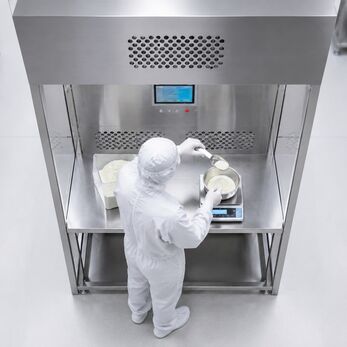
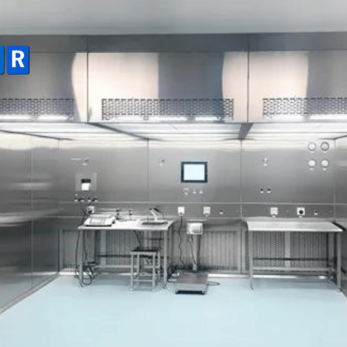
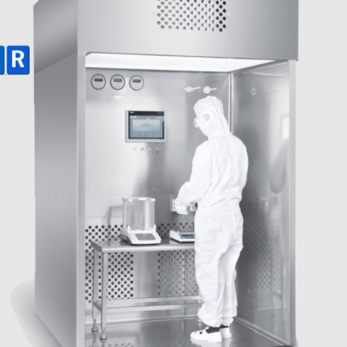
A LAF weighing booth is cleanroom equipment used in pharmaceutical factories in areas such as raw material weighing, sampling, excipient preparation, or handling powdered active ingredients. The equipment creates a controlled working zone through a fan system, HEPA filtration, airflow, and return air, helping reduce dust dispersion, support cross-contamination control, and maintain operating conditions suitable for GMP requirements.
In pharmaceutical manufacturing, dust is not merely a surface-cleanliness issue. Dust can carry active ingredients, excipients, or raw materials from one production batch, then settle on equipment, tools, intermediate packaging, operator garments, or surrounding areas. If not properly controlled, dust may increase cross-contamination risk, affect product quality, and create exposure risks for operators. Therefore, a LAF weighing booth should be viewed as a localized contamination-control point in pharmaceutical cleanrooms, not simply as a device with a fan and filter.
Why Is a LAF Weighing Booth Important in Pharmaceutical Factories?
In pharmaceutical factories, the raw material weighing area is often one of the areas with the highest risk of dust generation. When operators open raw material bags, take powder, pour powder into containers, weigh materials, or divide materials according to a production formula, fine dust particles may become airborne. With ordinary excipients, dust may contaminate the working area. With pharmaceutical active ingredients, dust may also be related to exposure risk and cross-contamination.
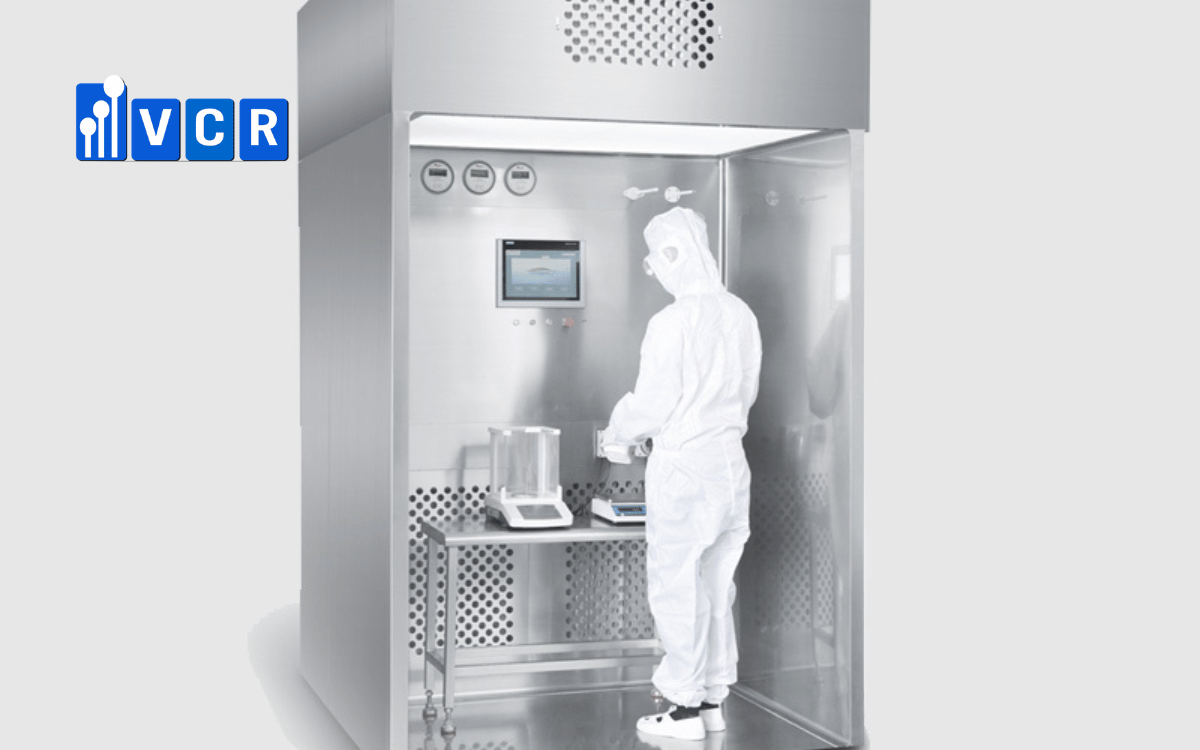
A LAF weighing booth is important because it creates a controlled working zone at the point where dust is generated. Instead of allowing operators to weigh materials directly in the room, the booth helps define the operating area, control airflow direction, and direct dust-laden air toward the return-air area or filtration system according to the design. As a result, dust has less opportunity to spread widely into the surrounding area.
In a GMP environment, GMP stands for Good Manufacturing Practice. Dust control is related to several objectives at the same time. The first objective is product quality. If dust from one material remains and mixes with another material, cross-contamination risk may occur. The second objective is operator safety. If active ingredient dust or irritating material dust disperses toward the operator, exposure may increase. The third objective is the cleanroom’s state of control. If dust spreads to floors, walls, equipment, and movement routes, cleaning becomes more difficult and the cleanroom environment may be affected.
A LAF weighing booth also helps make the operating process more organized. The factory can clearly define where the scale is placed, where raw material bags are placed, where containers are positioned, how operators should work inside the controlled zone, how cleaning should be performed after weighing, and how records should be maintained. When the equipment is correctly positioned in the cleanroom layout, the weighing booth becomes part of the contamination-control system instead of simply being an added device.
For cleanroom contractors, the LAF weighing booth should be considered from the design stage. The equipment is related to personnel flow, material flow, room pressure, HVAC, scale position, maintenance clearance, and cleaning procedures. If the equipment is selected only after the room has been completed, problems may arise, such as insufficient operating space, blocked return air, disturbed airflow, or an installation position that does not suit the production process.
Therefore, a LAF weighing booth plays an important role in pharmaceutical factories because it helps control dust at the source, reduce cross-contamination risks, support operator protection, and contribute to maintaining more stable cleanroom conditions.
What Is a LAF Weighing Booth in a Pharmaceutical Factory?
A LAF weighing booth is equipment that creates a controlled working zone using filtered airflow, commonly used in weighing, sampling, or powder-handling areas in pharmaceutical factories. LAF stands for Laminar Air Flow. Laminar airflow can be understood as airflow organized in a relatively stable direction, helping control the air path within the working zone.
In practice, the term “LAF weighing booth” may be used quite broadly. Some factories call it a raw material weighing booth. Some technical documents use the term weighing booth. In some cases, it may be called a dispensing booth, meaning a booth for weighing, dispensing, or distributing materials. If the equipment is mainly used for material sampling, it may be called a sampling booth. These names may vary depending on the supplier, the factory’s terminology, or the specific application.
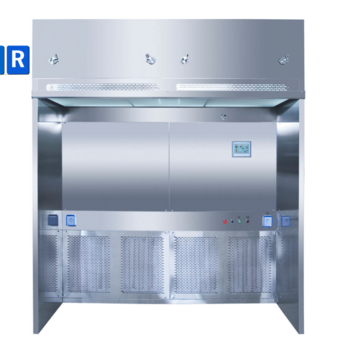
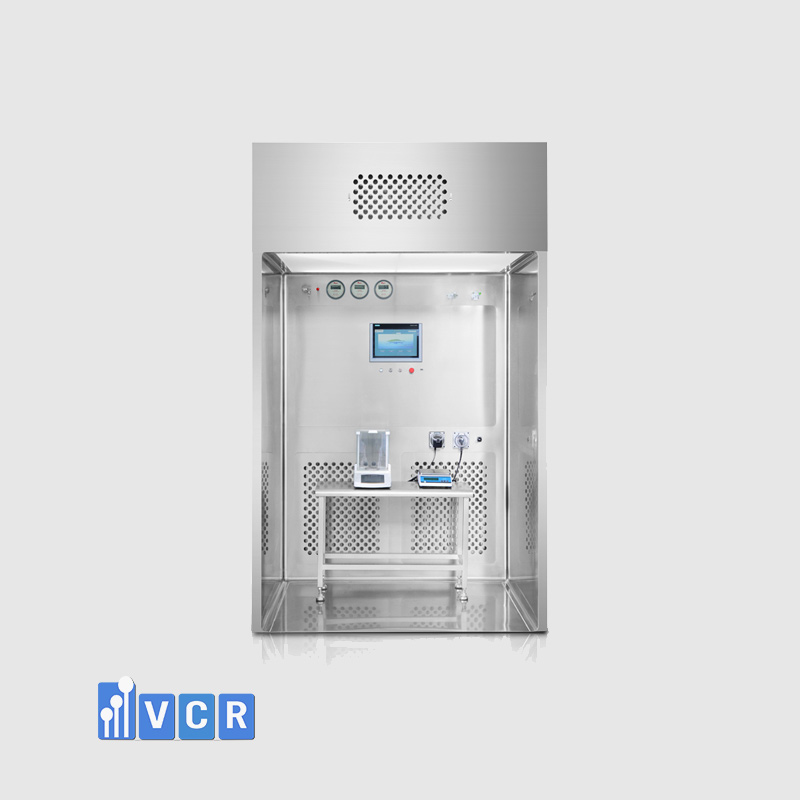
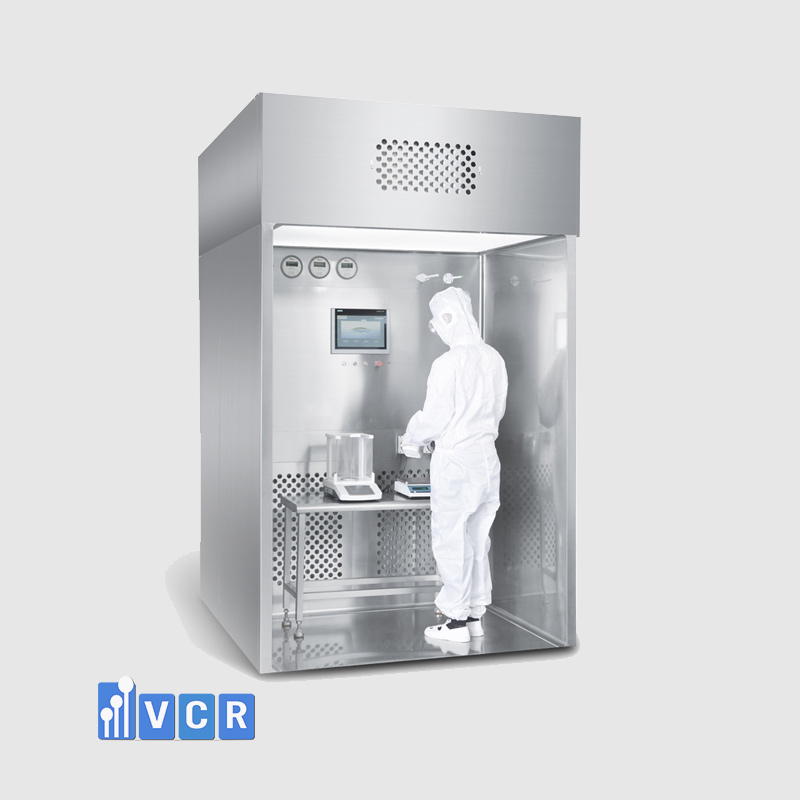
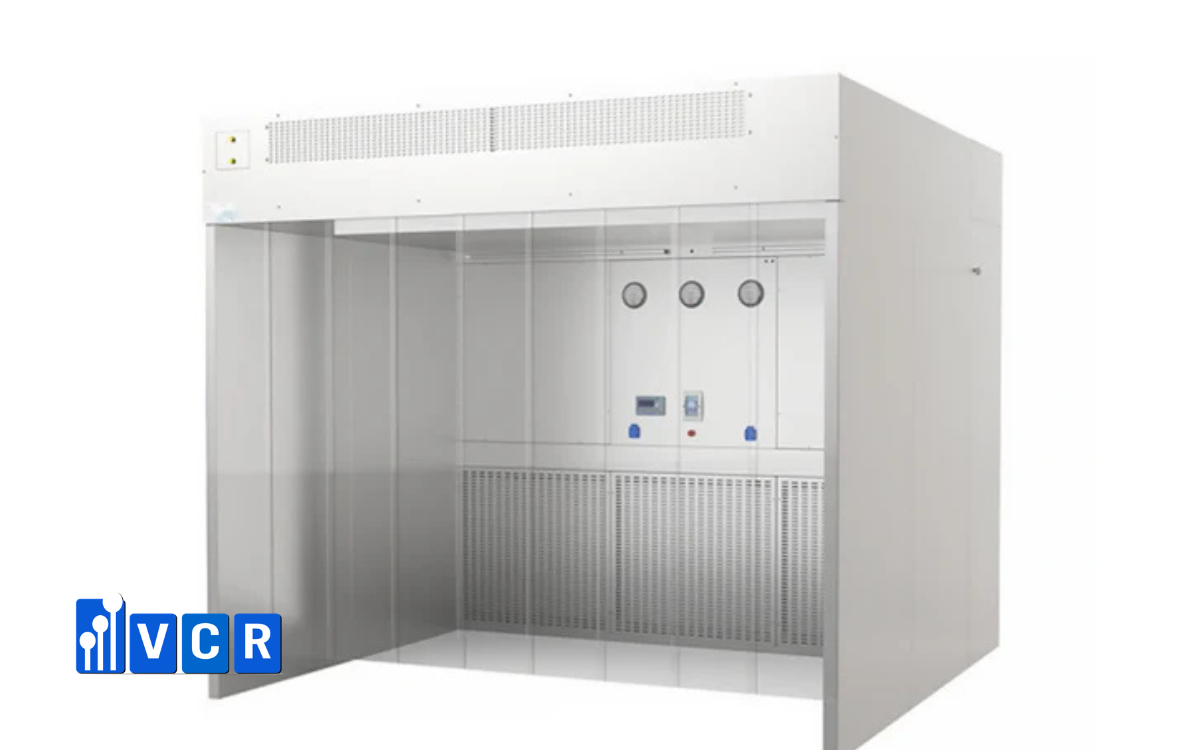
In pharmaceutical factories, a LAF weighing booth is generally understood as equipment consisting of a booth body, working zone, fan, filtration system, HEPA Filter, return-air area, differential pressure gauge, control panel, and lighting. The equipment is used to support raw material weighing in a controlled environment, especially when the material is in powder form, easily dispersed, or adhesive.
However, a LAF weighing booth should be distinguished from standard LAF. Standard LAF is usually used to supply clean air to protect samples, products, or tools from environmental dust. The main focus of standard LAF is product protection or sample protection. In contrast, a weighing booth used for powder weighing in pharmaceutical factories does not only need clean air; it also needs to control dust generated from the raw material itself. If the equipment only blows clean air but does not collect dust in the correct direction, dust may still escape outward.
A LAF weighing booth should also be distinguished from RLAF. RLAF stands for Reverse Laminar Air Flow, meaning reverse laminar airflow. RLAF usually emphasizes collecting dust generated at the working zone and directing dust-laden air toward the return-air area or filtration system. In practice, some LAF weighing booths may use a principle close to RLAF, especially when the main objective is source dust control. Therefore, when selecting equipment, it is not enough to rely only on the name. The airflow diagram, return-air direction, protection objective, and qualification criteria must be reviewed.
In short, a LAF weighing booth in a pharmaceutical factory is equipment that supports weighing, sampling, or powder-handling operations inside a controlled airflow zone. The equipment should be evaluated based on airflow principle, filtration system, working zone, cleanability, and suitability for the GMP process.
Where Is a LAF Weighing Booth Commonly Used in Pharmaceutical Factories?
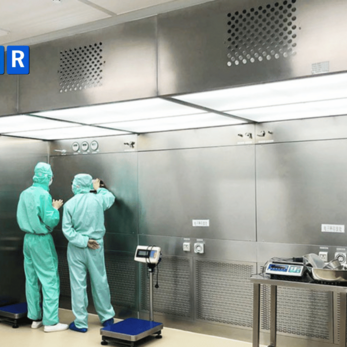
A LAF weighing booth is used in many areas of pharmaceutical factories, but the most common application is the raw material weighing area. This is where incoming materials are weighed according to the production formula before being transferred to subsequent processes. When bags are opened, powder is scooped, powder is poured, or material is transferred into containers, dust may be generated directly at the working zone. The weighing booth helps control dust at this generation point.
Incoming raw material sampling areas are also common locations for LAF weighing booths or equipment with a similar principle. When materials are received, the quality control or QA department may need to take samples for testing. Opening bags, opening containers, or inserting sampling tools into powdered raw materials can cause dust dispersion. If the sampling area handles many different raw materials, residual dust may increase the risk of sample mix-up or contamination in the sampling area.
Excipient preparation areas may also require LAF weighing booths. Excipients are supporting components in drug formulations and may exist as powders, granules, or easily dispersed materials. When excipients are weighed, dust may be less hazardous than active ingredient dust, but it can still affect cleanliness, room classification, and cross-contamination risk between formulas.
Active ingredient handling areas require more careful evaluation. API stands for Active Pharmaceutical Ingredient. With powdered APIs, dust may affect operators and the environment if dispersed. A LAF weighing booth may support dust control, but if the active ingredient has high toxicity or very low exposure limits, the factory must also evaluate containment. Containment means the ability to control contaminants within an acceptable boundary. In some cases, isolation equipment such as an isolator or a closed system may be more suitable than a standard weighing booth.
A LAF weighing booth may also be used in powder division areas before production, micro-weighing areas, or quality control laboratories where powder samples are handled. For micro-weighing, additional attention must be given to airflow and vibration effects on scale stability. If airflow is too strong or unstable, weighing results may be affected. Therefore, equipment used for micro-weighing must be designed and checked more carefully.
Depending on the area, the requirements for a LAF weighing booth will differ. A raw material weighing area needs a wide working space with enough room for bags, scales, trays, and containers. A sampling area must focus on the bag-opening point and sampling tools. An active ingredient area must place greater emphasis on exposure, cleaning, and filter replacement. Therefore, the same weighing booth configuration should not be used for every area; selection should be based on actual risk.
Operating Principle of a LAF Weighing Booth in Pharmaceutical Cleanrooms
The operating principle of a LAF weighing booth is based on organizing airflow inside the working zone to control generated dust and particles. Airflow means the movement of air. In the weighing booth, air is drawn or supplied by a fan through the filtration system, then passes through the working zone according to the equipment design. Depending on the configuration, air may be supplied from top to bottom, from back to front, or recirculated through a return-air and filtration system.
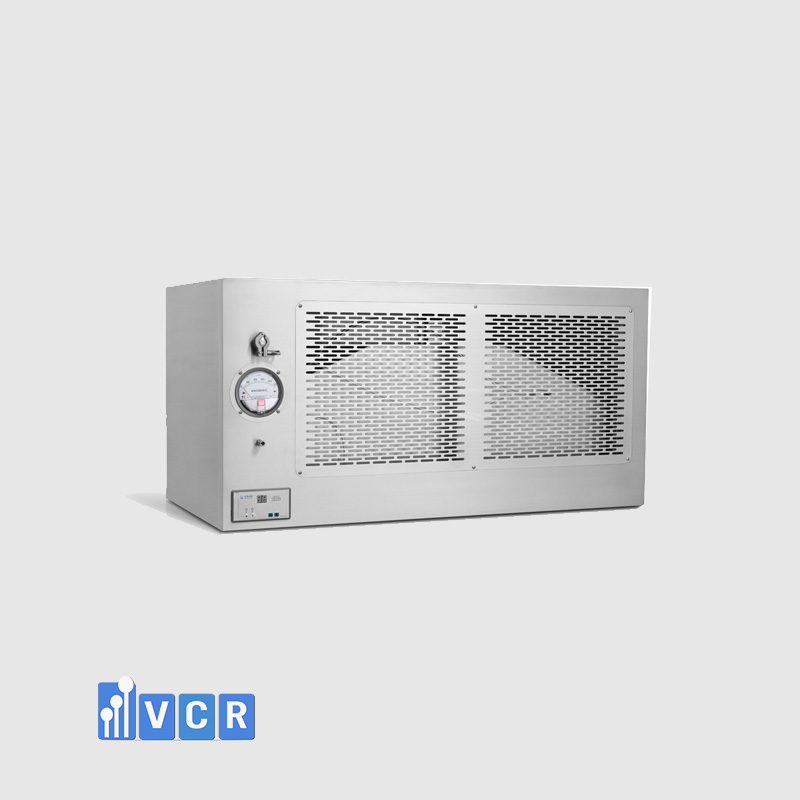
HEPA Filter stands for High Efficiency Particulate Air. A HEPA Filter captures fine particles in the airflow. In a LAF weighing booth, the HEPA Filter may be located in the supply-air path, return-air path, or recirculation system depending on the design. The role of the HEPA Filter is to reduce the number of particles in the airflow and support a controlled working zone.
However, the correct principle of a LAF weighing booth in a pharmaceutical factory is not only to supply clean air. If the booth only blows clean air into the working zone without a suitable return-air direction, dust generated from powders may be carried outward. Therefore, the key requirement is that airflow must be organized so that generated dust is directed toward the collection area instead of spreading into the room or moving toward the operator.
Return air means air drawn back into the system. In a weighing booth used for powder weighing, return air plays an important role because dust-laden air must be drawn into the return-air zone. The return-air area may be a return-air grille, return-air surface, or return-air chamber. If the return-air area is properly arranged, dust generated during weighing, pouring, or sampling tends to move toward the filtration system instead of dispersing outward.
Downflow means airflow from top to bottom. Some weighing booths use a downflow configuration to supply clean air from above the working zone. This configuration may help create a clean-air zone, but in powder weighing applications, it is necessary to check where the air goes after passing through the working zone. If air flows downward and then escapes toward the front or is disturbed by containers, dust may not be collected properly.
In real operation, operators often place scales, raw material bags, containers, and trays in the working zone. These objects may change the airflow path. If containers or raw material bags block the return-air area, dust will be more difficult to draw into the filtration system. Therefore, the operating principle of the weighing booth cannot be separated from the actual arrangement of the operation.
Smoke testing uses smoke to observe airflow direction. During LAF weighing booth qualification, smoke testing helps confirm whether smoke or simulated dust is drawn toward the return-air area, whether it is pushed outward, whether dead zones exist, and whether turbulence occurs. A dead zone is an area where airflow is weak or poorly exchanged. Turbulence means disturbed airflow. This is a very useful test for evaluating the weighing booth under realistic operating conditions.
Thus, the operating principle of a LAF weighing booth in pharmaceutical cleanrooms is the coordination of the fan, filters, airflow, return-air area, and working zone. The equipment only performs effectively when airflow moves in the correct direction, dust is collected at the correct point, and operators work within the controlled zone.
What Components Does a LAF Weighing Booth in a Pharmaceutical Factory Include?
A LAF weighing booth in a pharmaceutical factory usually includes several main components, each playing a specific role in creating a controlled working zone. The first component is the equipment body. The booth body is commonly made of easy-to-clean materials, often stainless steel. Stainless steel is widely used in cleanrooms because it has a smooth surface, is easy to wipe down, has low dust retention, and is suitable for GMP environments.
The working zone is where operators directly weigh, dispense, sample, or handle materials. This area must be designed according to the actual operating process. If the booth is used in a raw material weighing area, the working zone must have enough space for scales, raw material bags, containers, trays, and tools. If used in a sampling area, the working zone must match the bag-opening point and sampling tools.
The fan generates airflow. It helps air pass through the filtration system and maintain airflow inside the booth. The fan must have sufficient capacity to overcome filter resistance while maintaining suitable air velocity and airflow volume. If the fan is too weak, dust may not be collected. If the fan is too strong, powder may be disturbed more aggressively.
The filtration system often includes several stages. A pre-filter is a primary or coarse filter that captures large dust particles, fibers, and coarse impurities. A medium filter, if installed, captures smaller particles and reduces the load on the final filter. The HEPA Filter is a high-efficiency air filter used to capture fine particles in the airflow. Multiple filtration stages help the equipment operate more stably and extend the life of the HEPA Filter.
The return-air area collects dust-laden air back into the system. Return air may be arranged at the rear, bottom, sides, or another position depending on the design. This part is very important for a weighing booth used for powders. If return air is blocked by operating objects, dust will not be collected in the correct direction.
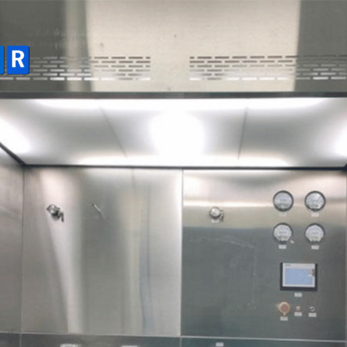
The differential pressure gauge monitors filter condition. Differential pressure means the pressure difference. When filters become dirty, differential pressure usually increases. If differential pressure is abnormally low, air leakage or poor filter installation may need to be checked. Some weighing booths include differential pressure alarms to support operation and maintenance.
The control panel is where operators turn the equipment on or off, monitor fan status, lighting, alarms, or display functions. Lighting must be sufficient for operators to read scale values, material labels, and observe residual dust. Illumination means lighting level.
In addition, the weighing booth may include power sockets for scales, utility ports, doors, curtains, or screens depending on requirements. In pharmaceutical applications, equipment construction must support operation, cleaning, maintenance, and qualification, not only external appearance.
The Role of the HEPA Filter and Filtration System in a LAF Weighing Booth
The filtration system is one of the most important components of a LAF weighing booth in pharmaceutical factories. HEPA Filter stands for High Efficiency Particulate Air. This filter captures fine particles in the airflow, supporting a controlled working zone and reducing the risk of particle dispersion into the surrounding area.
In a LAF weighing booth, the HEPA Filter may treat supply air or return air depending on the equipment configuration. If supply air passes through the HEPA Filter before entering the working zone, the weighing booth can create a cleaner airflow zone for materials or samples. If dust-laden air returns and passes through the filtration system, the HEPA Filter captures fine particles before the air is recirculated or treated further.
However, the filter grade alone should not be used to evaluate the weighing booth. HEPA H13 and HEPA H14 are high-efficiency filter grades commonly used in cleanroom equipment. But a higher filter grade does not automatically make the equipment control dust better if the fan lacks capacity, return air is incorrect, the working zone is blocked, or the filter is not sealed properly. The HEPA grade must match the control objective, cleanliness class, material type, and equipment configuration.
Pre-filters and medium filters also play important roles. A pre-filter captures large dust particles and reduces the load on downstream filters. A medium filter, if installed, captures smaller particles before air reaches the HEPA Filter. If the pre-filter is not checked or replaced at the right time, the HEPA Filter may quickly become dust-loaded, differential pressure may increase, and airflow volume may decrease. Therefore, filtration maintenance should consider the entire filter chain, not only the final filter.
Filter integrity means the overall integrity of the filter. A gasket is the sealing component. A good HEPA Filter that is not installed tightly may still allow air to bypass the filter. In that situation, the equipment may still have airflow, but actual filtration performance is not achieved. This is why HEPA leak testing is often considered during qualification or after filter replacement in areas requiring strict particle control.
Filter differential pressure should also be monitored. When filters become dirty, differential pressure usually increases. If differential pressure becomes too high, airflow volume may decrease. If differential pressure is abnormally low, it may be related to air leakage, poor filter installation, or air not passing through the filter correctly.
Therefore, the filtration system in a LAF weighing booth must be evaluated as a complete system, including the pre-filter, medium filter, HEPA Filter, fan, differential pressure, filter sealing, and maintainability. Only when these elements work together can the weighing booth maintain effective dust control in a pharmaceutical factory.
How Does a LAF Weighing Booth Control Dust in a Pharmaceutical Factory?
A LAF weighing booth controls dust by creating a working zone with organized airflow and filtration support. In pharmaceutical factories, dust is often generated when raw material bags are opened, powder is poured, materials are weighed, divided, sampled, or transferred into containers. If these operations take place outside a controlled zone, dust can spread into the cleanroom and settle on many surfaces.
When the weighing booth is properly designed, dust generated at the working zone is directed by airflow toward the return-air area or filtration system. As a result, dust does not disperse freely into the surrounding environment. This is an important difference between weighing inside a controlled booth and weighing directly in the room.
Air velocity means airflow speed. Air velocity directly affects the ability to draw dust into the return-air area. If air velocity is too low, dust may not be collected effectively, causing it to remain suspended inside the working chamber or escape outward. If air velocity is too high, especially with fine or lightweight powders, airflow may disturb the powder and create more dust. Therefore, stronger airflow is not always better. Airflow must move in the correct direction and at the correct level.
Airflow volume means the amount of air the equipment processes per unit of time. If the working zone is large but airflow volume is insufficient, dust in areas far from return air may not be collected. If airflow volume is too high but poorly distributed, it may create turbulence and affect weighing operations.
Dust control also depends on operator behavior. If operators place raw material bags or containers in a way that blocks the return-air grille, dust will be harder to draw into the system. If powder is poured near the outer edge of the controlled zone, dust may escape into the room. If cleaning after weighing is incomplete, residual dust may disperse again during the next use.
Therefore, a LAF weighing booth must be accompanied by clear operating instructions. Operators need to know where to place the scale, where to place raw material bags, how to avoid blocking return air, how to work inside the controlled zone, and how to clean after completing the operation. Good equipment can still perform poorly if operated incorrectly.
Smoke testing is a useful method for evaluating dust-control performance. By using smoke to simulate the path of dust, the factory can observe whether smoke is drawn toward return air, whether it escapes outward, or whether it swirls inside the working zone. The result helps verify the design and actual operating instructions.
Thus, a LAF weighing booth controls dust through the combination of airflow, return air, filtration, air velocity, airflow volume, working-zone design, and operating practice. No single factor can replace the complete control system.
The Role of a LAF Weighing Booth in Pharmaceutical Cross-Contamination Control
Cross-contamination occurs when dust, particles, or residues from one raw material, active ingredient, or product transfer to another material, tool, surface, or production batch. In pharmaceutical factories, the raw material weighing area is a notable cross-contamination risk because many different materials may be handled in the same space or across multiple production shifts.
A LAF weighing booth supports cross-contamination control by reducing dust dispersion outside the working zone. When dust is limited within a controlled zone and collected more effectively, the risk of dust settling on floors, walls, surrounding equipment, or other tools decreases. This helps make cleaning after weighing clearer and easier to control.
However, a LAF weighing booth does not automatically eliminate all cross-contamination risks. The equipment is only one part of the control system. Cross-contamination also depends on weighing procedures, production sequence, tool cleaning, material flow, operator garments, packaging management, batch records, and post-operation cleaning procedures.
Cleaning the weighing booth after each use is very important. If dust remains on the tabletop, return-air area, inner chamber walls, scale, trays, tools, or areas around the equipment, cross-contamination risk remains. For colored materials, odorous materials, potent active ingredients, or adhesive substances, even a small amount of residue can create problems. Therefore, weighing-booth design should minimize gaps, dead corners, and hard-to-clean locations.
Cleaning validation means documented confirmation that cleaning is effective. In some GMP areas, the factory must prove that the cleaning process is sufficiently effective to prevent impact on the next use. A weighing booth that is easy to clean supports this process better. Conversely, equipment with many hidden corners or hard-to-access return-air areas makes cleaning and cleaning validation more difficult.
For high-risk active ingredients, containment must also be evaluated. Containment means the ability to control contaminants within an acceptable boundary. A standard LAF weighing booth may not be sufficient if the active ingredient has high toxicity or very low exposure limits. In that case, the factory should consider more enclosed equipment, safe filter-replacement procedures, PPE, and additional protection solutions. PPE stands for Personal Protective Equipment.
Therefore, a LAF weighing booth plays an important role in pharmaceutical cross-contamination control by reducing dust dispersion and supporting cleaning. But final effectiveness depends on the coordination of equipment, operating procedures, cleaning, material flow, and GMP documentation.
How Does a LAF Weighing Booth Protect Operators, Products, and the Environment?
A LAF weighing booth can support three protection objectives in pharmaceutical factories: operator protection, product protection, and environmental protection. Operator protection means protecting the person performing the operation. Product protection means protecting the product. Environmental protection means protecting the surrounding environment. Each objective must be clearly understood in order to select the right equipment configuration.
For operators, the risk often comes from dust generated when handling powdered materials. When bags are opened, powder is poured, or active ingredients are divided, dust may move toward the operator’s face. If the equipment has suitable return air and correct airflow direction, dust-laden air is drawn toward the collection area, helping reduce dust dispersion toward the operator. However, for high-risk active ingredients, a weighing booth does not completely replace PPE or containment solutions.
For products or materials, a LAF weighing booth can support protection by supplying filtered air into the working zone. If the HEPA Filter and airflow are properly designed, the weighing zone may experience less impact from environmental dust. This is especially important when handling sensitive materials or when the weighing area is located in a cleanroom with particle-control requirements.
For the cleanroom environment, the weighing booth helps reduce dust spreading into the surrounding area. When dust is controlled at the source, floors, walls, nearby equipment, and movement paths in the room are less affected. This reduces cleaning workload after operation and supports maintenance of the area’s controlled state.
However, not every LAF weighing booth should be assumed to protect all three objectives at the same level. If the equipment focuses on clean-air supply but does not collect dust well, product protection may be acceptable, but operator protection from powder dust may be insufficient. If the equipment focuses on dust collection but the clean-air zone is unsuitable, product protection must be evaluated further.
Therefore, before selecting equipment, the factory must identify the main protection objective. If the priority is protecting operators from active ingredient dust, return air, airflow direction, dispersion control, and operating procedures must be emphasized. If the priority is protecting products from environmental dust, the HEPA Filter, clean-air zone, and particle testing must be emphasized. If operator, product, and environmental protection are all required, qualification criteria should include more tests, such as smoke testing, particle testing, HEPA leak testing if required, and evaluation under real operating conditions.
A LAF weighing booth only provides effective protection when the equipment, airflow, filtration, operation, and cleaning are controlled together. This is an important point in GMP pharmaceutical cleanroom operation.
How Is a LAF Weighing Booth Different from Standard LAF, RLAF, and Dispensing Booth?
LAF weighing booth, standard LAF, RLAF, and Dispensing Booth are terms that can easily cause confusion in pharmaceutical cleanroom projects. Understanding them correctly helps factories and contractors select equipment that matches actual risk.
Standard LAF stands for Laminar Air Flow. This equipment is usually used to supply clean air through a HEPA Filter into the working zone to protect samples, products, or tools from environmental dust. The main focus of standard LAF is product protection or sample protection. If a sample does not generate dust and needs protection from external particles, standard LAF may be suitable.
RLAF stands for Reverse Laminar Air Flow. RLAF usually emphasizes controlling dust generated at the working zone by collecting dust-laden air into the return-air area or filtration system. The main focus of RLAF is usually operator protection and environmental protection, meaning protection of operators and the surrounding environment from dust dispersion.
A Dispensing Booth is a raw material weighing or dispensing booth for batch material preparation. This is an application-based term. When a factory needs a Dispensing Booth, it usually refers to equipment used in a dispensing area, raw material weighing area, or material preparation area before production. A Dispensing Booth may use the RLAF principle, downflow, or another airflow configuration depending on the design.
A LAF weighing booth in pharmaceutical factories is often a common term for a cleanroom weighing booth with filtration and controlled airflow. However, technically, this name is not enough to identify the operating principle. A LAF weighing booth may focus on clean-air supply, may have dust-collecting return air, or may be close to the RLAF principle. Therefore, the airflow diagram should be reviewed instead of relying only on the equipment name.
If the area needs to protect clean samples from environmental dust and the samples do not generate dust, standard LAF may be suitable. If the area involves powder raw material weighing and generates dust, the equipment needs better dust-collection capability. If the process is batch material dispensing in a dispensing area, Dispensing Booth may be the more accurate application term.
The important point is not to ask which name is most correct, but to ask what risk the equipment controls. Where is dust generated? Where does the operator stand? Where does return air go? Does the product need protection from environmental dust? Does the equipment need to control cross-contamination? Once these questions are answered, the factory can select a more suitable configuration.
Practical Applications of LAF Weighing Booths in Pharmaceutical Factories
The first practical application of a LAF weighing booth is the incoming raw material weighing area. Here, materials are weighed according to the production formula before moving to processes such as mixing, granulation, tablet compression, capsule filling, or preparation. The booth helps control dust generated during bag opening, powder collection, weighing, and material transfer into containers. For raw material weighing areas, the equipment must provide enough space for scales, raw material bags, trays, and containers.
The second application is the excipient weighing area. Excipients may include lactose, starch, cellulose, disintegrants, binders, lubricants, or other supporting components in a formulation. Although many excipients do not have high exposure risk like active ingredients, excipient dust can still contaminate the area and create cross-contamination risks if cleaning is not well controlled. A LAF weighing booth helps limit dust and supports cleaning after weighing.
The third application is the active ingredient weighing area. APIs are pharmaceutical active ingredients. With powdered APIs, the weighing booth can help reduce dust dispersion at the working zone. However, this application must be evaluated carefully. If the API is highly toxic, strongly irritating, or has low exposure limits, a standard LAF weighing booth may not be sufficient. The factory must evaluate containment, filter-replacement procedures, PPE, and cleaning methods.
The fourth application is the sampling area. During incoming material sampling, operators often open bags, open containers, or take samples from large containers. A LAF weighing booth or sampling booth helps control dust at the bag-opening point and reduce the risk of dust spreading to the surrounding area. The equipment also helps provide more stable operating conditions for sampling.
The fifth application is the micro-weighing area. Some pharmaceutical formulations require very small amounts of active ingredients or additives. In micro-weighing areas, scale stability, vibration, and airflow effects must be considered. If airflow is too strong or unstable, scale readings may fluctuate. Therefore, a weighing booth used for micro-weighing must be designed to control dust without affecting weighing accuracy.
The sixth application is the quality control laboratory or laboratory area where powder samples are handled. If samples generate dust during splitting, grinding, sieving, or sampling, a LAF weighing booth may support dispersion control. However, if the main objective is to protect samples from environmental dust and the samples do not generate dust, standard LAF may be more suitable.
These applications show that a LAF weighing booth in a pharmaceutical factory is not one device used identically in every area. Each application must be reviewed according to material type, dust-generation level, protection objective, working space, cleaning requirements, and qualification criteria.
Criteria for Selecting a Suitable LAF Weighing Booth for Pharmaceutical Factories
The first criterion when selecting a LAF weighing booth is the material type. Fine powders, lightweight powders, easily airborne powders, color powders, excipients, active ingredients, or powdered chemicals all have different dispersion levels. The more easily a material disperses, the more carefully airflow, return air, working-zone design, and cleaning must be evaluated.
The second criterion is the protection objective. Does the factory need to protect operators, products, the environment, or all three? If the main objective is reducing dust dispersion toward operators, the equipment must emphasize dust collection. If the main objective is protecting materials from environmental dust, clean-air supply and the HEPA Filter must be emphasized. If the objective is reducing cross-contamination, easy-to-clean design and post-weighing cleaning procedures are especially important.
The third criterion is working-zone size. The booth must provide enough space for scales, raw material bags, containers, trays, tools, and operators. If the working zone is too small, operators may place materials outside the controlled zone or block the return-air area. If the booth is too large but airflow volume does not match, dust may not be collected effectively.
The fourth criterion is the type of scale used. Floor scales, bench scales, microbalances, and sensitive electronic scales all have different requirements. For microbalances, vibration, airflow stability, and scale position must be considered. For large raw material weighing, containers, trolleys, and lifting operations must be considered.
The fifth criterion is the filtration system. It is necessary to check whether the equipment has a pre-filter, medium filter, and HEPA Filter; whether the filter grade is H13 or H14; whether a differential pressure gauge is included; whether HEPA leak testing is possible; and whether filter replacement is convenient. Equipment should not be selected only because it has a high HEPA grade while ignoring the fan, return air, filter sealing, and maintenance access.
The sixth criterion is airflow parameters. Air velocity and airflow volume must suit the material and working zone. Weak airflow may fail to collect dust, while excessively strong airflow may disperse powder more or affect weighing. These parameters should be checked after installation.
Other important criteria include construction material, cleanability, noise level, illumination, and maintenance space. Pharmaceutical equipment needs easy-to-clean surfaces, minimal gaps, no hard-to-clean dead corners, sufficient lighting, and acceptable noise levels for operators.
As a cleanroom equipment supplier for cleanroom contractors, VCR Cleanroom Equipment can support consultation on LAF weighing booth configurations suitable for each pharmaceutical project, based on layout, material type, cleanliness class, control objective, and actual qualification conditions.
Key Considerations When Installing a LAF Weighing Booth in Pharmaceutical Cleanrooms
The installation of a LAF weighing booth should be considered from the cleanroom layout design stage. The equipment should not be placed only in whatever space remains after all other areas have been arranged. The booth position must be linked to the dust-generation point, material route, operator position, and room pressure conditions.
The first consideration is placing the equipment at the correct dust-generation point. If the weighing booth is located too far from the actual weighing area, operators may work outside the controlled zone or dust may disperse before it is collected. The booth should be located at the main operating area, where bags are opened, powders are poured, materials are weighed, and materials are transferred.
The second consideration is avoiding areas with airflow disturbance. If the booth is located near doors, airlocks, heavy personnel movement, or unsuitable HVAC air outlets, airflow inside the booth may be affected. HVAC stands for heating, ventilation, and air conditioning. In cleanrooms, HVAC controls cleanliness class, pressure, temperature, humidity, and overall airflow. The weighing booth should coordinate with HVAC rather than conflict with room airflow.
The third consideration is providing enough operating clearance. Operators need space to bring raw material bags in, place containers, operate scales, move weighed materials, and clean after operation. If the space in front of the booth is too narrow, operation becomes difficult and may lead to incorrect material placement.
The fourth consideration is providing enough maintenance clearance. The equipment needs access for filter replacement, fan inspection, differential pressure reading, return-air cleaning, and control-panel operation. If the weighing booth is placed too close to walls or squeezed between other equipment, maintenance becomes difficult.
The fifth consideration is preparing power supply and utilities properly. If an electronic scale is used inside the booth, suitable sockets or wiring must be provided while still ensuring cleanability and avoiding dust-retention points. If trolleys or large containers are used, height, floor level, and movement routes must be considered.
The final consideration is integrating the weighing booth into the GMP process. The factory needs to define material flow before weighing, material flow after weighing, packaging-waste handling, cleaning procedures, usage records, and inspection criteria. When the weighing booth is installed in the correct position and aligned with the correct process, it performs more effectively in dust and cross-contamination control.
What Should Be Checked During LAF Weighing Booth Qualification?
LAF weighing booth qualification in pharmaceutical factories should be performed according to predefined criteria. It is not enough to turn on the equipment, confirm the fan runs, and conclude that it passes. A compliant weighing booth should be checked for visual condition, function, airflow, filtration system, working zone, cleanability, and handover documentation.
The first step is visual inspection. Equipment dimensions, material, stainless steel surface finish, installation position, working zone, scale position, return-air position, control panel, and maintenance clearance should be checked. The equipment must match approved drawings and requirements.
Next is functional testing. Power supply, fan, lighting, control panel, alarms, and differential pressure gauge should operate stably. The fan should not produce abnormal noise or vibration. Lighting must be sufficient for weighing operations. The differential pressure gauge must display clearly so operators can monitor filter condition.
Airflow parameters should then be checked. Air velocity should be measured at representative locations in the working zone. If airflow volume is required, it should be checked using an appropriate method. It is not appropriate to measure only one convenient point and conclude that the entire booth passes. Measurement points should reflect where operators actually work and where dust is generated.
HEPA leak testing checks for leakage in the HEPA Filter. If required in the qualification scope, this test confirms that the HEPA Filter, filter frame, and gasket have no leakage points. Particle testing measures airborne particles and helps evaluate particle levels in the working zone or related area while the equipment is operating.
Smoke testing uses smoke to observe airflow direction. For a LAF weighing booth, smoke testing is very useful because it shows whether simulated dust is drawn toward the return-air area. If smoke escapes outward, is pushed toward the operator, or swirls inside the working chamber, airflow design, obstacle placement, or operating arrangement should be reviewed.
For pharmaceutical cleanrooms, qualification criteria should be defined in the URS. URS stands for User Requirement Specification. The URS should clearly state which process the equipment supports, which parameters must be achieved, which tests must be performed, and which documents must be handed over. If the URS is unclear, qualification may lead to disagreements among the contractor, supplier, and investor.
Handover documentation should include drawings, airflow diagram, technical specifications, operating instructions, cleaning instructions, maintenance instructions, filter certificates if any, test results, and qualification records. A weighing booth should only be released for use when both the physical equipment and documentation meet the requirements.
Cleaning and Maintenance of a LAF Weighing Booth After Operation
After being put into use, a LAF weighing booth must be cleaned and maintained periodically to preserve dust-control performance. In pharmaceutical factories, maintenance does not only extend equipment life; it also helps maintain the controlled state required by GMP. A weighing booth that still runs normally may not necessarily control dust well if filters are dirty, return air is blocked, or residual dust remains in the working zone.
Post-operation cleaning should begin with the working tabletop. This is where scales, raw material bags, trays, containers, and tools are placed, so dust often settles there. Inner chamber walls, hidden corners, areas around the scale, scale cables if any, doors, or curtains should also be cleaned according to procedure.
Return-air grilles and return-air surfaces are very important. Dust-laden air often passes through these areas, so dust may accumulate after repeated use. If the return-air area is heavily loaded with dust, airflow may be obstructed and dust-collection performance may decrease. Therefore, the working tabletop should not be the only area cleaned; the return-air area must also be included.
External stainless steel surfaces, handles, floor-contact areas, and the surrounding space should also be cleaned. Dust may settle in locations that operators often overlook. If not cleaned, residual dust may disperse again during the next use or adhere to other materials.
For maintenance, filter differential pressure is a key parameter to monitor. When differential pressure increases, filters may be dirty. When differential pressure is abnormally low, air leakage or poor filter installation should be checked. The pre-filter should be checked frequently because it captures larger dust. The medium filter and HEPA Filter should also be monitored according to the maintenance schedule and operating data.
The fan, noise level, and vibration should also be checked. If the fan produces unusual noise, strong vibration, or weaker airflow than usual, early inspection is needed. Lighting, control panel, and alarms must also remain in good working condition.
Maintenance of a LAF weighing booth is not only filter replacement. If operators place obstacles incorrectly, block return air, or clean improperly, the equipment may still control dust poorly even though the fan runs normally. Therefore, maintenance must go together with operator training and real-operation checks.
All cleaning and maintenance activities must be recorded. Maintenance records help prove that the equipment is controlled, support deviation investigation, and serve GMP assessment. Information such as cleaning date, responsible person, equipment condition, differential pressure values, filter condition, and corrective actions should be clearly recorded.
Common Mistakes When Using a LAF Weighing Booth in Pharmaceutical Factories
The first mistake is selecting equipment based only on price. Investment cost is important, but if the weighing booth does not match the material, operating process, or layout, the factory may face difficulties in qualification, cleaning, maintenance, and operation. A low-cost device that cannot control dust may create higher costs later.
The second mistake is focusing only on HEPA H14. HEPA H14 has high filtration efficiency, but it is not the only factor determining equipment performance. If the fan is unsuitable, return air is blocked, the filter is not sealed properly, or air velocity is incorrect, the weighing booth may still control dust poorly. HEPA must be considered as part of the overall system.
The third mistake is not reviewing the airflow diagram. The equipment name does not show where dust will go. It is necessary to review where air is supplied from, where air returns, where the operator stands, and how generated dust is collected. Without reviewing the airflow diagram, factories may easily select equipment that does not match the control objective.
The fourth mistake is choosing a working zone that is too small. In pharmaceutical weighing areas, operators need space for scales, raw material bags, containers, trays, and tools. If the booth is too small, operation may occur outside the controlled zone or objects may block return air.
The fifth mistake is skipping smoke testing. Smoke testing helps observe actual airflow direction. Without this test, the factory may not know whether simulated dust is drawn toward return air or pushed outward.
The sixth mistake is not cleaning the return-air area. Many people clean only the working tabletop but ignore return-air grilles and return-air surfaces. These are exactly the areas where dust passes frequently. If not cleaned, airflow may be obstructed and residual dust may become a contamination source.
The seventh mistake is using a weighing booth for chemical vapor. If the main risk is toxic vapor, gas, or solvent vapor, a LAF weighing booth is not the correct solution. A Fume Hood or specialized exhaust treatment system should be considered instead.
The eighth mistake is not evaluating containment for high-risk active ingredients. If handling APIs with high toxicity, a standard weighing booth may not be sufficient. Exposure, equipment tightness, filter-replacement procedures, PPE, and additional protection solutions must be evaluated.
The final mistake is not keeping maintenance records. In GMP, equipment that still runs does not necessarily mean equipment is still under control. Without data on differential pressure, cleaning, filter replacement, and periodic checks, the factory cannot easily prove equipment status during audits or deviation investigations.
FAQ – Frequently Asked Questions About LAF Weighing Booths in Pharmaceutical Factories
Question: What is a LAF weighing booth used for in a pharmaceutical factory?
A LAF weighing booth is used to support weighing, sampling, or handling powdered raw materials in pharmaceutical cleanrooms. The equipment helps control dust generated at the working zone, reduces dust dispersion into the surrounding environment, and supports cross-contamination control.
Question: Is a LAF weighing booth different from a Dispensing Booth?
It may be different or overlapping depending on terminology. A Dispensing Booth is an application-based term for raw material dispensing or weighing. A LAF weighing booth is a common term for a weighing booth with filtration and controlled airflow. When selecting equipment, the airflow diagram and intended use should be reviewed.
Question: Is a LAF weighing booth the same as RLAF?
Not every LAF weighing booth should automatically be considered RLAF. RLAF stands for Reverse Laminar Air Flow and emphasizes collecting dust generated at the working zone. Some weighing booths may use the RLAF principle, but the actual configuration must be reviewed.
Question: Does a LAF weighing booth control cross-contamination?
A LAF weighing booth can support cross-contamination control by reducing dust dispersion and making post-operation cleaning easier to control. However, effectiveness also depends on weighing procedures, material flow, tool cleaning, batch records, and equipment maintenance.
Question: What is the role of the HEPA Filter in a LAF weighing booth?
The HEPA Filter captures fine particles in the airflow, supports maintaining a controlled working zone, and reduces particle dispersion. However, equipment performance also depends on the fan, return air, air velocity, filter sealing, and operation method.
Question: Should a pharmaceutical raw material weighing area use a LAF weighing booth or standard LAF?
If the raw material weighing area handles powders and dust is generated from the material, a LAF weighing booth with return air or a Dispensing Booth is usually more suitable than standard LAF. Standard LAF is usually more suitable when the main objective is protecting samples or products from environmental dust.
Question: What should be checked during LAF weighing booth qualification?
Visual condition, construction material, dimensions, installation position, power supply, control panel, lighting, fan, differential pressure, air velocity, airflow volume if required, HEPA leak testing, particle testing, smoke testing, and handover documentation should be checked.
Question: What is smoke testing used for in a LAF weighing booth?
Smoke testing is used to observe airflow direction. For a LAF weighing booth, smoke testing helps confirm whether smoke or simulated dust is drawn toward the return-air area, whether it is pushed outward, and whether dead zones or turbulence exist.
Question: How often should a LAF weighing booth be maintained?
Maintenance frequency depends on material type, dust-generation level, operating time, and the factory’s GMP requirements. Parameters such as filter differential pressure, filter condition, air velocity, return-air area, and cleaning should be monitored periodically.
Question: What should contractors consider when selecting a LAF weighing booth for a pharmaceutical factory?
Contractors should identify the process, material type, dust-generation level, protection objective, layout, airflow direction, return air, HEPA grade, working-zone size, cleanability, and qualification criteria. Equipment should not be selected only by name or catalogue.
Conclusion: A LAF Weighing Booth Is Important Equipment for Pharmaceutical Dust Control
A LAF weighing booth is important equipment in areas used for weighing, sampling, or handling powdered raw materials in pharmaceutical factories. It helps create a controlled working zone, reduce dust dispersion, support cross-contamination control, and contribute to protecting operators, products, and the cleanroom environment.
However, the effectiveness of a LAF weighing booth does not depend only on the HEPA Filter. Suitable equipment requires the correct airflow principle, effective return air, appropriate air velocity, sufficient airflow volume, a properly sized working zone, easy-to-clean materials, a clear maintenance procedure, and suitable qualification criteria.
When selecting a LAF weighing booth for a pharmaceutical factory, factories and contractors should begin with actual risks: what material is handled, how dust is generated, how the operation is performed, who or what needs protection, what GMP requirements apply, and what needs to be checked during qualification. This approach helps the equipment operate more stably, reduce cross-contamination risk, and support long-term cleanroom control.
CTA – Consulting on LAF Weighing Booth Selection for Pharmaceutical Factories
If you need to select a LAF weighing booth for a raw material weighing area, sampling area, or powder-handling area in a pharmaceutical factory, start with the material type, dust-generation level, airflow direction, return-air zone, HEPA Filter, cleanability, and GMP qualification criteria. Suitable equipment should not only have a good filter, but also the correct principle, correct application, and correct actual layout.
VCR Cleanroom Equipment is a cleanroom equipment supplier for cleanroom contractors and can support consultation on LAF weighing booth configurations suitable for each pharmaceutical project. When the weighing booth is selected according to material type, cleanliness class, airflow direction, working zone, and GMP requirements, factories can control dust more effectively, reduce cross-contamination risks, and operate cleanrooms more stably.
Hai VCR