- Why Is Periodic RLAF Inspection and Maintenance Necessary in Cleanrooms?
- Which Groups of Parameters Should Be Monitored for RLAF?
- Checking RLAF Air Velocity
- Checking Airflow Volume and Air Recirculation Capability
- Monitoring Filter Differential Pressure in RLAF
- Checking the Condition of Pre-Filters, Medium Filters, and HEPA Filters
- HEPA Leak Test: Checking HEPA Filter Leakage in RLAF
- Particle Test: Checking Airborne Particles in the Working Zone
- Smoke Test: Observing Airflow Direction and the Return-Air Zone
- Checking the Fan, Noise Level, and Vibration During RLAF Operation
- Checking the Working Zone and Return-Air System
- Checking Lighting, Control Panel, and Alarms
- Cleaning RLAF After Operation: Key Areas Not to Miss
- How Should RLAF Inspection and Maintenance Frequency Be Determined?
- What Should Be Recorded in RLAF Inspection and Maintenance Documentation?
- Signs That RLAF Needs Immediate Inspection
- Common Mistakes in RLAF Maintenance
- FAQ – Frequently Asked Questions About RLAF Inspection and Maintenance
- Conclusion: Monitoring the Right Parameters Helps RLAF Operate Stably and Control Dust Effectively
- CTA – Consulting on RLAF Inspection, Maintenance, and Selection for Cleanrooms
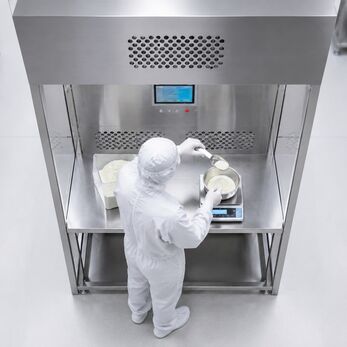
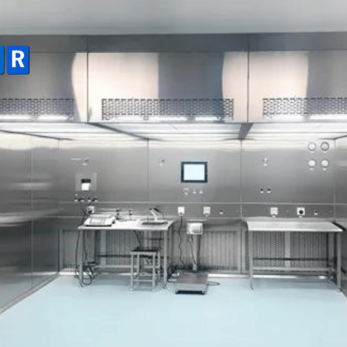
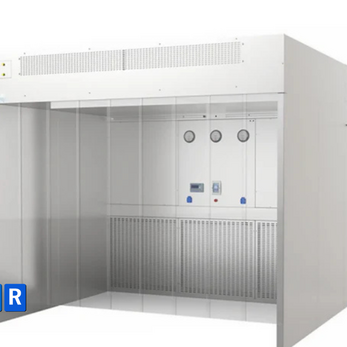
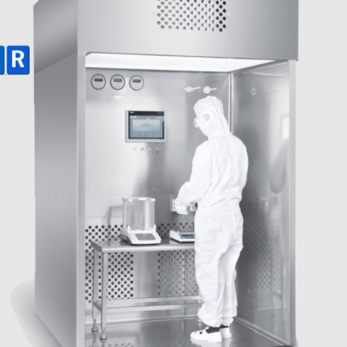
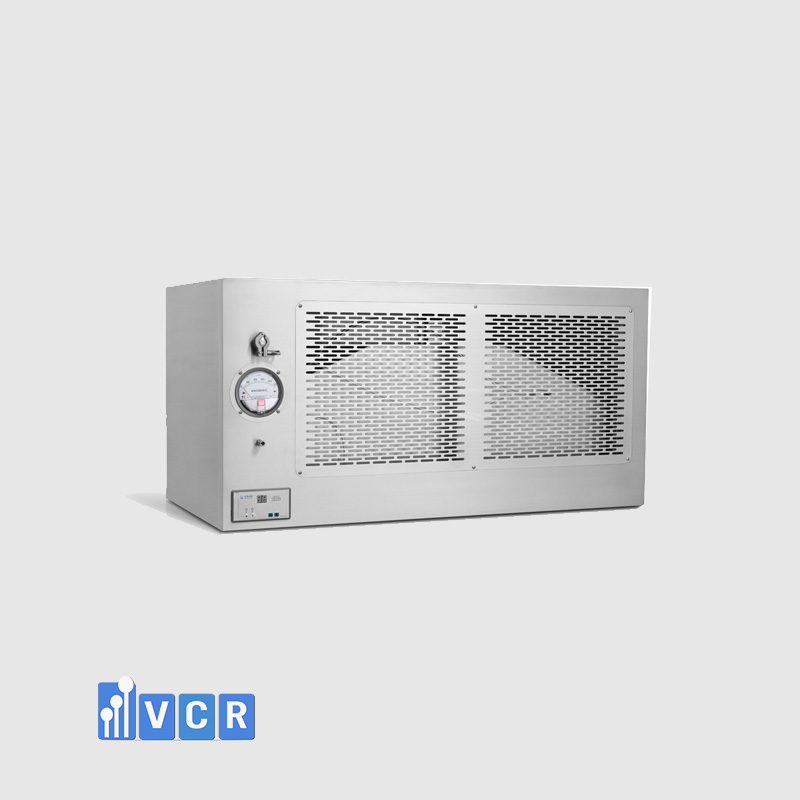
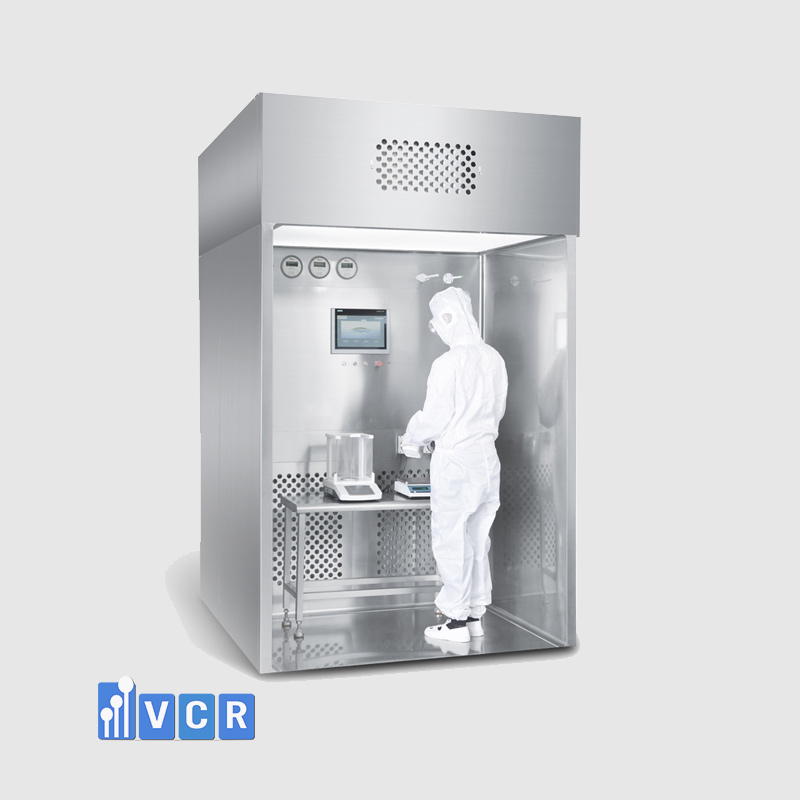
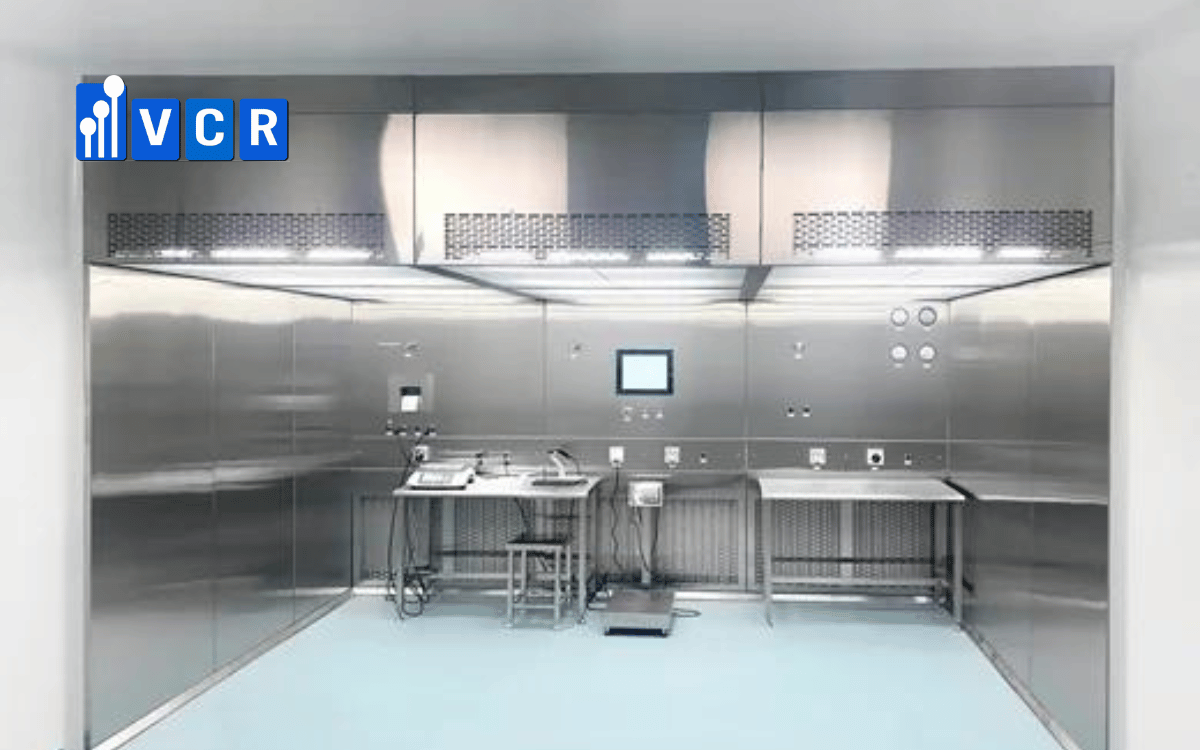
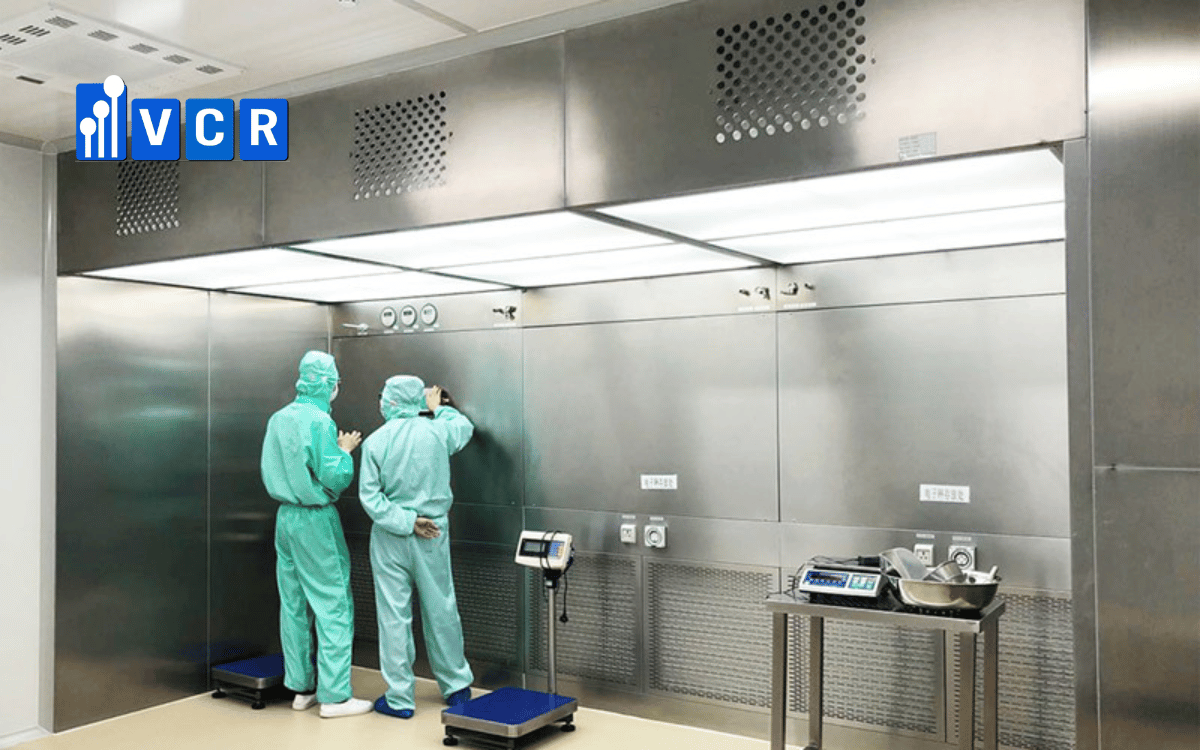
RLAF is a reverse laminar airflow device used in cleanrooms to control dust, particles, and contaminants generated at the working zone. In areas such as powder raw material weighing, sampling, active ingredient handling, chemical preparation, or handling easily dispersed materials, RLAF helps collect dust-laden air into the filtration system, limit dispersion into the surrounding environment, and support operator protection.
However, RLAF only operates stably when it is properly inspected and maintained. After a period of use, filters may become loaded with dust, differential pressure may change, air velocity may decrease, the fan may become less stable, the return-air area may be blocked, or airflow may no longer follow the intended design direction. Therefore, factories and contractors need to monitor important parameters such as air velocity, airflow volume, filter differential pressure, HEPA Filter condition, airflow direction, airborne particle level, noise level, vibration, working-zone condition, and maintenance records to keep the equipment performing effectively over the long term.
Why Is Periodic RLAF Inspection and Maintenance Necessary in Cleanrooms?
RLAF is not equipment that can operate stably forever simply by turning on the fan. During use, the equipment is continuously exposed to dust, powder, fine particles, active ingredients, chemicals, or easily dispersed materials. These substances may settle on the working zone, return-air grilles, filter surfaces, return-air chamber, and internal components. Without periodic inspection and maintenance, RLAF may gradually lose its dust-control capability without operators immediately noticing.
In cleanrooms, equipment performance degradation is not always visible to the naked eye. The fan may still run, the light may still be on, and the control panel may still function, but air velocity may have decreased, filter differential pressure may have increased, the return-air area may have accumulated dust, or the HEPA Filter may no longer maintain the same tightness as when first installed. This causes dust generated at the working zone to be collected less effectively, increasing the risk of dispersion into the surrounding environment.
In areas such as raw material weighing, active ingredient sampling, or fine powder handling, this risk is even more significant. If dust is not controlled, operators may be exposed to a higher level of dust, cleanroom surfaces may become more contaminated, and cross-contamination risks between materials or products may increase. In a GMP environment, GMP stands for Good Manufacturing Practice, dust control is not only a hygiene issue but also relates to quality, safety, and the ability to prove that the equipment is properly managed.
Periodic RLAF inspection and maintenance help factories detect deviations early. When filter differential pressure increases, the factory can plan inspection or filter replacement before airflow volume drops severely. When air velocity does not meet requirements, the fan, filters, or air path can be checked. When smoke testing shows that airflow does not move toward the return-air area, the working arrangement or return-air zone can be adjusted. As a result, the equipment can be maintained in a more stable operating condition.
RLAF maintenance also helps extend equipment life. If the pre-filter is cleaned or replaced at the right time, the HEPA Filter will be less dust-loaded and can operate more stably. If the fan is inspected periodically, abnormal vibration, noise, or airflow reduction can be detected early. If the working zone is cleaned properly, residual dust and cross-contamination risks are reduced.
Therefore, RLAF inspection and maintenance should not be treated as a secondary task after installation. It is part of the contamination-control strategy in cleanrooms, helping the equipment maintain dust-control effectiveness, support operator protection, and meet GMP operating requirements.
Which Groups of Parameters Should Be Monitored for RLAF?
To keep RLAF operating stably, factories should not monitor only one single parameter. RLAF is a system made up of a fan, filtration system, HEPA Filter, working zone, return-air path, control panel, equipment body, and supporting operation components. Therefore, inspection should be organized into parameter groups to accurately reflect the overall condition of the equipment.
The first group is airflow parameters. This group includes air velocity, airflow volume, and airflow direction. Air velocity indicates whether airflow in the working zone is sufficient to collect dust. Airflow volume reflects the amount of air the equipment processes per unit of time. Airflow direction shows whether dust is drawn toward the return-air area or pushed outside the controlled zone. This is a core parameter group because RLAF operates based on airflow-control principles.
The second group is filtration parameters. This group includes filter differential pressure, pre-filter condition, medium filter condition, HEPA Filter condition, filter-frame tightness, and HEPA leak test results if applicable. The filters are where dust and particles are captured in the airflow, but they are only effective when properly installed, free from leakage, and not overloaded with dust. Filter differential pressure is an important indicator for monitoring filter condition over time.
The third group is airborne particle parameters in the working zone. Particle testing evaluates the cleanliness level of the air within the equipment zone or related area. Particle test results do not only reflect equipment performance; they are also affected by the surrounding room, operator practice, cleaning, materials, and the overall airflow pattern.
The fourth group is electromechanical parameters. This group includes fan status, noise level, vibration, control panel operation, alarms, lighting, and power supply. Fan degradation, abnormal vibration, or non-functioning alarms can all affect stable RLAF operation.
The fifth group is cleaning and maintenance parameters. This group includes working-zone condition, residual dust, return-air grilles, return-air surfaces, stainless steel surfaces, hidden corners, doors, screens, handles, and other dust-retention points. In many cases, the equipment is not technically damaged, but performance decreases because the return-air area is blocked, the working zone is dusty, or cleaning is incomplete.
By monitoring all these parameter groups, factories can evaluate RLAF as a complete dust-control system. This approach helps detect deviations early, avoids relying on the feeling that the equipment is still running normally, and supports clear maintenance documentation for GMP cleanrooms.
Checking RLAF Air Velocity
Air velocity is one of the most important parameters when inspecting RLAF because it directly affects dust-collection capability at the working zone. If air velocity is unsuitable, the equipment may fail to control dust even if the fan is still running and the filters are still in use.
In RLAF, air velocity that is too low may prevent dust from being drawn toward the return-air area. When operators open raw material bags, pour powder, weigh materials, or take samples, dust particles may become airborne and remain suspended in the working zone. If airflow is not strong enough to collect them, dust may escape from the controlled area, settle on equipment surfaces, or spread into the surrounding area. This reduces operator protection and increases cross-contamination risk.
On the other hand, excessively high air velocity is also not desirable. With lightweight powders, fine powders, or easily dispersed powders, overly strong airflow may disturb the material more aggressively. In that case, dust may disperse more inside the working chamber, creating turbulence and causing the airflow pattern to become unstable. Therefore, in RLAF, stronger airflow does not automatically mean better control. The key is that air velocity must be suitable for the design, material type, and control objective.
Air velocity should be checked in important situations. During initial qualification, air velocity measurement confirms that the equipment operates according to design specifications. After replacing a HEPA Filter or pre-filter, measurements should be repeated to see whether filter resistance affects airflow. After fan maintenance, equipment relocation, or operator feedback that airflow seems weak, air velocity should also be checked. In addition, air velocity should be tested periodically according to the factory’s maintenance schedule.
Air velocity measurement should not be based on subjective judgment. Operators should not simply place their hand inside the working zone and decide whether airflow is strong or weak. Suitable measuring equipment should be used, and measurements should be taken at representative points inside the working zone. These points should reflect actual working areas, including the clean-air supply area, main working area, and areas related to return air if needed. Results should be recorded to track trends over time.
If air velocity gradually decreases across inspections, filter loading, increased differential pressure, fan degradation, or blocked air paths should be investigated. If air velocity is uneven, the return-air area, obstacles in the working chamber, or airflow design should be checked. Proper air velocity monitoring helps factories detect problems before they affect dust-control performance.
Checking Airflow Volume and Air Recirculation Capability
Airflow volume is the amount of air processed by the equipment per unit of time. While air velocity indicates airflow speed at a measurement point, airflow volume reflects the total amount of air that RLAF supplies, returns, or recirculates depending on the design. This is an important parameter for evaluating whether the equipment has enough capacity to handle dust-laden air.
In RLAF, airflow volume is directly related to dust-collection capability in the working zone. When operators handle powders, active ingredients, or granular chemicals, air in the working area may carry dust. If airflow volume is sufficient and the return-air path works correctly, dust-laden air is drawn into the filtration system. If airflow volume decreases, dust may not be fully collected and may disperse outward.
Airflow volume may decrease for several reasons. Dirty filters increase resistance, reducing the amount of air passing through the system. Fan degradation or unstable fan operation can also reduce airflow volume. Return-air paths blocked by raw material bags, containers, trays, or dust buildup also obstruct airflow. In some cases, changes to the layout around the equipment or the placement of additional obstacles near the working zone can affect air recirculation.
Air velocity and airflow volume must be clearly distinguished. A measurement point may show relatively high air velocity, but the total airflow volume of the equipment may still be insufficient if airflow distribution is uneven or the air path is blocked. Conversely, total airflow volume may be adequate, but velocity in certain working-zone areas may be low, creating dead zones or weak control areas. Therefore, RLAF should be evaluated by considering air velocity, airflow volume, filter differential pressure, and airflow direction together.
Airflow volume should be checked during qualification, after filter replacement, after fan maintenance, or when there are signs of poor dust control. If airflow volume is found to be reduced, the filters, fan, return-air path, return-air grilles, and working zone should be checked together. Fan speed should not be increased subjectively before identifying the cause, because excessive airflow may create turbulence or increase powder dispersion.
Monitoring airflow volume helps factories understand the actual air-handling capacity of RLAF. This is an important basis for keeping the equipment stable, especially in high-dust areas such as raw material weighing, sampling, or active ingredient handling.
Monitoring Filter Differential Pressure in RLAF
Differential pressure is an important parameter for monitoring filter condition during RLAF operation. When air passes through a filter, the filter creates a certain amount of resistance. The pressure difference before and after the filter reflects this resistance. As the filter accumulates more dust, resistance increases and differential pressure usually rises.
The differential pressure gauge helps operators monitor filter condition. If differential pressure gradually increases over time, the filter may be becoming dirty and may need inspection or replacement according to plan. If differential pressure rises abnormally fast, dust generation may be higher than expected, the pre-filter may have been bypassed, the air path may be obstructed, or the equipment may be operating under heavier conditions than originally designed.
Abnormally low differential pressure also requires attention. Many people only focus on high differential pressure, but an abnormal drop may suggest issues such as air leakage, loose filter installation, poor gasket sealing, or air bypassing the filter instead of passing through the filter media. In this situation, the equipment may still have airflow, but particle filtration performance may not be ensured.
Differential pressure should not be assessed using only a single value at one moment. Trend monitoring is more important. If differential pressure gradually increases with use, that may be normal filter loading. If it increases suddenly, drops suddenly, or fluctuates abnormally, immediate inspection is needed. Periodic data recording helps factories decide when cleaning, filter replacement, or air-system inspection is necessary.
Differential pressure is an important indicator in daily maintenance, but it does not fully replace other tests. A filter with differential pressure within limits may still have leakage. Therefore, HEPA Filters still require HEPA leak testing during qualification, after filter replacement, or according to periodic requirements. Similarly, differential pressure does not replace particle testing because airborne particle results are also affected by the environment, operation, and cleaning.
In GMP cleanrooms, filter differential pressure should be recorded in operating records or maintenance checklists. Alert limits, action limits, and recording frequency should be clearly defined. When differential pressure exceeds the limit, a specific response procedure should be followed instead of leaving the decision to operator judgment.
Proper differential pressure monitoring helps RLAF maintenance become more proactive. Instead of waiting until airflow becomes weak, dust disperses, or equipment fails inspection, the factory can detect filter condition early and plan maintenance accordingly.
Checking the Condition of Pre-Filters, Medium Filters, and HEPA Filters
The RLAF filtration system usually consists of several filtration stages. A pre-filter is a primary or coarse filter that captures large dust particles, fibers, and coarse impurities. A medium filter is an intermediate filter that captures smaller particles and reduces the load on the final filter. A HEPA Filter stands for High Efficiency Particulate Air and captures fine particles in the airflow. Each filter stage has its own role and should be checked appropriately.
A common mistake is focusing only on the HEPA Filter while ignoring the pre-filter and medium filter. In reality, if the primary filter becomes dirty or is not replaced at the right time, more dust will reach the later filtration stages. This causes the HEPA Filter to load faster, differential pressure to increase, and airflow volume to decrease. In this situation, the equipment may lose dust-control effectiveness even though the HEPA Filter has not yet reached its scheduled replacement time.
The pre-filter should be checked more frequently in high-dust areas such as powder raw material weighing, sampling, or color powder handling areas. Inspection may include observing dust loading, checking for blockage, cleaning, or replacing the filter according to procedure. If the pre-filter is ignored, HEPA Filter maintenance costs may increase and equipment performance may decline more easily.
The medium filter, if installed, reduces the load on the HEPA Filter. It captures part of the smaller particles after the pre-filter stage. For applications with high dust generation or long-term stable operation requirements, a medium filter can help make the filtration system more durable. However, the medium filter also needs monitoring because when it becomes dirty, it increases resistance and affects airflow volume.
The HEPA Filter is the most important filtration stage for fine particles. When checking a HEPA Filter, attention should be given to differential pressure, installation tightness, filter frame condition, gasket condition, and leak test results if applicable. HEPA H13 and HEPA H14 are high-efficiency filter grades commonly used in environments requiring strict particle control. However, a high filter grade does not mean inspection is unnecessary. If the filter is not installed tightly or becomes damaged, HEPA filtration may fail to perform as required.
Filter replacement should be based on operating data and factory requirements, not subjective judgment alone. Factors such as differential pressure, particle test results, HEPA leak test results, operating time, dust-generation level, and handled material type should all be considered. For color powders, active ingredients, or adhesive chemicals, filters may load faster than in light laboratory applications.
Checking each filtration stage properly helps RLAF operate more stably, reduces the risk of filter overload, and maintains long-term dust-control performance.
HEPA Leak Test: Checking HEPA Filter Leakage in RLAF
HEPA leak testing is an important test used to confirm that the HEPA Filter, filter frame, and sealing gasket do not have leakage points that allow air to bypass the filter. In cleanrooms, even a high-grade HEPA Filter cannot ensure particle-control performance if it is not installed tightly.
A gasket is a sealing component. It ensures that air passes through the filter media instead of through gaps between the filter and the installation frame. Filter integrity refers to the overall integrity of the filter, including the filter media, filter frame, gasket, and installation position. If filter integrity is not achieved, insufficiently filtered air may pass through the system and affect particle levels in the working zone.
HEPA leak testing is usually performed during new equipment qualification. This step confirms that the equipment is correctly installed and that the filter has no leakage before official operation. This test should also be performed after HEPA Filter replacement, because removal and installation may affect the gasket, filter frame, or sealing pressure. In addition, if maintenance involves the filter installation area, if differential pressure is abnormal, or if particle test results fail, HEPA leakage should also be considered.
In a GMP environment, HEPA leak testing is not only a technical inspection but also evidence for quality documentation. Test results help prove that the filtration system is controlled and that there is no air bypass around the filter. This is especially important for RLAF used in active ingredient weighing areas, raw material sampling areas, or areas requiring strict particle control.
Some factories may assume that if the HEPA Filter is H14, leakage testing is unnecessary. This is incorrect. H14 indicates the filtration efficiency of the filter media under appropriate conditions, but it does not guarantee that the filter has been tightly installed in the equipment. Even a small leak at the filter frame or gasket can allow air to bypass the filter and reduce actual performance.
HEPA leak testing should be performed by qualified personnel using suitable equipment. Results should be clearly recorded, including test time, test equipment, test location, results, and corrective actions if leaks are found. If leakage is detected, it should be corrected before the equipment is used or before operation continues in areas requiring strict control.
Particle Test: Checking Airborne Particles in the Working Zone
Particle testing measures airborne particles. For RLAF, this test helps evaluate the cleanliness level of the working zone or related area while the equipment is operating. It is one of the important methods for confirming that the equipment and surrounding environment maintain particle control according to cleanroom requirements.
Particle test results do not depend only on RLAF itself. They are also affected by many other factors such as room cleanliness class, HVAC condition, area cleaning, operator behavior, material type, measurement location, and airflow direction. Therefore, if particle test results fail, it is not appropriate to immediately conclude that the RLAF is faulty. The entire operating context must be reviewed.
Particle testing is commonly used during initial qualification, periodic evaluation, or when there is suspicion that the equipment no longer maintains dust-control effectiveness. If the RLAF has recently had filters replaced, fan maintenance performed, installation position changed, or has operated for a period with high-dust materials, particle testing can help reassess particle-control condition.
The particle measurement location should match the test objective. If testing the working zone, the measurement point should represent the area where operators perform the actual task. If testing the impact on the surrounding environment, measurements may be needed near the equipment or in areas where dust dispersion is likely. The method should be consistent so that results can be compared over time.
When particle test results increase abnormally, related factors should be checked. Is the HEPA Filter leaking? Has differential pressure changed? Is the return-air area blocked? Is there residual dust in the working zone? Are operators working correctly within the controlled zone? Is the room HVAC stable? These questions help identify the cause instead of responding subjectively.
In GMP cleanrooms, particle test results should be recorded. These records support trend monitoring, periodic evaluation, and deviation investigation. If particle data is documented consistently, factories can detect changes in the equipment or environment early and maintain equipment more proactively.
Particle testing does not replace air velocity testing, differential pressure monitoring, or HEPA leak testing. Each test answers a different question. Particle testing shows actual particle levels, air velocity testing shows airflow capability, differential pressure shows filter condition, and HEPA leak testing shows filter tightness. When these tests are combined, the factory gains a more complete understanding of RLAF condition.
Smoke Test: Observing Airflow Direction and the Return-Air Zone
Smoke testing uses smoke to observe airflow direction. This test is especially useful for RLAF because the equipment operates based on the principle of collecting dust-laden air into the return-air area. Air velocity or differential pressure measurements may show that the equipment has airflow and filter resistance, but they do not always show whether dust is actually moving toward the correct collection path. Smoke testing visually confirms this.
In RLAF, dust generated at the working zone should be drawn by airflow into the return-air area. Return air means air drawn back into the system. If airflow moves correctly, test smoke will move toward the return-air grille or return-air surface instead of escaping toward the operator or spreading outside the equipment. If smoke is pushed outward, swirls in the chamber, or moves unstably, the airflow pattern should be checked.
Smoke testing helps detect dead zones and turbulence. A dead zone is an area where airflow is weak or poorly exchanged. If a dead zone exists inside the working chamber, dust may remain suspended longer or accumulate in one location. Turbulence means disturbed airflow that no longer moves in a stable direction. Turbulence can make dust dispersion harder to control.
Smoke testing should be performed after equipment installation, during initial qualification, or after layout changes. If RLAF is moved to a new position, if surrounding equipment changes, or if doors or personnel movement affect the working zone, smoke testing can help reassess airflow direction. After major maintenance, fan replacement, filter replacement, or return-air adjustment, this test is also very useful.
Smoke testing should also be considered when there is suspicion that actual operation is blocking return air. In many cases, the equipment is not damaged, but operators may place raw material bags, trays, containers, or scales in front of the return-air area. Smoke testing will show that airflow no longer follows the intended design path. This provides visual evidence for retraining operators or adjusting the working-zone arrangement.
When smoke testing is performed, images, videos, or written descriptions should be recorded if required by factory procedures. Results should be linked with actual conditions such as fan status, object placement, room doors, personnel presence, and equipment configuration. Smoke testing does not replace particle testing or HEPA leak testing, but it is a valuable tool for understanding how airflow behaves in real operation.
Checking the Fan, Noise Level, and Vibration During RLAF Operation
A fan generates airflow. A blower may refer to an air-moving or centrifugal fan depending on the design. In RLAF, the fan provides the driving force for airflow, allowing the equipment to supply, return, or recirculate air through the filtration system. If the fan degrades, the entire dust-control performance of RLAF may be affected.
When checking the fan, operating condition, sound, vibration, and airflow stability should be evaluated. A stable fan usually produces a steady sound, has no abnormal noise, does not vibrate unusually, and does not cause sudden airflow changes. If the fan produces whistling, scraping, rattling, vibration, or other unusual sounds, immediate inspection is needed to prevent larger failures.
Noise level directly affects operator comfort because RLAF is usually installed near the working area. If noise level increases compared with previous operation, possible causes include fan wear, dust buildup on fan blades, bearing problems, blocked air paths, increased filter resistance, or equipment vibration due to unstable installation. Noise is not only a comfort issue; it may also be a technical warning sign.
Abnormal vibration also requires attention. Vibration may reduce fan life, affect equipment structure, loosen mechanical components, or make operators uncomfortable. If RLAF is used near a scale or sensitive measuring equipment, vibration may affect weighing operations or process stability.
The fan should also be checked together with the filtration system. When filters become dirty, resistance increases and the fan must work harder to maintain airflow. If the fan cannot overcome this resistance, airflow volume decreases. If operators increase fan speed without checking the root cause, turbulence may be created in the working zone or the equipment may operate outside optimal conditions.
Fan inspection should be performed during periodic maintenance and whenever signs appear, such as weak airflow, increased differential pressure, changed noise level, or failed smoke testing. Information such as operating time, fan condition, sound, vibration, and corrective actions should be recorded in maintenance records.
An RLAF with a good HEPA Filter but an unstable fan cannot operate effectively. Therefore, the fan is one of the components that must be monitored regularly to ensure the equipment maintains airflow according to design.
Checking the Working Zone and Return-Air System
The working zone and return-air system should be checked regularly during RLAF operation. Many dust-control problems are not caused by equipment failure, but by dusty working zones, blocked return air, incorrectly placed objects, or operators working outside the controlled zone.
The working zone should be inspected for cleanliness, residual dust, stainless steel surface condition, scale position, trays, raw material bags, containers, and tools. If dust is found on the tabletop, inner chamber walls, or hidden corners, cleaning should be performed according to procedure. Residual dust does not only create hygiene issues; it may also become a cross-contamination source for the next operation.
The return-air system should be checked to ensure it is unobstructed. Return-air grilles, return-air surfaces, or suction areas may accumulate dust after use. If dust accumulates heavily, airflow may be restricted. If objects block the return-air area, dust-laden air will not be collected properly into the filtration system. This is a very common issue in raw material weighing or sampling areas.
When checking return air, actual operating conditions should also be observed. The equipment may appear unobstructed when empty, but when operators place raw material bags, containers, or scales inside the chamber, the return-air area may become blocked. Therefore, checking only the empty condition is not enough. Equipment should be assessed under real or simulated operating conditions.
Operator behavior should also be observed. Are operators working inside the controlled zone? Are materials placed near the front edge? Is the return-air grille blocked? Is cleaning performed after operation? Do operators recognize differential pressure readings or alarms? If operation is incorrect, the equipment may lose effectiveness even without technical failure.
RLAF maintenance should include working-zone and return-air inspection as a mandatory part. This helps factories detect real operating issues that technical parameters alone may not fully reveal. Stable equipment requires not only a good fan and filters, but also a clean working zone, unobstructed return air, and correct operator practice.
Checking Lighting, Control Panel, and Alarms
Lighting, the control panel, and alarm systems are supporting components in RLAF operation. They do not directly filter dust, but they affect operation accuracy, equipment-status awareness, and response speed when deviations occur.
Illumination means lighting level. In the RLAF working zone, lighting must be sufficient for operators to read labels, observe materials, check surfaces, weigh, sample, and clean. If lighting is weak, uneven, or creates dark zones, operators may make mistakes, miss residual dust, or fail to notice material adhering to surfaces. Good lighting is especially important when handling color powders, active ingredients, or adhesive materials.
The control panel is where operators turn the equipment on or off and monitor fan status, differential pressure, alarms, or operating modes if available. If the control panel displays incorrect information, buttons are unresponsive, the screen malfunctions, or alarms do not work, operators may fail to recognize abnormal equipment conditions.
Differential pressure alarms, fan alarms, and fault alarms, if available, should be checked periodically. A non-functioning alarm may delay maintenance response. For example, if filter differential pressure exceeds the limit but the alarm does not activate, the equipment may continue operating under unsuitable conditions. If the fan fails but the system does not display the fault, operators may only notice the problem after dust has dispersed more than usual.
Lighting, the control panel, and alarms should be included in daily or periodic checklists depending on equipment usage level. Minor issues such as flickering lights, loose buttons, hard-to-read displays, or unstable alarms should be corrected early because they affect how operators interact with the equipment.
In GMP cleanrooms, stable equipment operation is not only about having a good fan and filters. Operators need enough information to know the equipment status. Lighting, the control panel, and alarms are the connection between the equipment and the user. If this connection is unreliable, deviation detection becomes weaker.
Cleaning RLAF After Operation: Key Areas Not to Miss
Cleaning RLAF after operation is an important part of equipment maintenance. In operations involving powders, active ingredients, chemicals, color powders, or adhesive materials, residual dust may appear in many areas inside and around the equipment. If cleaning is incomplete, residual dust may cause cross-contamination, affect particle test results, and make GMP compliance more difficult.
The first area to clean is the working tabletop. This is where scales, trays, raw material bags, containers, and tools are placed, so dust often accumulates there. If the tabletop is not cleaned, dust may transfer to the next material batch or adhere to tools. The inner chamber walls also need cleaning because dust may settle on surfaces due to airflow or operator movement.
Return-air grilles and return-air surfaces should not be overlooked. These are the areas where dust-laden air enters the return-air system. After operation, dust may accumulate in these grilles or surfaces. If not cleaned, airflow may be restricted and dust-collection performance may decrease. With fine powders or color powders, dust in the return-air area may adhere strongly and require a suitable cleaning procedure.
The area around the scale should also be checked. Dust may accumulate under scale feet, around the weighing pan, on cables, or at contact points with the tabletop. If the scale is fixed inside the RLAF, there should be a method for cleaning around it without affecting the measuring device. If the scale is removed after operation, its movement path should be controlled to avoid carrying dust to other areas.
Hidden corners, handles, doors or screens if present, external stainless steel surfaces, and floor-contact areas should also be inspected. Dust may accumulate in areas that operators often overlook. If the equipment has grooves, locks, or hard-to-reach components, these areas should be included in cleaning instructions.
Cleaning validation means the documented confirmation that cleaning is effective. In high-requirement GMP areas, especially when handling active ingredients or materials with cross-contamination risks, RLAF cleaning may need to be controlled by clear procedures and appropriate evidence. Not every case requires the same level of cleaning validation, but the principle is that the factory must demonstrate that equipment is clean enough for the next use.
RLAF cleaning should not be performed only when visible dust is present. Some fine particles are difficult to see but may still affect the cleanroom environment. Therefore, cleaning procedures should be based on material risk, frequency of use, and quality requirements, not only visual inspection.
How Should RLAF Inspection and Maintenance Frequency Be Determined?
There is no single inspection frequency suitable for every RLAF. Maintenance frequency should be determined based on handled material type, dust-generation level, operating time, GMP requirements, cleanliness class, risk level, and production schedule. An RLAF used daily in a powder weighing area requires a different inspection approach from one used only occasionally in a laboratory.
For daily or pre-shift checks, the factory may focus on easily observable items such as working-zone cleanliness, lighting, control panel, alarms, displayed differential pressure, blocked return-air areas, and abnormal equipment noise. These steps help detect issues before operation begins.
For weekly or monthly periodic checks, depending on factory procedures, more detailed inspection may include filter differential pressure, pre-filter condition, air velocity, return-air condition, internal surfaces, and mechanical components. If the equipment is used in a high-dust area, pre-filter inspection and return-air cleaning should be performed more frequently.
For planned tests such as HEPA leak testing, particle testing, or smoke testing, frequency usually depends on GMP requirements, qualification requirements, risk level, and the factory’s validation schedule. These tests may not need to be performed daily, but they should have a clear plan. In particular, after HEPA Filter replacement, major maintenance, equipment relocation, or layout changes, relevant tests should be considered again.
In addition to periodic schedules, abnormal checks are required when deviation signs appear. If differential pressure increases or decreases abnormally, airflow becomes weak, noise level increases, dust accumulation becomes more noticeable, particle tests fail, or smoke tests show incorrect airflow direction, the factory should not wait until the next scheduled maintenance. Early inspection helps prevent the equipment from operating incorrectly for a long period.
Inspection frequency should also be adjusted based on actual data. If a device frequently shows rapid differential pressure increase, material type, pre-filter performance, or filter replacement schedule should be reviewed. If a device generates little dust and has long-term stable data, frequency may be optimized according to an approved procedure. The best approach is risk-based and data-based maintenance, not only fixed-calendar maintenance.
What Should Be Recorded in RLAF Inspection and Maintenance Documentation?
In GMP cleanrooms, RLAF inspection and maintenance documentation is not merely administrative paperwork. It is evidence that the equipment has been monitored, controlled, and maintained throughout its operating life. If a deviation occurs, records help the factory trace equipment condition, identify trends, and assess potential impact on products or the environment.
An RLAF inspection record should include the inspection date, person performing the inspection, area of use, equipment ID, and general equipment condition. If the factory has multiple RLAF units in different areas, equipment ID and location are important to avoid data confusion. The record should also indicate the operating shift or inspection time if needed.
Technical parameters to record include air velocity, airflow volume if measured, filter differential pressure, pre-filter condition, medium filter condition, and HEPA Filter condition. If particle testing, smoke testing, or HEPA leak testing is performed, results should be recorded clearly, including test conditions and comments if applicable. For detailed tests, separate reports should be stored and linked to the equipment record.
The record should also include fan condition, noise level, vibration, lighting, control panel, alarms, and working-zone condition. Cleaning should be recorded, including areas cleaned, the person performing cleaning, and confirmation after cleaning. If residual dust, damage, abnormal differential pressure, or fault alarms are detected, corrective actions should be documented.
The RLAF checklist should include a conclusion stating whether the equipment is fit for operation. If it is not acceptable, clear actions should be defined, such as stopping use, further inspection, re-cleaning, filter replacement, technical support, or impact assessment. Signatures from the person performing the inspection and the reviewer, if applicable, strengthen documentation control.
GMP documentation records help the factory prove that equipment is not only installed correctly but also properly managed during use. When data is recorded consistently, factories can track differential pressure trends, filter life, fault frequency, and maintenance effectiveness. This forms the basis for improving maintenance schedules and reducing operational risk.
Signs That RLAF Needs Immediate Inspection
Factories should not wait until scheduled maintenance if RLAF shows abnormal signs. One common warning sign is an abnormal increase or decrease in differential pressure. Increased differential pressure may indicate dirty filters, blocked air paths, or higher-than-normal dust generation. Abnormally low differential pressure may be related to air leakage, loose filter installation, or air not passing properly through the filter.
Weaker airflow than normal is also a sign that inspection is needed. If operators notice weaker airflow, dust not being drawn toward return air, or powder dispersing more than before, air velocity, airflow volume, differential pressure, fan condition, and the return-air area should be checked. However, subjective feeling should not be the only basis. Operator feedback is an initial signal, but conclusions should be based on measurements.
Increased noise level or unusual vibration should also be addressed early. The fan may have dust buildup, wear, misalignment, blockage, or may be working harder due to increased filter resistance. If these signs are ignored, the equipment may become more severely damaged or unstable during operation.
More visible dust in the working zone, surrounding surfaces, or near the front edge of the equipment is also a warning sign. This may indicate that airflow is no longer collecting dust effectively, the return-air area is blocked, air velocity is unsuitable, or operation is incorrect. If particle test results fail, a complete review should include the HEPA Filter, differential pressure, cleaning, operator practice, and surrounding room environment.
Failed smoke testing is a clear sign that airflow direction needs inspection. If smoke does not move toward the return-air area, is pushed toward the operator, or swirls inside the working zone, the equipment may no longer control dust according to its intended principle. In this case, obstacles, fan performance, return air, working-zone arrangement, and surrounding layout should be reviewed.
Control panel alarms, fault indicators, abnormal fan status, or operator complaints about difficult operation should not be ignored. Early inspection helps prevent the equipment from operating incorrectly for an extended period, reducing the risk of impact on operators, products, and the cleanroom environment.
Common Mistakes in RLAF Maintenance
One common mistake is replacing only the HEPA Filter without checking the pre-filter and medium filter. In reality, upstream filtration stages reduce the load on the HEPA Filter. If the pre-filter is dirty but not cleaned or replaced, the HEPA Filter will quickly become dust-loaded and differential pressure will increase. Filtration maintenance should consider the entire filter chain, not only the final filter.
The second mistake is only looking at differential pressure without checking airflow direction. Differential pressure within limits does not necessarily mean airflow is moving in the correct direction. The return-air area may be blocked, the airflow pattern may be disturbed, or actual operation may allow dust to escape outward. Therefore, smoke testing and observation of real operating conditions remain necessary.
The third mistake is failing to clean the return-air area. Many operators focus on wiping the working tabletop but ignore return-air grilles, return-air surfaces, or areas near suction points. These are exactly the areas where dust passes through frequently. If these areas accumulate dust, airflow may be restricted and residual dust may become a contamination source.
The fourth mistake is measuring air velocity at the wrong location. If only one convenient point is measured, the result may not represent the entire working zone. Measurement should follow clear locations, methods, and criteria. Inconsistent measurement data is difficult to use for trend evaluation.
The fifth mistake is replacing filters without checking for leakage. After HEPA Filter replacement, if HEPA leak testing is required but not performed, the factory may fail to detect poor sealing. A new filter installed with leakage can still reduce particle-control performance.
The sixth mistake is not keeping records. Without differential pressure data, air velocity data, test results, and maintenance history, the factory cannot easily prove that the equipment is controlled. Deviation investigation also becomes more difficult because there is no trend data.
Other mistakes include skipping smoke testing, not training operators, maintaining equipment based on subjective feeling, or checking only when clear failure occurs. An RLAF that is still running does not necessarily mean it is still controlling dust correctly. RLAF maintenance must be based on data, procedures, and a proper understanding of the operating principle.
FAQ – Frequently Asked Questions About RLAF Inspection and Maintenance
Question: What parameters should be checked for RLAF?
RLAF should be checked for air velocity, airflow volume, filter differential pressure, pre-filter condition, medium filter condition, HEPA Filter condition, airflow direction, particle test results, fan status, noise level, vibration, working zone, return air, lighting, control panel, and cleanliness.
Question: How often should RLAF be inspected?
Inspection frequency depends on material type, dust-generation level, operating time, and GMP requirements. Equipment used daily in powder weighing areas should be checked more frequently than equipment used occasionally in laboratories. In addition to scheduled checks, immediate inspection is needed when abnormal signs appear.
Question: What does increased RLAF differential pressure mean?
Increased differential pressure usually indicates that the filter is accumulating dust or that the air path has higher resistance. The filter condition, especially the pre-filter and HEPA Filter, should be checked. If differential pressure rises abnormally fast, dust generation, blockage, or operating conditions should also be reviewed.
Question: When should the HEPA Filter in RLAF be replaced?
The HEPA Filter should be replaced when differential pressure exceeds the limit, test results fail, leakage is detected, the filter is damaged, or according to the approved maintenance plan. Replacement timing should be based on operating data, not only subjective judgment.
Question: Is HEPA leak testing required?
HEPA leak testing is typically performed during equipment qualification, after HEPA Filter replacement, or according to factory requirements. In GMP areas requiring strict particle control, this test is very important to confirm that the filter and filter frame do not leak.
Question: What is smoke testing used for in RLAF?
Smoke testing is used to observe airflow direction. For RLAF, it helps confirm whether smoke or simulated dust is drawn toward the return-air area, whether dead zones exist, whether turbulence appears, and whether air escapes from the controlled zone.
Question: Should particle testing be performed periodically?
Depending on GMP requirements, cleanliness class, and risk level, particle testing may be performed during qualification, periodic evaluation, or when there is suspicion that the equipment no longer maintains control performance. Results should be recorded for trend monitoring.
Question: Is excessively high RLAF air velocity good?
Not necessarily. Excessively high air velocity may cause lightweight powder to disperse more strongly, create turbulence, and affect operation. Air velocity must match the equipment design, material type, and control objective. Strong airflow does not automatically mean good dust control.
Question: Why does RLAF still run but control dust poorly?
The equipment may still run while filters are dirty, airflow volume is reduced, return air is blocked, airflow direction is incorrect, the HEPA Filter is leaking, the working zone is dirty, or operators are using the equipment incorrectly. The whole system should be checked instead of only looking at fan status.
Question: What should contractors and factories prepare for RLAF maintenance?
They should prepare inspection checklists, suitable measuring devices, maintenance schedules, parameter records, cleaning procedures, filter replacement plans, differential pressure criteria, airflow testing methods, and operator training on how to use RLAF according to its intended principle.
Conclusion: Monitoring the Right Parameters Helps RLAF Operate Stably and Control Dust Effectively
RLAF inspection and maintenance are not only about replacing filters periodically. They involve monitoring the entire system, including air velocity, airflow volume, differential pressure, HEPA Filter condition, airflow direction, working zone, return-air system, fan, noise level, cleaning, and operating records. Each parameter reflects one part of equipment condition, and only when they are evaluated together can the factory fully understand dust-control performance.
When parameters are properly monitored, RLAF can maintain dust collection at the working zone, reduce dispersion into the surrounding environment, support operator protection, and better meet GMP cleanroom requirements. Conversely, if the factory relies only on the feeling that the equipment is still running normally, hidden deviations may be missed and may gradually affect control performance.
An effective RLAF maintenance program should be based on data, procedures, and a correct understanding of the equipment’s operating principle. This is the foundation for stable operation, longer equipment life, and long-term cleanroom control.
CTA – Consulting on RLAF Inspection, Maintenance, and Selection for Cleanrooms
If you need to select, inspect, or maintain RLAF for a GMP cleanroom, evaluate the equipment according to complete parameters such as air velocity, airflow volume, differential pressure, HEPA Filter condition, airflow direction, working zone, return air, fan, noise level, cleaning, and qualification requirements. Proper monitoring of these parameters helps the equipment operate more stably and control dust more effectively in real conditions.
VCR Cleanroom Equipment is a cleanroom equipment supplier for cleanroom contractors and can support consulting on RLAF and related cleanroom equipment suitable for areas such as raw material weighing, sampling, active ingredient handling, chemical handling, or GMP cleanrooms requiring dust control. When RLAF is selected correctly, tested correctly, and maintained correctly, factories can reduce dispersion risks, improve operating performance, and better meet cleanroom control requirements.
Hai VCR