- What Is a Weighing LAF Unit?
- Why Do Facilities in Ho Chi Minh City Need Weighing LAF Equipment?
- Is a Weighing LAF the Same as a Dispensing Booth?
- Why Should Buyers Avoid Selecting Only by Price?
- Key Criteria for Selecting a Reliable Weighing LAF
- Define the Protection Objective
- Stable Airflow Across the Weighing Zone
- Traceable HEPA Filtration
- Appropriate Fan Configuration
- Low-Level Return Air for Powder Control
- Correct Differential Pressure Strategy
- Hygienic Construction
- Recommended Control Functions
- Required Technical Documentation
- Essential Tests After Installation
- Air Velocity and Uniformity Testing
- HEPA Filter Integrity Testing
- Airflow Visualization
- Airborne Particle Testing
- Noise, Illumination, and Alarm Testing
- Common Purchasing Mistakes in Ho Chi Minh City
- Where to Buy a Reliable Weighing LAF Unit in Ho Chi Minh City
- Information Required for an Accurate Quotation
- Frequently Asked Questions
- Conclusion
What Is a Weighing LAF Unit?
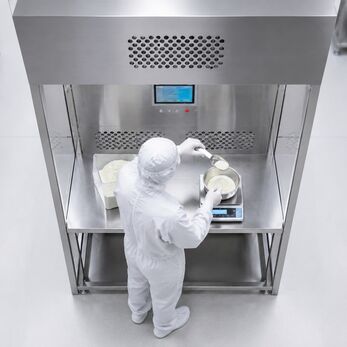
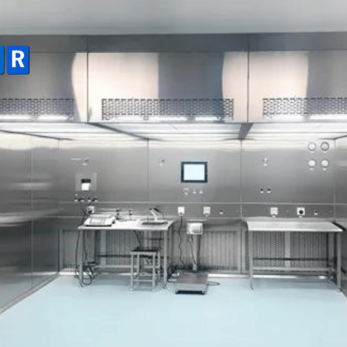
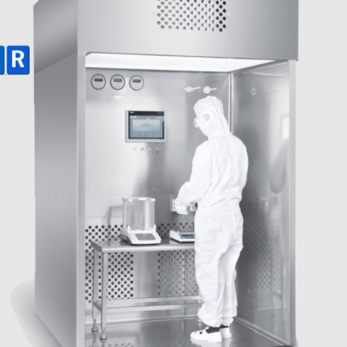
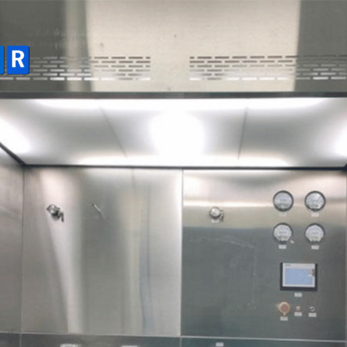
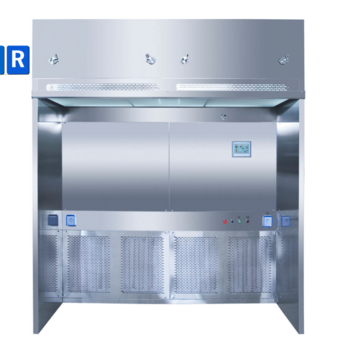
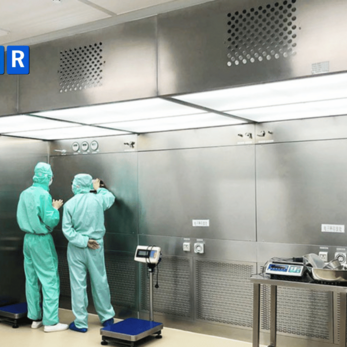
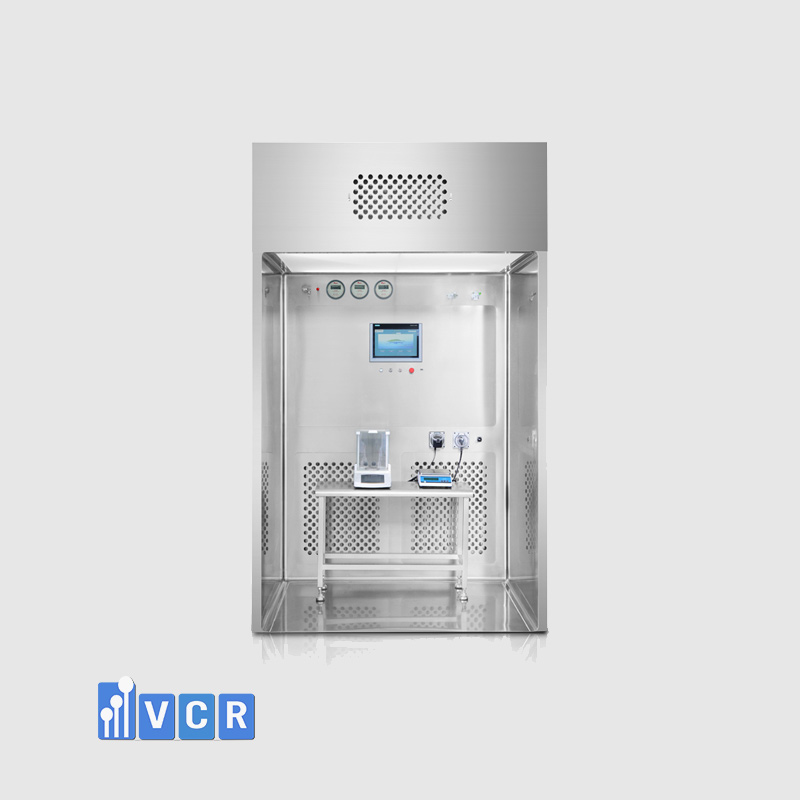
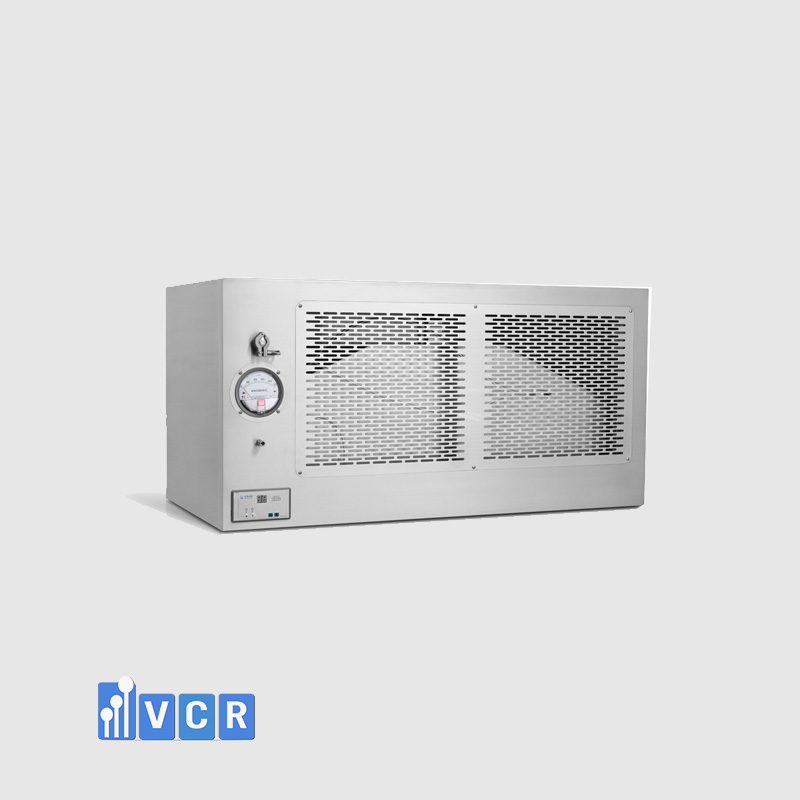
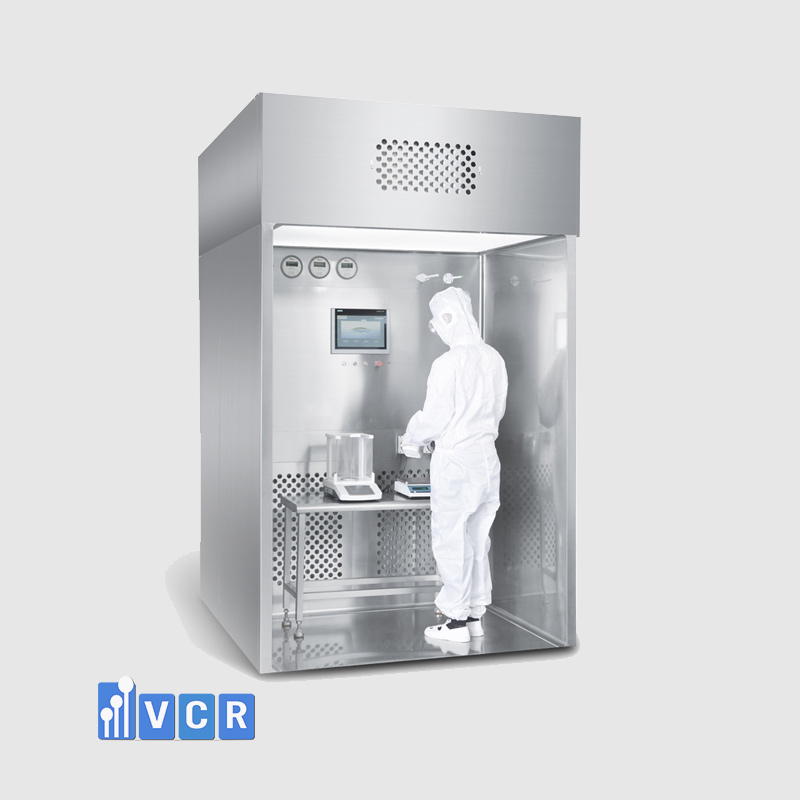
A Weighing LAF unit is a local clean-air system used for weighing, sampling, dispensing, or handling raw materials inside a controlled environment.
LAF stands for Laminar Air Flow, although the more technically accurate term is often unidirectional airflow.
The unit supplies filtered air through a HEPA filter to create a controlled zone around the scale, raw material, and operator.
In practical cleanroom projects, the term Weighing LAF may describe several different configurations.
Some systems are designed mainly to protect the product from environmental contamination. Other systems include low-level return air and a lower internal pressure to help control powder generated during weighing.
For this reason, buyers should not rely only on the product name.
The airflow schematic, return-air arrangement, pressure relationship, filtration system, and protection objective must be reviewed before purchase.
Why Do Facilities in Ho Chi Minh City Need Weighing LAF Equipment?
Ho Chi Minh City and the surrounding southern industrial region contain many pharmaceutical, dietary supplement, cosmetic, medical device, biotechnology, and laboratory facilities.
Raw-material weighing can expose an open product to environmental contamination. It can also release powder into the surrounding room.
When weighing is performed on a standard table, room HVAC airflow may carry particles toward nearby surfaces or other production areas.
A Weighing LAF unit creates a local controlled-air zone to reduce environmental influence on the open material.
Where the unit includes low-level return air, it may also collect powder close to the source and reduce migration into the room.
However, its performance depends on airflow design, scale position, container size, operator movement, and the HVAC conditions of the installation area.
Is a Weighing LAF the Same as a Dispensing Booth?
The two systems may look similar, but their primary design objectives can differ.
A conventional LAF unit mainly supplies clean unidirectional air to protect the product.
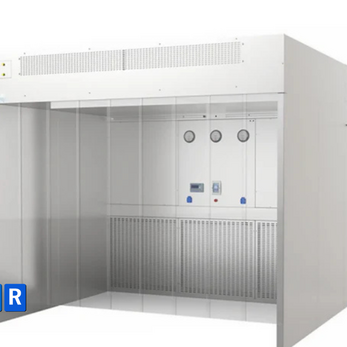
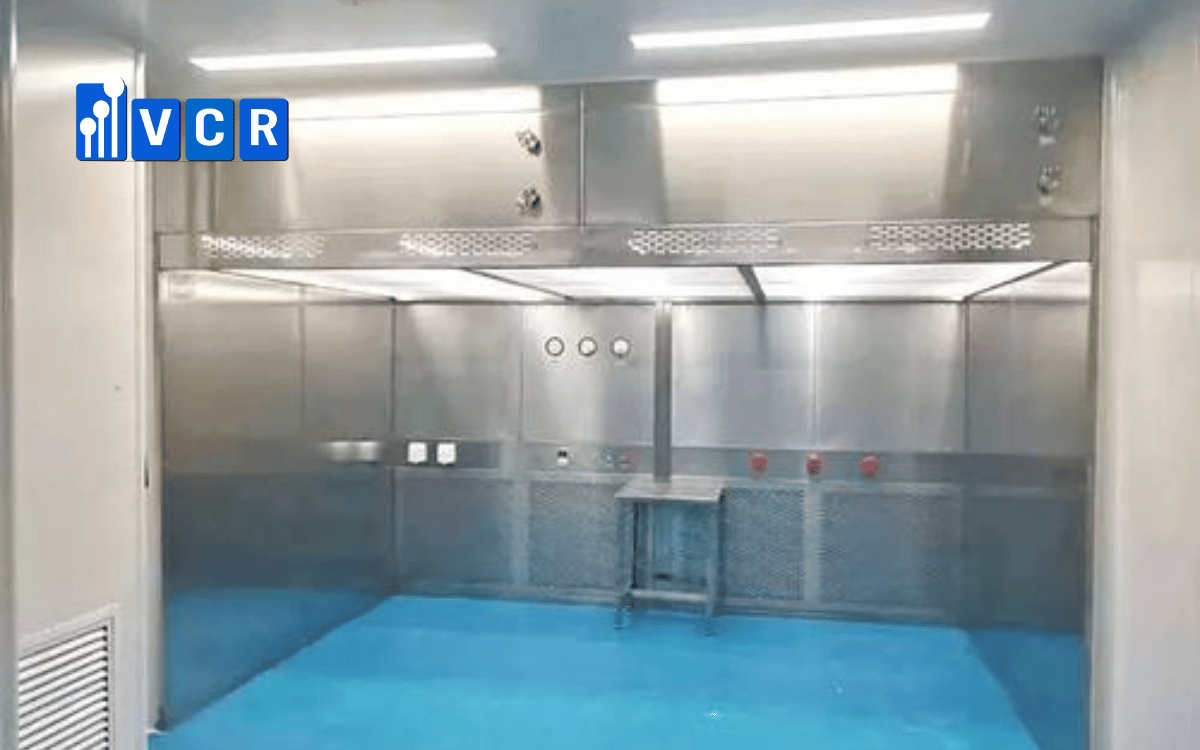
A Dispensing Booth is generally designed for weighing and subdividing powdered materials. It normally includes low-level return airflow and an appropriate pressure relationship to support powder containment.
Some suppliers use the terms Weighing LAF, Dispensing Booth, Weighing Booth, RLAF, and Downflow Booth for the same general equipment category.
The purchaser should therefore review the actual technical configuration instead of relying on the product name.
Important differences include airflow direction, return-air position, negative pressure, HEPA filter area, control functions, and acceptance testing.
Why Should Buyers Avoid Selecting Only by Price?
A Weighing LAF unit is not simply a stainless-steel enclosure fitted with a fan and HEPA filter.
Its performance depends heavily on aerodynamic design and velocity distribution.
Two units with identical external dimensions may use different HEPA filter areas, fan arrangements, pressure plenums, air-distribution systems, return-air configurations, and sensors.
A low-cost unit may achieve the target average velocity but still contain low-velocity zones, high-velocity zones, turbulence, or dead areas.
A quotation may also exclude transportation, installation, HEPA integrity testing, multi-point airflow measurement, smoke visualization, particle counting, calibration, or qualification support.
Buyers should compare the complete technical and service scope rather than only the initial equipment price.
Key Criteria for Selecting a Reliable Weighing LAF
Define the Protection Objective
The first design decision is whether the unit must protect the product, the operator, or both.
Where the material generates little dust and product protection is the main objective, a conventional unidirectional airflow system may be suitable.
Where weighing generates airborne powder, low-level return airflow, appropriate negative pressure, and recirculating filtration should be considered.
Highly potent, toxic, or low-exposure-limit materials may require more advanced containment than a standard Weighing LAF can provide.
Incorrectly defining the protection objective can result in an unsuitable airflow configuration and costly modifications.
Stable Airflow Across the Weighing Zone
A Weighing LAF normally supplies downward airflow through ceiling-mounted HEPA filters.
However, downward movement alone does not demonstrate acceptable performance.
Air velocity should be reasonably uniform across the defined working plane.
Low-velocity areas may fail to protect the product or control powder. High-velocity areas may disturb lightweight materials and affect scale stability.
Distribution depends on HEPA filter area, fan arrangement, pressure-plenum design, air-distribution components, and obstructions inside the working zone.
The unit should therefore be assessed with the scale, trolley, containers, and operator in their intended positions.
Traceable HEPA Filtration
Weighing LAF equipment used in pharmaceutical applications commonly includes H14 HEPA filters or another grade specified by the project.
The supplier should identify the filter manufacturer, model, dimensions, filtration efficiency, rated airflow, and initial pressure drop.
These values affect fan selection and the ability to maintain airflow as the filter becomes loaded.
The filter-holding system should provide effective sealing and suitable access for installed integrity testing.
An upstream aerosol port and sufficient scanning access should be included when HEPA leak testing is required.
A factory certificate does not confirm the integrity of the complete installed system after transportation and assembly.
Appropriate Fan Configuration
A small Weighing LAF unit may achieve stable airflow with one fan when the pressure plenum and air-distribution system are designed correctly.
Larger units may use multiple fans or multiple fan-filter modules to divide the airflow area and improve controllability.
However, multiple fans do not automatically guarantee uniform airflow.
Poor fan positioning, plenum design, or control settings may still create unequal velocity zones.
Similarly, a single fan does not automatically produce poor performance. The key issue is whether stable static pressure can be maintained across the rear side of the HEPA filter.
The supplier should demonstrate performance through multi-point airflow testing and smoke visualization.
Low-Level Return Air for Powder Control
If the Weighing LAF is used with dusty materials, low-level return airflow may be necessary.
The return system collects powder carried downward by the airflow and reduces escape through the open front.
The return area must match the system airflow.
An undersized return grille may create high local suction velocity and turbulence. Poorly distributed returns may create dead zones or recirculation.
Return grilles, prefilters, and plenums should also be accessible for cleaning because material residue can create cross-contamination risks.
Correct Differential Pressure Strategy
A product-protection LAF does not always require negative pressure relative to the surrounding room.
In some applications, the working zone may be neutral or slightly positive to reduce inward contamination.
A powder-containment Weighing LAF commonly operates below the surrounding-room pressure.
The pressure target must therefore be based on the protection objective and the overall room-pressure cascade.
Differential pressure gauges or transmitters should monitor HEPA filter resistance, prefilter condition, and the unit-to-room pressure relationship.
Hygienic Construction
The internal working area is commonly manufactured from stainless steel 304 or another suitable material.
Surfaces should be smooth, sealed, and easy to clean. Internal corners should minimize powder accumulation.
Lights, sockets, control panels, and return grilles should not create inaccessible cleaning areas.
A polished stainless-steel appearance does not automatically demonstrate hygienic design.
Exposed fasteners, gaps, difficult joints, and sharp corners may still retain material.
Recommended Control Functions
A basic Weighing LAF unit may include switches, a variable-frequency drive, differential pressure gauges, and an airflow sensor.
Higher-specification systems may use a programmable controller and touch-screen interface.
The control system can display fan status, airflow velocity, filter pressure drop, operating hours, and alarm conditions.
As filter resistance rises, the variable-frequency drive may adjust fan speed to maintain the airflow setpoint.
Typical alarms include low airflow, high filter pressure drop, fan failure, sensor signal loss, abnormal power conditions, and maintenance reminders.
However, an installed sensor only measures conditions at its location. Multi-point airflow testing remains necessary.
Required Technical Documentation
Technical documentation should be defined during quotation and design approval.
The supplier should provide a technical datasheet, general arrangement drawing, airflow schematic, electrical diagram, component list, and operation and maintenance manual.
GMP projects may also require HEPA filter certificates, sensor calibration certificates, agreed material records, factory test reports, site test reports, and support documents for FAT, SAT, IQ, or OQ.
Terms such as “GMP-compliant,” “ISO Class 5,” or “Grade A” should be converted into measurable acceptance criteria.
Without defined airflow, pressure, particle, HEPA integrity, noise, illumination, and alarm requirements, acceptance may become unclear.
Essential Tests After Installation
Air Velocity and Uniformity Testing
Air velocity should be measured at multiple points across the defined working plane.
The report should show the average, minimum, maximum, and variation between locations.
A single reading close to the installed sensor cannot represent the complete weighing zone.
Where distribution is unsuitable, the fan speed, pressure plenum, air-distribution components, or return-air arrangement may require adjustment.
HEPA Filter Integrity Testing
Test aerosol is introduced upstream of the HEPA filter, and a photometer probe scans the filter face, gasket, frame, and installation interface.
This test identifies transportation damage, seal leakage, and installation defects.
It confirms that air supplied to the weighing zone passes through the filtration system as intended.
Airflow Visualization
Smoke visualization provides direct evidence of airflow behavior inside the unit.
It can reveal turbulence, reverse airflow, dead zones, obstruction effects, and contaminated air entering the product zone.
Where powder containment is required, the smoke study should also confirm that airflow moves toward the low-level returns rather than escaping through the open front.
Airborne Particle Testing
When the Weighing LAF must achieve a defined ISO cleanliness classification, airborne particle testing should be performed under agreed conditions.
The particle result should be assessed together with airflow velocity, HEPA integrity, pressure relationships, and surrounding-room conditions.
A passing particle count does not automatically demonstrate uniform airflow or powder containment.
Noise, Illumination, and Alarm Testing
Noise should be controlled to support operator comfort and stable working conditions.
Lighting should be sufficient for reading scale displays, material labels, operating instructions, and production documents.
Fan, airflow, pressure, filter, sensor, and maintenance alarms should be functionally tested.
Common Purchasing Mistakes in Ho Chi Minh City
A common mistake is failing to distinguish between product-protection LAF equipment and powder-containment Weighing Booths.
This may result in purchasing a unit without low-level return air or an appropriate pressure strategy.
Another mistake is specifying only average airflow velocity without defining acceptable variation between points.
The average may pass while significant low- or high-velocity areas remain.
Buyers may also test only an empty unit. Scales, trolleys, containers, and operators can significantly change airflow behavior.
An advanced touch screen should not be treated as proof of airflow quality. Independent multi-point testing and smoke visualization remain necessary.
Where to Buy a Reliable Weighing LAF Unit in Ho Chi Minh City
Buyers should select a supplier capable of process assessment, protection-objective definition, airflow engineering, manufacturing, transportation, installation, testing coordination, and after-sales service.
The supplier should understand how the unit interacts with room HVAC, pressure cascades, doors, personnel flow, material movement, and cleaning procedures.
Vietnam Cleanroom Equipment, also known as VCR Cleanroom, supplies cleanroom equipment to cleanroom contractors, pharmaceutical plants, dietary supplement facilities, cosmetic factories, electronics manufacturers, and laboratories.
VCR can help determine whether the project requires a product-protection LAF, a Weighing LAF with low-level return air, an RLAF system, or a complete Dispensing Booth.
For projects in Ho Chi Minh City and southern Vietnam, a site survey can also assess room dimensions, doors, corridor width, ceiling height, electrical connections, HVAC conditions, and the equipment delivery route.
Information Required for an Accurate Quotation
The buyer should provide room dimensions, installation location, scale size, material-container dimensions, trolley size, and operator-clearance requirements.
The supplier should also receive information about the material, dustiness, number of operators, required cleanliness level, and product or operator protection objectives.
Available power, room pressure, HVAC conditions, recirculation or return-air requirements, controls, and alarm functions should also be defined.
Transportation, installation, calibration, testing, FAT, SAT, IQ, OQ, warranty, and maintenance requirements should be agreed before manufacturing.
Frequently Asked Questions
Is a Weighing LAF the same as a Weighing Booth?
Not always. A Weighing LAF may only provide clean unidirectional airflow for product protection. A Weighing Booth normally includes low-level return air and pressure control to reduce powder escape. The actual configuration should be reviewed.
Must a Weighing LAF achieve ISO Class 5?
No. The required cleanliness level depends on the product, open-material exposure, weighing process, and contamination risk assessment.
Should a Weighing LAF use one fan or multiple fans?
The required number depends on filter area, plenum dimensions, velocity-uniformity requirements, and control strategy. A well-designed single-fan system may perform effectively, while multiple fans do not automatically guarantee uniform airflow.
Does a Weighing LAF need low-level return air?
Low-level return air may not be necessary when the main objective is product protection. It should be considered when the material generates dust and powder escape must be controlled.
Can a Weighing LAF be custom manufactured?
Yes. The unit should be designed according to room dimensions, scale size, trolleys, containers, operator movement, and airflow requirements.
How often should the HEPA filter be replaced?
HEPA replacement should not be based only on a fixed calendar interval. Decisions should consider pressure drop, airflow performance, integrity-test results, operating hours, and the preventive-maintenance program.
Conclusion
Buying a reliable Weighing LAF unit in Ho Chi Minh City requires evaluation of the protection objective, airflow design, velocity uniformity, HEPA quality, fan configuration, return-air system, technical documentation, and testing capability.
A suitable unit must do more than provide clean air. It should maintain a stable protection zone, avoid affecting weighing accuracy, and meet the actual powder-control requirements of the process.
Vietnam Cleanroom Equipment can work with project owners and cleanroom contractors to survey, configure, manufacture, transport, install, and test Weighing LAF equipment for cleanroom projects in Ho Chi Minh City and southern Vietnam.