- Why Is It Necessary to Distinguish Between RLAF and LAF in a Cleanroom System?
- What Is LAF in a Cleanroom?
- What Is RLAF in a Cleanroom?
- Working Principle of LAF
- Working Principle of RLAF
- Difference in Protection Objective: Product, Operator, and Environment
- Difference in Airflow Direction and Contamination Control
- Difference in Cleanroom Applications
- Difference in Filtration Systems and Key Technical Parameters
- How Are RLAF and LAF Different from a Dispensing Booth?
- When Should LAF Be Used, and When Should RLAF Be Used?
- Common Mistakes When Selecting RLAF and LAF
- FAQ – Frequently Asked Questions About RLAF and LAF
- Conclusion: RLAF and LAF Serve Two Different Control Objectives
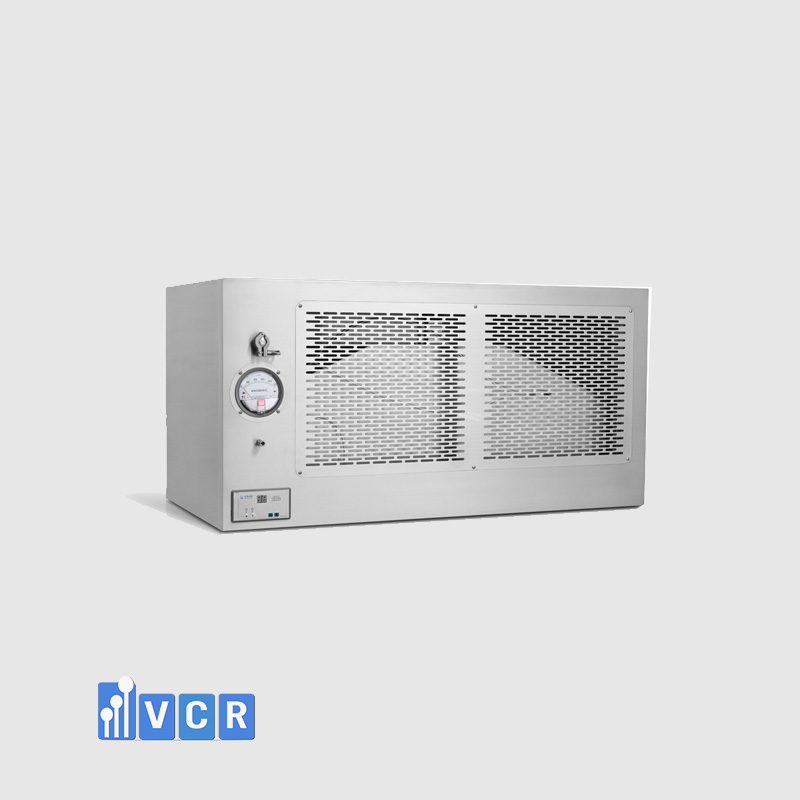
RLAF and LAF are both airflow-control equipment used in cleanrooms. They are commonly used to create a controlled working zone where airborne particles, suspended particles, and contamination risks can be managed. However, these two types of equipment are not the same in terms of purpose, protection direction, and how they handle risks in actual operation. LAF is commonly used to create a clean-air zone to protect products, samples, or tools from environmental dust. RLAF, on the other hand, is often considered when dust, particles, or contaminants are generated from the working zone itself and need to be controlled to reduce dispersion into the surrounding environment and support operator protection.
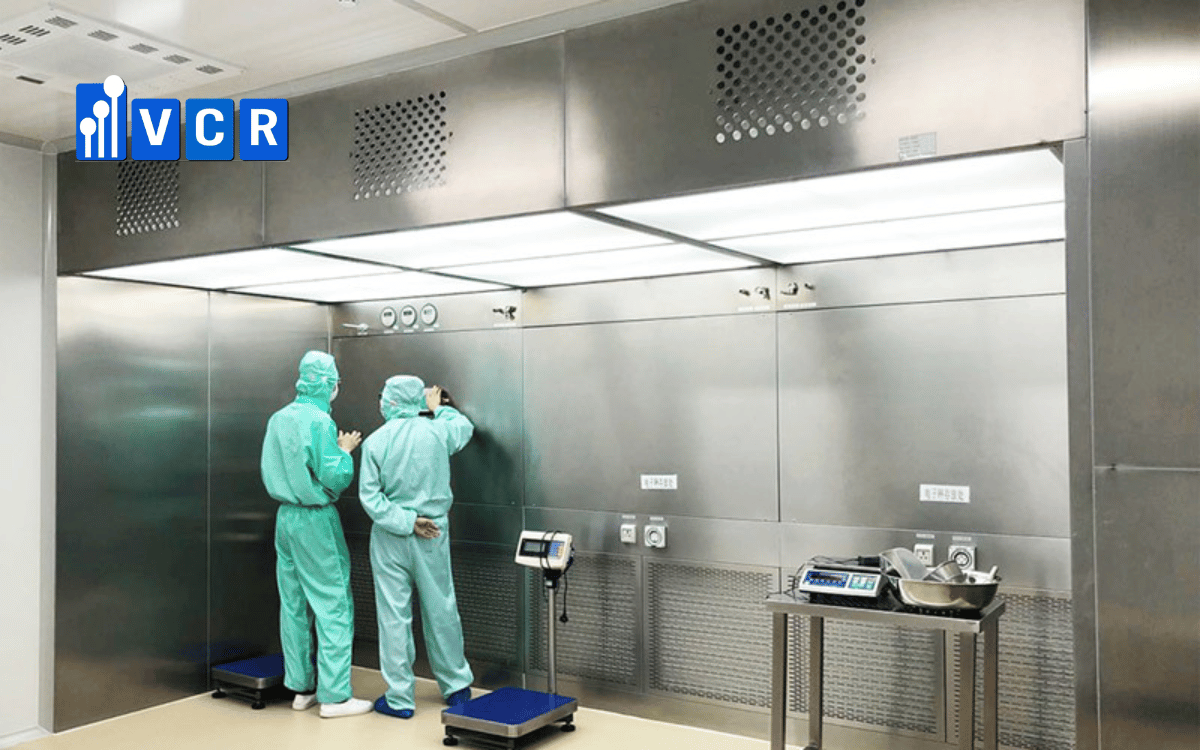
In cleanroom design, confusing RLAF with LAF may lead to selecting the wrong equipment, placing it in the wrong location, or expecting the wrong function from it. An area that mainly needs product protection from environmental dust may only require a suitable LAF. However, an area that handles powders, active ingredients, or materials with dispersion risks may require RLAF or a more specialized contamination-control solution. Therefore, understanding the difference between RLAF and LAF is an important foundation for designing, selecting, qualifying, and operating a more stable cleanroom system.
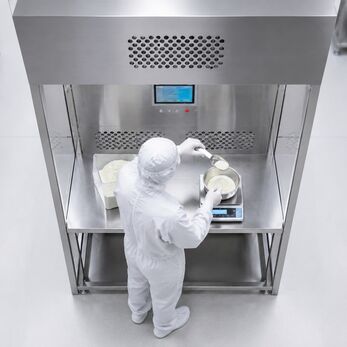
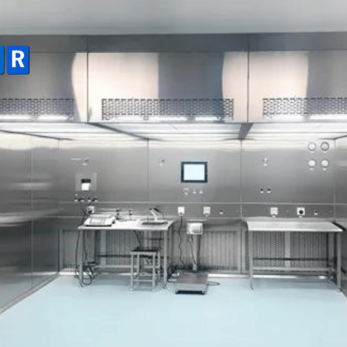
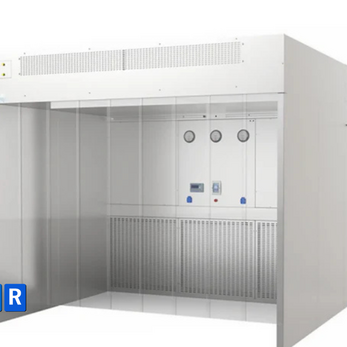
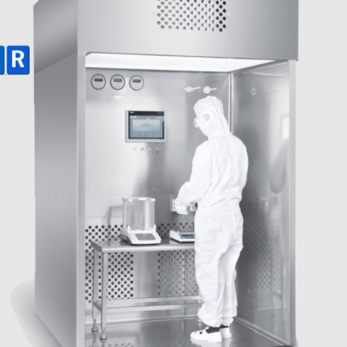
Why Is It Necessary to Distinguish Between RLAF and LAF in a Cleanroom System?
In a cleanroom, airflow does not only serve cooling or ventilation purposes. It is also a tool for contamination control. Depending on the intended purpose, airflow may be designed to protect products from environmental dust, or to protect operators and the surrounding area from dust generated during operations. This is why it is necessary to clearly distinguish between RLAF and LAF.
LAF stands for Laminar Air Flow, which means a laminar airflow unit. When people refer to LAF, they usually mean a device that creates a stable clean airflow passing through the working zone, helping reduce the risk of airborne particles from the surrounding environment settling on products or samples. LAF is commonly used in laboratories, sample preparation areas, clean-tool handling areas, or areas that require a localized clean zone for product protection.
RLAF stands for Reverse Laminar Air Flow, which means a reverse laminar airflow unit. RLAF is also related to airflow control, but its focus is often different from LAF. RLAF is usually considered when the working zone may generate dust, particles, active ingredients, or contaminants that need to be collected and controlled to prevent them from spreading into the surrounding environment. In many cases, RLAF is not only intended to protect products, but also to protect operators and the cleanroom environment.
Without distinguishing between these two types of equipment, a factory may select the wrong solution. For example, if an operation generates active-ingredient dust but only uses a standard LAF with the purpose of supplying clean air for product protection, the active dust may still disperse toward the operator or the surrounding area. Conversely, if an operation only requires sample protection from environmental dust but uses a more complex RLAF system, the investment and operation requirements may not be optimal.
The important point is that RLAF and LAF should not be compared in terms of which one is “better.” The correct question is which device is suitable for the specific risk that needs to be controlled. If the main risk is environmental dust affecting the product, LAF is usually more suitable. If the main risk is dust or contaminants generated from the working zone and spreading outward, RLAF should be considered. In GMP cleanrooms, GMP stands for Good Manufacturing Practice, the correct equipment selection must begin with risk analysis, not simply with equipment names.
What Is LAF in a Cleanroom?
LAF stands for Laminar Air Flow, which means a laminar airflow unit. It is a device that creates a stable clean airflow within a localized working zone, usually to protect products, samples, tools, or processes from dust and airborne particles in the surrounding environment. In cleanrooms, LAF is commonly used when a factory or laboratory needs a working area that is cleaner than the surrounding environment, without necessarily upgrading the entire room to a higher cleanliness class.
Laminar air flow means an airflow pattern that moves in a relatively stable direction, reduces turbulence, and limits the introduction of dust particles into the working zone. Before air enters the working area, it is usually drawn through a filtration system, passes through a HEPA Filter, and is then supplied in a defined direction. HEPA Filter stands for High Efficiency Particulate Air, meaning a high-efficiency air filter that captures fine airborne particles.
LAF may come in different forms. Vertical Laminar Air Flow means vertical airflow, usually supplied from top to bottom. This type is suitable for many operations that require clean air to cover products or samples from above. Horizontal Laminar Air Flow means horizontal airflow, usually supplied from the rear toward the front. This type may be suitable for certain laboratory operations where clean air needs to move horizontally across the working surface.
In practice, LAF is commonly used in clean benches, laboratories, sample preparation areas, product inspection areas, tool preparation areas, or processes that require protection from environmental dust. A clean bench is a localized clean-air working bench. The core purpose of LAF is product protection.
However, LAF is not suitable for every operation. If the working process generates a large amount of dust, powder, active ingredients, or substances that may harm operators, a standard LAF may not be sufficient. LAF mainly controls clean air supplied into the working zone, but it is not always designed to collect dust generated from the handled material itself. Therefore, before selecting LAF, it is necessary to determine whether the main risk comes from the external environment or from the material inside the working zone.
What Is RLAF in a Cleanroom?
RLAF stands for Reverse Laminar Air Flow, which means a reverse laminar airflow unit or reverse laminar airflow booth. In this term, “reverse” means opposite or reversed, while “laminar air flow” means controlled laminar airflow. However, RLAF should not be understood simply as LAF with the airflow direction reversed. In essence, RLAF is usually designed to control the dispersion of dust, particles, or contaminants generated within the working zone.
In cleanrooms, there are areas where the main risk is not environmental dust entering the product, but dust generated by the operation itself spreading outward. For example, when operators weigh powder materials, sample active ingredients, handle chemicals, or process easily dispersed materials, dust particles may become airborne and spread into the surrounding area. In this case, the equipment must do more than supply clean air. It must direct and collect contaminated air toward the filtration system.
RLAF is used to create a working zone with airflow controlled in a collection-oriented direction. Air carrying dust or contaminants generated in the working area is drawn toward the return-air or intake area, then passes through the filtration system. Depending on the design, the filtered air may be recirculated or handled according to the system requirements. The objective is to reduce the dispersion of dust or contaminants into the surrounding environment.
RLAF is often associated with operator protection and environmental protection. In some applications, RLAF may also support product protection, but its design focus is usually different from a standard LAF. While LAF generally creates a clean-air zone to prevent product contamination, RLAF controls particles generated from the operation to prevent them from affecting operators and the surrounding environment.
Therefore, RLAF can be briefly understood as a reverse laminar airflow unit used in cleanrooms to control dust, particles, or contaminants generated at the working zone through airflow direction, collection, and filtration. It is suitable for operations where contaminants may spread from inside the working area to the outside, especially in pharmaceutical, chemical, nutraceutical, cosmetic, biotechnology, and laboratory environments with strict contamination-control requirements.
Working Principle of LAF
The working principle of LAF is based on creating a stable clean airflow passing through the working zone. When the equipment operates, air is drawn into the system, passes through filtration stages, and finally passes through the HEPA Filter before being supplied into the working area. HEPA Filter stands for High Efficiency Particulate Air, meaning a high-efficiency air filter that captures fine airborne particles. The filtered air is then delivered into the working area in a relatively stable direction to create a localized clean zone.
With vertical airflow, clean air is usually supplied from top to bottom. The airflow passes through the working zone and pushes particles away from the working area according to the designed direction. This type is commonly used when clean air needs to cover products, samples, or tools from above. With horizontal airflow, clean air is usually supplied from the rear toward the front, passing through the working zone and moving outward. This type may be suitable for certain laboratory operations or work areas that require clean air to move horizontally across the working surface.
The purpose of LAF is to create a cleaner working zone where products or samples are protected from dust and particles from the surrounding environment. As clean airflow passes through the working area, it helps prevent external particles from entering sensitive areas. Therefore, LAF is suitable for operations that require clean handling of samples, tools, packaging, product components, or surfaces that need particle control.
However, LAF only works effectively when the airflow is not obstructed. If operators place too many objects in the working area, block the supply-air outlet, block the airflow path, or work in the wrong position, the laminar airflow may become disturbed. When airflow becomes turbulent, product protection is reduced. Dust from the environment or from items inside the working area may be drawn into the zone that needs protection.
LAF is also not suitable for every type of material. If the operation generates a large amount of powder dust, active-ingredient dust, or hazardous particles, the clean airflow from a standard LAF may not be enough to control dispersion. In some designs, LAF may push dust away from the working zone but direct it toward the operator or surrounding environment. Therefore, before selecting LAF, the main goal must be clearly defined as product protection from the environment, not control of a strong dust source generated by the material itself.
Working Principle of RLAF
The working principle of RLAF is based on dispersion control within the working zone. When operators handle powders, active ingredients, chemicals, or materials that may generate particles, the air in the working area may carry dust or contaminants. RLAF directs this airflow toward the suction or return-air area, then passes it through the filtration system to reduce the risk of dispersion into the surrounding environment.
Supply air means air supplied into the working area. Return air means air drawn back into the system. Exhaust air means air discharged from the system. Airflow means the movement of air. In RLAF, these elements must be designed as a coordinated system. Supply air helps maintain a stable working zone. Return air collects air carrying dust or particles. If exhaust air is involved, it must be properly treated before being discharged or connected to an exhaust treatment system. Through this coordination, RLAF does not only create airflow; it also controls the path of contaminants.
Unlike a standard LAF, RLAF does not only focus on supplying clean air into the working zone. Its more important role is to collect potentially contaminated airflow. When dust is generated in the working area, RLAF helps draw it toward the return-air zone instead of allowing it to disperse freely. The air then passes through a pre-filter, intermediate filter, or HEPA Filter depending on the configuration. The HEPA Filter captures fine particles, helping the filtered air achieve better control performance.
RLAF only works effectively when air velocity, airflow volume, return-air position, filter grade, tightness, and operating procedures are properly designed. If air velocity is too low, dust may not be collected in time. If air velocity is too high, dust or lightweight materials may be disturbed more strongly. If the return-air area is blocked by material bags, trays, containers, or tools, the airflow will not follow the intended direction.
A common misunderstanding is thinking that RLAF is simply an exhaust device. In reality, if air is only extracted strongly without proper airflow control, vortexes may form, dust movement may become unpredictable, or the working zone may become unstable. RLAF is also not simply an air-blowing device. If air is blown in the wrong direction, the equipment may increase dispersion instead of reducing it. The value of RLAF lies in the balance between supply air, return air, filtration, and working-zone geometry.
In cleanrooms, the RLAF principle is suitable for points where dust must be controlled at the source. This is why RLAF is often considered in raw material weighing areas, sampling areas, active ingredient handling areas, chemical handling areas, or operations that may generate airborne particles. When properly designed and operated, RLAF helps reduce exposure risks, reduce cross-contamination, and support a more stable cleanroom environment.
Difference in Protection Objective: Product, Operator, and Environment
The most important difference between LAF and RLAF lies in their protection objectives. LAF is usually designed with a focus on product protection. RLAF is usually designed with a broader focus on operator protection and environmental protection from contaminants generated within the working zone.
With LAF, the main risk is usually environmental dust entering products, samples, or tools. Therefore, the equipment creates a clean airflow passing through the working zone to reduce the risk of environmental particles settling on surfaces that need protection. LAF is suitable for operations where the product is sensitive to dust, but the operation itself does not generate much dust or hazardous material.
With RLAF, the main risk usually comes from the working zone itself. When handling powders, active ingredients, or chemicals, dust and particles may be generated from the material. If uncontrolled, they may move toward the operator, settle in the surrounding environment, or spread to other areas. RLAF is considered to collect and control the airflow carrying these generated contaminants.
A simple way to understand the difference is this: LAF answers the question, “How can the environment be prevented from contaminating the product?” RLAF answers the question, “How can contaminants generated in the working zone be prevented from spreading outward?” These are different questions, so the technical solutions are also different.
In some cases, RLAF may still support product protection. For example, if the working zone receives clean air and dust is collected effectively, the product may also benefit from a more stable working environment. However, if the main purpose is to protect a sample from environmental particles, LAF may be simpler and more suitable. If the main purpose is to reduce dispersion of dust or active ingredients, RLAF is usually more appropriate.
For operator protection, a standard LAF is not always sufficient. If clean airflow pushes dust from the working area toward the operator standing in front of the equipment, exposure risk may still exist. RLAF is often designed to reduce this situation by collecting dust-laden air. Therefore, in areas handling active ingredients, fine powders, or substances requiring strict control, operator protection must be evaluated from the beginning.
For the cleanroom environment, LAF helps maintain a localized clean zone for the product, while RLAF helps prevent generated contaminants from spreading into the surrounding area. Both have roles in a contamination control strategy, but they serve different risk points. The correct selection depends on whether the factory needs to protect the product from the environment or protect people and the environment from the handled material.
Difference in Airflow Direction and Contamination Control
Airflow direction is the core factor that differentiates LAF from RLAF. With LAF, clean air is usually supplied through a HEPA Filter and moves in a stable direction across the working zone. The goal is to create a clean-air layer that protects products or samples. With RLAF, the equipment usually emphasizes collecting or extracting dust-laden air from the working zone into the filtration system, limiting dispersion into the surrounding environment.
Airflow pattern means the distribution and movement pattern of air. In LAF, the airflow pattern is typically designed so that clean air moves evenly through the work area with minimal turbulence. In vertical LAF, air moves from top to bottom. In horizontal LAF, air moves from back to front. The goal is to bring clean air into the product zone and push particles away from the working area.
In RLAF, the airflow pattern is designed to control generated contaminants. Dust or particles should not be allowed to spread freely; instead, they are directed toward the return-air or suction zone. When dust-laden air enters the filtration system, particles are captured by appropriate filtration stages. Therefore, airflow in RLAF is not only used to supply clean air, but also to collect contamination.
RLAF should not be understood simply as “reverse air.” The word “reverse” does not mean that reversing the airflow direction of LAF automatically creates RLAF. The essence of RLAF is controlling the movement of contaminants according to safety and dispersion-control objectives. If the design only reverses airflow without considering operator position, dust-generation zone, return air, supply air, air velocity, and filtration, the equipment may not perform effectively.
With LAF, obstacles are a major issue. If tools, trays, packaging, or operators’ hands disturb the clean airflow, the product protection zone may be affected. With RLAF, blocked return air is a major risk. If material bags, trays, or tools block the return-air path, dust may not be collected properly and may spread outward.
This shows that both LAF and RLAF depend heavily on proper use. A device with a good configuration may still perform poorly if operated incorrectly. In LAF, the working area must remain unobstructed so clean airflow can move in the intended direction. In RLAF, the return-air and collection zones must not be blocked, and operations must be carried out within the controlled zone of the equipment.
The difference in airflow also affects qualification and testing. LAF usually requires air velocity testing, airflow uniformity testing, particle testing, and HEPA Filter integrity testing. RLAF, in addition to similar factors, must also consider collection direction, dispersion-control performance, smoke testing, and how simulated dust moves within the working area. Smoke test means using smoke to observe airflow direction.
Difference in Cleanroom Applications
LAF and RLAF are used in different cleanroom areas depending on the nature of the operation. LAF is commonly used in locations that need a localized clean-air zone to protect products, samples, or tools from environmental dust. RLAF is commonly used in locations where dust, particles, or contaminants may be generated from the handled material.
LAF is suitable for operations such as sample preparation, clean product inspection, handling sterilized or cleaned tools, small-scale packaging, laboratory work, or processes where environmental dust must be reduced around the product. In these cases, the product is the main object requiring protection, while the handled material does not generate a significant amount of dust.
RLAF is more suitable for areas such as powder raw material weighing, raw material sampling, active ingredient handling, chemical handling, handling easily dispersed materials, or operations that may generate airborne particles. In these areas, the source of risk is the material or the operation itself. Therefore, the equipment must control dust at the source of generation.
In pharmaceutical factories, LAF may be used for sample preparation or clean product handling. RLAF may be considered in active ingredient weighing areas or raw material sampling areas with dispersion risks. In cosmetic factories, LAF may support sample handling or clean packaging operations, while RLAF may be more suitable for handling color powders, fragrances, or powdered raw materials. In nutraceutical production, RLAF is often worth considering in areas that weigh vitamins, minerals, powdered extracts, or fine additives.
In laboratories, LAF may be used when a clean zone is needed for non-hazardous samples. However, if the operation has a risk of dispersing controlled agents, more suitable equipment must be evaluated. Depending on the nature of the risk, this may include RLAF, a safety cabinet, a fume hood, or another containment system.
Therefore, the question “Where should LAF or RLAF be used?” cannot be answered based only on the industry. In the same pharmaceutical factory, a clean sample-handling area may require LAF, while an active ingredient powder weighing area may require RLAF or a Dispensing Booth. In the same laboratory, an operation that does not generate dust may use LAF, while a dispersive operation needs equipment with collection control. The right selection must be based on the nature of the operation, material type, contamination source, and protection objective.
Difference in Filtration Systems and Key Technical Parameters
Both LAF and RLAF may use HEPA Filters, but the purpose of the filtration system in each device is not exactly the same. In LAF, the HEPA Filter mainly creates clean air supplied into the working zone to protect products. In RLAF, the filtration system not only supports clean air supply but also handles air carrying dust or contaminants generated in the working zone.
HEPA Filter stands for High Efficiency Particulate Air, meaning a high-efficiency air filter. Before the HEPA Filter, equipment may include a pre-filter, which captures larger particles and reduces the load on the final filter. Some devices may include a medium filter, meaning an intermediate filter, to better protect the HEPA Filter and extend stable operating time. HEPA H13 and HEPA H14 are high-efficiency filter grades commonly used in environments requiring strict particle control.
However, LAF or RLAF should not be selected only by asking whether the equipment uses HEPA H13 or H14. Filter grade is only one part of the system. Air velocity means airflow speed. Airflow volume means the amount of air processed per unit of time. Differential pressure means the pressure difference across a filter. Noise level means operating sound level. Illumination means lighting level. Filter integrity means the tightness or integrity of the filter. All of these parameters affect actual performance.
For LAF, key concerns include airflow uniformity, air velocity across the working zone, the ability to create a clean zone, and the condition of the HEPA Filter. If air velocity is uneven or airflow is disturbed, product protection is reduced. For RLAF, in addition to similar parameters, it is necessary to consider the ability to collect dust-laden air, return-air direction, suction position, containment level, and dispersion risk.
Differential pressure helps monitor filter condition. When the filter becomes dirty, differential pressure usually increases. If differential pressure is abnormally low, leakage or loose filter installation may need to be checked. Filter integrity is especially important in cleanroom applications that require strict qualification. HEPA leak testing may be performed to confirm that air is not bypassing the filter.
In summary, LAF and RLAF may both use HEPA filtration, but their filtration systems serve different control objectives. LAF uses filtration to supply clean air for product protection. RLAF uses filtration as part of a strategy to collect and handle air carrying generated contaminants. Therefore, technical parameters must be selected according to the control objective, not merely according to the equipment name.
How Are RLAF and LAF Different from a Dispensing Booth?
To avoid confusion in cleanroom applications, it is important to distinguish clearly between LAF, RLAF, and a Dispensing Booth. LAF and RLAF are terms that mainly describe airflow principles. A Dispensing Booth is a term that describes a specific application, especially in material weighing, sampling, or powder dispensing.
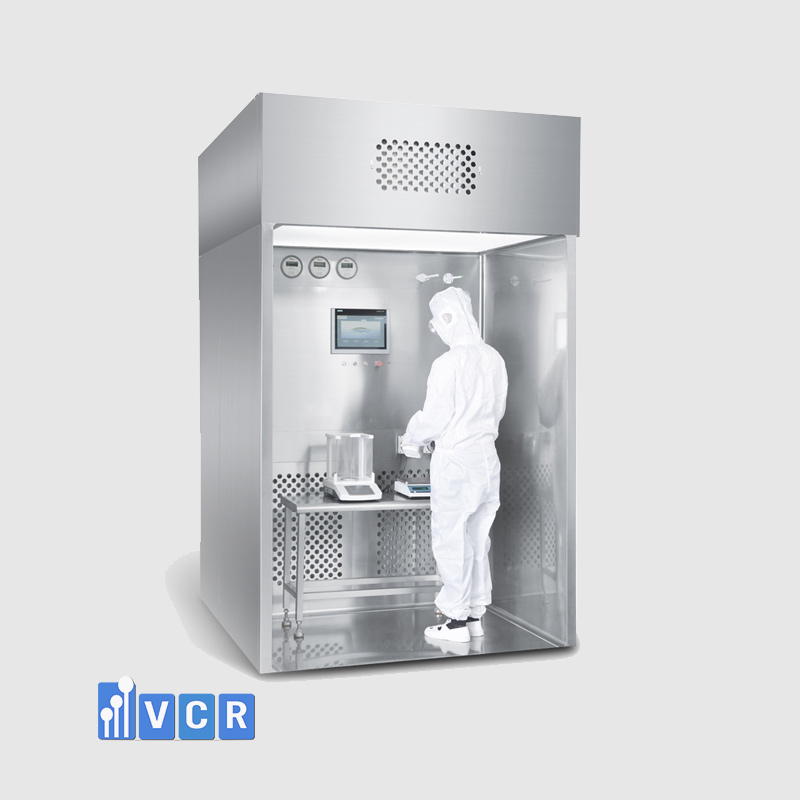
LAF is a laminar airflow unit, usually focused on creating a clean-air zone to protect products or samples. RLAF is a reverse laminar airflow unit, usually focused on collecting and controlling dispersion from the working zone. A Dispensing Booth is a material dispensing booth, commonly used in raw material weighing rooms, sampling areas, formulation areas, or powder handling areas. A Weighing Booth means a weighing booth, while a Powder Containment Booth means a booth for controlling powder dust.
In practice, some Dispensing Booths may operate on principles similar to RLAF because they also collect dust generated from the working zone and direct it to the filtration system. For example, when operators weigh powder inside a weighing booth, airflow may be designed to draw dust toward return-air grilles and through filtration stages. This principle may overlap with the dispersion-control objective of RLAF. However, Dispensing Booth remains a term more closely tied to a specific application: material weighing and dispensing.
LAF is generally not used to handle heavy dust generation from powder materials unless the design has been evaluated and proven suitable. RLAF and Dispensing Booth are closer in applications related to powder dust, but it should not be assumed that every RLAF is a Dispensing Booth or every Dispensing Booth is RLAF. The actual design, airflow direction, filtration system, containment level, and acceptance criteria must be reviewed.
Containment means the ability to control and keep contaminants within an acceptable boundary. This is an important factor when handling powders, active ingredients, or chemicals with risks. If the goal is to create a clean zone for products, LAF may be considered. If the goal is to control dispersion from the working zone, RLAF or another suitable containment device should be considered. If the goal is weighing, sampling, or dispensing powder, Dispensing Booth is usually the most application-specific term.
When selecting equipment, do not rely only on the name shown in a catalogue. A device should be evaluated based on protection objective, handled material, airflow direction, filter grade, installation position, working space, operating procedure, and acceptance requirements. This approach helps avoid confusion between LAF, RLAF, and Dispensing Booth in cleanroom projects.
When Should LAF Be Used, and When Should RLAF Be Used?
LAF should be used when the main objective is to create a localized clean-air zone to protect products, samples, or tools from environmental dust. LAF is suitable for operations where the handled material generates little dust, but the operation requires a clean environment. Examples include clean sample preparation, product inspection, tool handling, assembly of dust-sensitive components, or laboratory operations without significant dispersion risks.
RLAF should be used when the operation may generate dust, particles, active ingredients, or chemicals and the goal is to reduce dispersion into the surrounding environment. RLAF is suitable for areas such as powder raw material weighing, active ingredient sampling, chemical handling, handling easily dispersed materials, or operations with potential operator exposure risks. When the risk comes from the handled material itself, RLAF is usually more relevant than a standard LAF.
A simple way to choose is to identify the main contamination source. If the main contamination source is outside the working zone and may enter the product, LAF is usually suitable. If the main contamination source is generated inside the working zone and may spread outward, RLAF should be considered. If both risks exist, additional assessment of airflow design, containment level, and quality requirements is needed to choose the correct equipment or combine solutions.
Factories should also consider the type of material being handled. For clean samples, clean components, or clean tools, LAF may work well. For fine powders, active ingredients, easily dispersed raw materials, or odorous substances, RLAF or a specialized dust-control device may be more appropriate. LAF should not be used merely because it is familiar, and RLAF should not be selected simply because it sounds more controlled. Equipment must match the actual risk.
Cleanroom layout is also important. Layout means the arrangement of rooms and equipment. A good device placed in the wrong position may perform poorly. LAF should be placed where turbulence is limited and where product protection operations are appropriate. RLAF should be placed at the dust-generation point, with enough working space, an unobstructed return-air path, and compatibility with personnel flow and material flow.
As a cleanroom equipment supplier for cleanroom contractors, VCR Cleanroom Equipment can support the selection of LAF, RLAF, or suitable dust-control equipment according to layout, cleanliness class, airflow, handled material, and acceptance requirements for each project. Early coordination during the design stage helps reduce the risk of selecting the wrong equipment, lacking operating space, or facing difficulties during post-installation qualification.
Common Mistakes When Selecting RLAF and LAF
The first mistake is thinking that RLAF is simply LAF with reversed airflow. In reality, RLAF differs from LAF not only in airflow direction, but also in control objective. LAF usually protects products from environmental dust. RLAF usually controls dust or contaminants generated from the working zone. If airflow direction is simply reversed without risk analysis, the equipment may not achieve the intended performance.
The second mistake is using LAF in areas with heavy dust generation without evaluating operator protection. Some powder weighing, active ingredient handling, or chemical operations may generate dust inside the working zone. If standard LAF is used, the airflow may push dust away from the product but toward the operator or environment. This risk must be evaluated before equipment selection.
The third mistake is using RLAF for operations that only need sample protection from environmental dust. In some cases, LAF is simpler, easier to operate, and more suitable. If the operation does not generate dust or does not have significant dispersion risk, selecting RLAF may increase cost and operational complexity without delivering proportional value.
The fourth mistake is selecting equipment based only on price. In cleanrooms, initial investment cost should not be the only criterion. A cheaper device that does not match the risk may create higher costs later through qualification difficulties, poor operation, cross-contamination, or layout modification. Conversely, overly complex equipment that does not match the need may also increase unnecessary costs.
The fifth mistake is focusing only on the HEPA filter grade while ignoring airflow. HEPA Filter is very important, but equipment performance depends on airflow direction, air velocity, airflow volume, return air, filter tightness, and operator practice. A device using HEPA H14 but having poor airflow design may still fail to control contamination. A device with a suitable filter but installed in the wrong location may also underperform.
The sixth mistake is not considering working space. LAF requires an unobstructed working zone to maintain clean airflow. RLAF requires sufficient working space and an unblocked return-air zone. If the space is too narrow, operators may place tools incorrectly, disturb airflow, or block the collection path.
The seventh mistake is failing to test after installation. Tests such as air velocity testing, differential pressure monitoring, airflow direction checks, HEPA leak testing, and smoke testing are very important. HEPA leak testing means checking for leakage in the HEPA filter. Smoke testing means using smoke to observe airflow direction. If equipment is simply installed and used without testing, the factory may not know whether it truly meets requirements.
The biggest mistake is selecting equipment by name instead of by the risk that needs to be controlled. Suitable equipment must be determined based on handled material, dust source, protection objective, personnel flow, material flow, layout, GMP standards, and acceptance requirements.
FAQ – Frequently Asked Questions About RLAF and LAF
Question: What is RLAF?
RLAF stands for Reverse Laminar Air Flow, meaning a reverse laminar airflow unit. It is commonly used to control dust, particles, or contaminants generated in the working zone and reduce their dispersion into the surrounding environment.
Question: What is LAF?
LAF stands for Laminar Air Flow, meaning a laminar airflow unit. It creates a stable clean airflow in the working zone, usually to protect products, samples, or tools from environmental dust and airborne particles.
Question: What is the basic difference between RLAF and LAF?
LAF usually focuses on protecting products from environmental dust. RLAF usually focuses on controlling dust or contaminants generated from the working zone to protect operators and the surrounding environment. The difference lies in the control objective and airflow direction.
Question: Is RLAF simply LAF with reversed airflow?
No. RLAF should not be understood simply as LAF with reversed airflow. RLAF has a different dispersion-control objective from standard LAF. It is not just about changing airflow direction, but also about controlling how dust or contaminants are collected and filtered.
Question: Is LAF used to protect products or operators?
LAF is mainly used to protect products, samples, or tools from environmental dust. It is not always suitable for protecting operators from dust or active ingredients generated during operation.
Question: Does RLAF use HEPA Filters?
Yes. Many RLAF units use HEPA Filters, meaning high-efficiency air filters, to capture fine particles in the airflow. Depending on requirements, the equipment may use HEPA H13, H14, or another filtration configuration suitable for the risk being controlled.
Question: When should RLAF be used instead of LAF?
RLAF should be used when the operation may generate dust, particles, active ingredients, or chemicals, and when dispersion into the surrounding environment needs to be limited. If the operation only needs sample protection from environmental dust and generates little dust itself, LAF may be more suitable.
Question: Can LAF be used for powder raw material weighing areas?
LAF should not automatically be used for powder raw material weighing areas. If the operation generates a large amount of dust, dispersion risk and operator protection must be evaluated. In many cases, RLAF, a Dispensing Booth, or specialized dust-control equipment may be more suitable.
Question: Can RLAF replace a Dispensing Booth?
It depends on the design and intended use. RLAF refers more to the reverse airflow-control principle, while a Dispensing Booth is a material weighing and dispensing booth for a specific application. Some Dispensing Booths may use principles similar to RLAF, but direct substitution should not be made without evaluating layout, materials, and acceptance requirements.
Question: What should cleanroom contractors consider when selecting RLAF or LAF?
Contractors should clearly define the protection objective, contamination source, handled material, airflow direction, cleanliness class, installation location, working space, testing requirements, and acceptance criteria. Equipment should be selected according to actual risk, not only by name.
Conclusion: RLAF and LAF Serve Two Different Control Objectives
RLAF and LAF are both airflow-control devices used in cleanrooms, but they should not be used interchangeably without proper evaluation. LAF is generally suitable when a localized clean-air zone is needed to protect products, samples, or tools from environmental dust. RLAF is suitable when dust, particles, or contaminants generated from the working zone need to be controlled to limit dispersion and support operator and environmental protection.
The difference between these two devices lies in their protection objective, airflow direction, and the nature of the risk being controlled. If the main contamination source comes from the external environment, LAF may be a reasonable choice. If the main contamination source is generated from material inside the working zone, RLAF should be evaluated. In some projects, additional equipment such as a Dispensing Booth or specialized containment system may also be required.
Choosing the right equipment must be based on risk analysis, handled material, cleanliness class, layout, personnel flow, material flow, and acceptance criteria. When factories and contractors correctly understand the difference between RLAF and LAF, they can design a cleanroom system that is more stable, safer, and better aligned with GMP requirements.
Hai VCR