- Why Is It Important to Understand the Working Principle of RLAF?
- What Is RLAF in a Cleanroom System?
- Why Is It Called Reverse Laminar Air Flow?
- General Working Principle of RLAF
- How Does Airflow Move in RLAF?
- The Role of the HEPA Filter in RLAF
- How Is RLAF Different from Standard LAF in Airflow Principle?
- How Does RLAF Control Dust and Contaminants at the Working Zone?
- Factors That Affect RLAF Operating Performance
- How Can the Working Principle of RLAF Be Tested?
- Common Mistakes That Cause RLAF to Deviate from Its Design Principle
- When Should RLAF Be Used Based on the Reverse Laminar Airflow Principle?
- FAQ – Frequently Asked Questions About the Working Principle of RLAF
- Conclusion: RLAF Is Called Reverse Laminar Air Flow Because Its Objective Is Collection and Dispersion Control
RLAF is called reverse laminar air flow because the equipment does not only supply clean air into the working zone, but also directs and collects air carrying dust, particles, or contaminants generated at the source. In cleanrooms, especially in areas where powders, active ingredients, chemicals, or samples with dispersion risks are handled, controlling the direction of airflow directly affects the effectiveness of operator protection, product protection, and protection of the surrounding environment.
This article analyzes the working principle of RLAF, how airflow moves, the role of the HEPA Filter, the factors that affect operating performance, and key considerations when selecting, testing, qualifying, and maintaining RLAF in cleanroom systems.
Why Is It Important to Understand the Working Principle of RLAF?
In a cleanroom system, each airflow-control device is designed for a specific purpose. Some equipment focuses on supplying clean air to protect products from environmental dust. Other equipment focuses on collecting dust, particles, or contaminants generated from the working zone to limit dispersion into the surrounding area. RLAF belongs to the second group, so if it is simply understood as “equipment with reverse airflow,” it is easy to select, install, or operate it incorrectly.
RLAF stands for Reverse Laminar Air Flow, meaning a reverse laminar airflow unit. The important point in the principle of RLAF is not the word “reverse” in a simple mechanical sense, but the purpose of controlling the direction of air movement. When operators handle powder materials, active ingredients, chemicals, or samples that may disperse, dust and particles can appear directly in the working zone. Without suitable airflow control, these particles may move toward the operator, spread into the cleanroom, settle on equipment surfaces, or travel to other areas.
In pharmaceutical, cosmetic, nutraceutical, high-purity chemical, or biotechnology cleanrooms, this is a significant risk. Raw material dust does not only make the working environment dirty; it may also cause cross-contamination between products, affect operational safety, and reduce the reliability of the entire contamination-control system. Therefore, equipment such as RLAF is used to provide localized contamination control at the point of generation instead of relying only on the room’s general HVAC system.
HVAC stands for Heating, Ventilation and Air Conditioning. HVAC controls the overall cleanroom environment, including temperature, humidity, pressure, airflow volume, and cleanliness class. However, HVAC is not always sufficient to handle dust generated directly at a specific working point. When dust is generated in a weighing area, sampling area, or chemical-handling area, a localized device is needed to collect and filter air at the source.
Understanding the working principle of RLAF helps contractors, operation technicians, and investors answer important questions: where dust is generated, which direction the airflow will carry the dust, whether the return-air area is effective, what the HEPA Filter can handle, whether the operator is protected, and whether the working zone remains stably controlled. Without answering these questions, selecting RLAF may simply mean buying equipment with the right name, but not necessarily equipment that controls the right risk.
What Is RLAF in a Cleanroom System?
RLAF stands for Reverse Laminar Air Flow, meaning a reverse laminar airflow unit or reverse laminar airflow booth. In this term, “reverse” means opposite or reversed, while “laminar air flow” means laminar airflow. Laminar airflow can be understood as airflow moving in a relatively stable direction, limiting turbulence and helping control the path of air within the working zone.
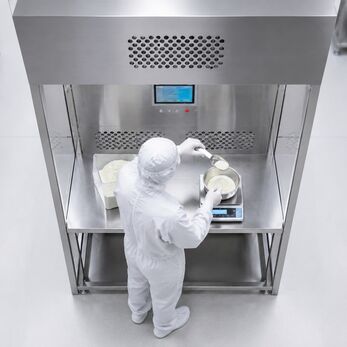
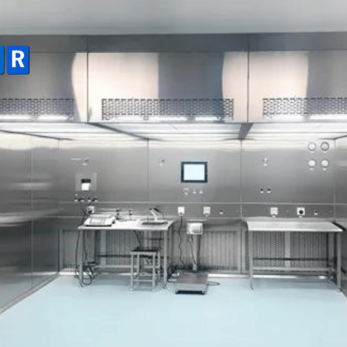
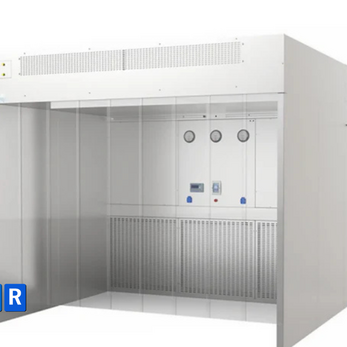
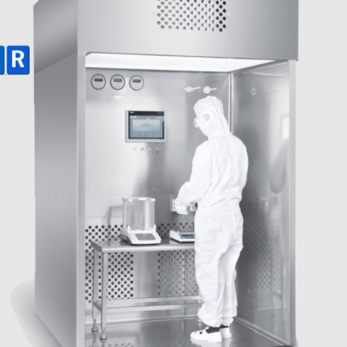
In a cleanroom system, RLAF is commonly understood as equipment that creates a working zone with airflow controlled in a collection-oriented direction. When dust, particles, or contaminants are generated in the working area, the equipment helps draw air carrying these contaminants toward the return-air or suction area, then sends it through the filtration system. The goal is to reduce the possibility of dispersion into the surrounding environment while supporting operator protection and, in some applications, product protection.
RLAF should be distinguished from standard LAF. LAF stands for Laminar Air Flow, meaning a laminar airflow unit. LAF is commonly used to supply clean air into the working zone to protect products, samples, or tools from environmental dust. RLAF is not simply LAF with reversed airflow; it has a different control objective. RLAF is usually used when the source of risk is located inside the working zone, meaning dust or particles are generated by the working process itself and may spread outward.
RLAF can be applied in many areas of factories and cleanrooms. Common locations include powder raw material weighing areas, raw material sampling areas, active ingredient handling areas, chemical preparation areas, laboratories, areas for handling easily dispersed materials, or production steps that may generate airborne particles. In these situations, operator movements may cause dust to become airborne, and the system needs airflow designed to control dust directly at the source.
RLAF is also associated with operator protection and environmental protection. If a device only supplies clean air but does not collect generated dust, operators may still be exposed. If a device only extracts air without controlling airflow direction, dust may form vortices and spread in unpredictable directions. An effective RLAF must combine air supply, air collection, air filtration, and a suitable working-zone design.
In short, RLAF can be understood as cleanroom equipment used to control dust, particles, or contaminants at the working zone through the principle of reverse laminar airflow, in which contaminated air is directed toward the filtration system instead of dispersing freely into the surrounding environment.
Why Is It Called Reverse Laminar Air Flow?
RLAF is called reverse laminar air flow because it combines two ideas: laminar airflow and the reverse collection mechanism for contaminants generated from the working zone. “Laminar air flow” means airflow organized in a relatively stable direction, limiting turbulence and allowing the path of air to be controlled. “Reverse” means opposite or reversed, but in the context of RLAF, it should not be understood simply as airflow blowing in the opposite direction.
In standard LAF, clean air is usually supplied in a stable direction to protect the product. For example, in vertical airflow, clean air moves from top to bottom; in horizontal airflow, clean air moves from the rear toward the front. The purpose of LAF is to move clean air through the product area, helping limit environmental dust from contacting the product or sample. In other words, LAF mainly answers the question: how can the environment be prevented from contaminating the product?
RLAF is usually used in a different context. Here, the contamination source may be generated by the working zone itself. When operators weigh powder, sample active ingredients, handle chemicals, or process easily dispersed materials, dust and particles may be released from the material. If clean air is simply supplied in the conventional way, the airflow may unintentionally push dust out of the working zone or toward the operator. Therefore, RLAF is designed to direct air carrying dust toward the return-air or suction area.
The “reverse” aspect of RLAF lies in its dispersion-control objective. Instead of only supplying clean air into the working zone to protect the product from the environment, RLAF collects air carrying contaminants generated at the working zone to reduce the risk of dispersion into the environment. The airflow does not simply move in one direction to clean the working area; it is organized to draw dust or particles toward the correct collection path. Therefore, reverse laminar airflow should be understood as a mechanism for controlling the movement direction of air with the objective of contaminant collection.
If RLAF is described too simply as “equipment with reverse wind,” users may misunderstand it and assume that reversing the fan direction is enough. In reality, this is not the case. RLAF requires coordination between supply-air position, return-air position, air velocity, airflow volume, working-chamber geometry, operator position, handled material type, and filtration efficiency. If these factors are not suitable, the equipment may not perform effectively even if airflow is present.
Therefore, the term reverse laminar air flow reflects a contamination-control mindset: contaminants generated during operation should not be allowed to move freely, but should be directed into a controlled air path. This is why RLAF is often selected for areas where dust, powder, active ingredients, or particles are generated at the source, especially when it is necessary to reduce operator exposure risk and limit contamination dispersion into the surrounding cleanroom area.
General Working Principle of RLAF
The general working principle of RLAF can be understood as a continuous sequence: the equipment creates controlled airflow in the working zone, dust or particles generated during operation are drawn toward the return-air area, contaminated air passes through the filtration system, and then the air is recirculated or treated depending on the design. The important point is that these steps are not separate. If clean air is supplied but not collected correctly, dust may be pushed outward. If air is only extracted without proper airflow organization, the working zone may become turbulent and dust movement may become difficult to control.
When RLAF operates, the fan system creates airflow within the working chamber. Depending on the design, the equipment may supply clean air into the working zone while also creating a return-air area in an appropriate position to collect dust-laden air. Supply air means air delivered into the working zone. Return air means air that has passed through the working area and carries dust or particles back into the system. Exhaust air means air discharged from the system if treatment or removal is required. Airflow means the movement of air throughout the equipment.
In actual operation, dust may be generated when operators open raw material bags, pour powder, take samples, divide materials, or handle chemicals. These dust particles first appear in the working zone. Without control, they may be carried in different directions by hand movement, operator movement, room airflow, or pressure differences. RLAF creates a localized air field to reduce this free movement. Air carrying dust is directed toward the return-air area instead of spreading outward.
Once collected, dust-laden air passes through the filtration system. The filtration configuration may include a pre-filter, meaning a primary or coarse filter; a medium filter, meaning an intermediate filter; and a HEPA Filter, meaning a high-efficiency air filter. HEPA Filter stands for High Efficiency Particulate Air and captures fine particles in the airflow. Depending on the design, filtered air may be recirculated into the equipment or treated according to specific system requirements.
RLAF is not merely an air-extraction device. A simple exhaust system without proper working-zone design may create vortices, cause turbulence, and allow dust to disperse in unwanted directions. RLAF is also not merely an air-blowing device. If air is blown too strongly or in the wrong direction, dust may be disturbed and spread more widely. The effectiveness of RLAF lies in the balance between air supply, air collection, air filtration, and working-chamber geometry.
For this reason, RLAF should be evaluated as a localized air-control system. It must answer four questions: where clean air is supplied, where dust is generated, through which path dust-laden air is collected, and how the filtration system handles that airflow. If these four questions are correctly addressed, RLAF can control dust at the source and support stable cleanroom operation.
How Does Airflow Move in RLAF?
Airflow in RLAF is designed to control the path of dust and particles within the working zone. In principle, clean air or filtered air enters the working area and creates a controlled operating environment. When the operator performs the task, the air in this zone may carry dust, particles, or generated contaminants. This airflow is then drawn toward the return-air grille, return-air surface, or suction zone before entering the filtration system.
The air path in RLAF is not always the same in every device. Some designs may supply air from above and collect return air at the bottom or rear. Other designs may place suction zones according to the direction in which dust is generated. The important point is not that every RLAF must share one identical airflow diagram, but that the airflow must perform its intended function: it must not push dust toward the operator, must not allow dust to escape from the controlled zone, and must not create dead zones inside the working chamber.
A dead zone is an area where airflow is weak or poorly circulated. If dead zones exist inside the working chamber, dust may accumulate or remain suspended longer, reducing control effectiveness. Turbulence means disturbed airflow that no longer follows a stable direction. Turbulence may appear when air velocity is unsuitable, when obstacles are placed incorrectly, or when operator movements interrupt the airflow.
In a correctly operating RLAF, airflow must draw dust toward the return-air area in a stable way. During powder handling, dust tends to rise or spread sideways. If airflow is well designed, dust does not move freely outward but is carried toward the return path. The return-air area acts as the collection point for contaminated air. The filtration system then removes particles from the airflow before the air is recirculated or sent to the next treatment stage.
If air velocity is too low, airflow does not have enough force to draw dust toward the return-air area. Dust may remain suspended in the working chamber or escape from the controlled zone. If air velocity is too high, especially when working with light powders or easily dispersed materials, airflow may disturb the material, increase dispersion, and make handling more difficult. Therefore, air velocity in RLAF is not a case of “the higher, the better.” It must match the material, control objective, and chamber design.
Another important factor is how objects are arranged. If raw material bags, containers, trays, scales, or tools block the return-air area, airflow cannot follow the designed path. In this case, even though the fan is running and the filter is operating, dust may not be collected properly. This is why RLAF operation requires clear handling instructions and cannot rely only on the equipment itself.
Airflow in RLAF should therefore be understood as a control path: from the air supply zone, through the dust-generation area, toward the return-air zone, through the filtration system, and back to a stable condition. When this control path is interrupted, the effectiveness of the entire equipment is reduced.
The Role of the HEPA Filter in RLAF
HEPA Filter stands for High Efficiency Particulate Air, meaning a high-efficiency air filter. In RLAF, the HEPA Filter plays an important role in handling fine particles in the airflow, especially when air carrying dust or generated particles is collected from the working zone. If airflow is the means of bringing dust back into the system, then the HEPA Filter is the component that captures the particles that need to be controlled.
However, the HEPA Filter does not work alone. Before air reaches the HEPA Filter, many RLAF configurations may use a pre-filter and a medium filter. A pre-filter is a primary or coarse filter that captures larger dust particles, fibers, and coarse impurities. A medium filter is an intermediate filter that captures smaller particles and reduces the load on the HEPA Filter. Using multiple filtration stages helps the system operate more stably and prevents the HEPA Filter from becoming overloaded too quickly.
In cleanrooms, HEPA H13 and HEPA H14 are commonly mentioned high-efficiency filtration grades. H14 usually has higher filtration efficiency than H13, but this does not mean every RLAF must use H14. Filter grade selection should be based on the required cleanliness class, type of contaminant to be controlled, level of dust generation, qualification requirements, and the overall equipment design. A high filter grade that does not match the airflow volume or fan capacity may increase resistance and affect operation.
It is important to understand that the HEPA Filter alone does not determine the entire performance of RLAF. If the filter frame is not sealed properly, air may bypass the filter instead of passing through the filter media. If differential pressure is abnormal, the filter may be dirty, clogged, or incorrectly installed. Differential pressure is commonly used to monitor filter condition. When the filter becomes dirty, differential pressure usually increases. If differential pressure is abnormally low, leakage or improper filter installation may need to be checked.
The effectiveness of the HEPA Filter also depends on airflow volume and air velocity. If airflow volume is insufficient, dust may not be effectively drawn back into the filtration system. If airflow volume is too high, the equipment may create turbulence or overload the filter. In addition, if the return-air area is blocked, dust-laden air cannot properly enter the filtration system, preventing the HEPA Filter from performing its role even if the filter itself meets the required grade.
Therefore, the role of the HEPA Filter in RLAF should be viewed within the entire control chain: dust generation, airflow collection, filtration stages, installation tightness, differential pressure monitoring, and operating procedures. The HEPA Filter is important, but it is only effective when the entire RLAF system is designed and used correctly.
How Is RLAF Different from Standard LAF in Airflow Principle?
RLAF and LAF are both related to laminar airflow, but their aerodynamic objectives and contamination-control methods are not the same. LAF stands for Laminar Air Flow and is usually designed to supply clean air in a stable direction to protect products, samples, or tools from dust in the surrounding environment. RLAF stands for Reverse Laminar Air Flow and usually emphasizes collecting or controlling air carrying dust generated from the working zone.
With standard LAF, the product or sample is the main object to be protected. The equipment supplies clean air through a HEPA Filter into the working zone, helping reduce the risk of particles from the environment settling on the product. In this case, the main risk is understood as moving from the environment into the product area. Therefore, LAF is more focused on product protection.
With RLAF, the main risk usually moves from the working zone outward. When operators handle powder, active ingredients, chemicals, or easily dispersed materials, dust and particles generated from the material may spread into the room or toward the operator. RLAF is designed to collect dust-laden air, send it through the filtration system, and reduce dispersion. Therefore, RLAF is often associated with operator protection and environmental protection.
RLAF should not be understood as a replacement for LAF in every situation. If an operation needs a clean-air zone to protect a sample from environmental dust and does not generate significant dust, LAF may be more suitable. If the operation generates dust or contaminants that must be controlled, RLAF may be the option to consider. These two devices serve different risk groups and should not be compared simply in terms of which one is better.
The difference also lies in how performance is tested. For LAF, people usually focus on air velocity, airflow uniformity, working-zone cleanliness, and HEPA Filter integrity. For RLAF, in addition to those factors, attention must be paid to collection direction, dispersion-reduction ability, and whether simulated dust moves toward the correct return-air area. Smoke testing, meaning the use of smoke to observe airflow direction, is very useful for evaluating RLAF airflow.
In other words, LAF mainly creates a clean zone, while RLAF mainly controls dispersion. LAF answers the question of whether the environment contaminates the product. RLAF answers the question of whether dust from the working zone spreads outward. This is the core difference in airflow principle between the two devices.
How Does RLAF Control Dust and Contaminants at the Working Zone?
RLAF controls dust and contaminants by acting directly at the point of generation. When powders, active ingredients, or chemicals are handled, dust often appears directly in the working area. The source may be the opening of a raw material bag, a tray, a weighing surface, a sampling tool, a container, or the point where powder is poured. Without control, dust may move in many directions and spread into the surrounding environment.
The control mechanism of RLAF can be understood as a chain: dust is generated at the source, airflow directs the dust, the return-air area collects the dust, the filtration system captures particles, and the surrounding environment has a reduced risk of contamination dispersion. Every step in this chain is important. If dust is generated but airflow is not strong or directed enough, dust may spread outward. If airflow is directed but the return-air area is blocked, dust is not collected. If air is collected but the filter is not sealed, particle-control efficiency decreases.
For powder materials, fine particles may remain airborne for a long time. During operation, hand movements and room airflow can cause particles to move unpredictably. RLAF creates a localized airflow field to draw dust-laden air back into the system rather than allowing particles to move freely. This helps reduce the amount of dust escaping from the working zone and reduces the risk of dust settling on surrounding surfaces.
RLAF also supports reduced operator exposure. When dust is drawn toward the return-air area instead of moving toward the operator, the risk of inhaling dust may be reduced. However, RLAF should not be understood as a complete replacement for PPE. PPE stands for Personal Protective Equipment and includes masks, gloves, goggles, protective garments, and other protective items depending on the risk. For high-risk materials, RLAF is only one part of the overall control strategy.
Containment means the ability to control contaminants within an acceptable boundary. For potent active ingredients, toxic chemicals, or substances requiring special control, containment must be assessed more carefully. A standard RLAF may be suitable for some applications, but it is not always sufficient for every risk level. When risk is high, the factory may need additional solutions such as dedicated exhaust treatment, more enclosed equipment, special operating procedures, or exposure assessment.
Therefore, RLAF does not control dust through one factor alone. It works through the coordination of airflow design, return-air area, filtration system, operating procedure, cleaning, personal protection, and periodic testing. When these factors work together, the equipment can help maintain a more stable working zone and reduce contamination-dispersion risk in the cleanroom.
Factors That Affect RLAF Operating Performance
The operating performance of RLAF depends on many factors, including air velocity, airflow volume, return-air position, working-chamber size, filter grade, filter tightness, fan condition, surrounding room environment, object arrangement, and operator handling practices. Even a well-designed RLAF may fail to achieve the expected control performance if it is operated incorrectly.
Air velocity means the speed of airflow. Air velocity in RLAF must be sufficient to direct dust toward the return-air area, but it must not be so high that it disturbs the material or creates turbulence. With light powders, excessively high air velocity may cause stronger dust dispersion. If air velocity is too low, dust may remain suspended or escape from the controlled zone. Therefore, air velocity should be determined according to the operation, material type, and control objective.
Airflow volume means the amount of air processed per unit of time. Airflow volume affects the ability to collect dust-laden air. If airflow volume is insufficient, the equipment may not draw dust effectively toward the return-air area. If airflow volume is too high but the working chamber is not designed accordingly, airflow may become turbulent. Airflow volume must be considered together with equipment size, filtration system, and fan capacity.
Return-air position is a very important factor. RLAF only controls well when dust is drawn toward the correct collection area. If the return-air area is positioned incorrectly relative to the dust source, collection efficiency decreases. If the return-air area is blocked by raw material bags, containers, trays, or tools, dust cannot follow the designed path. This is a common operating issue in real working areas.
Filter grade and filter tightness also directly affect performance. The HEPA Filter can capture fine particles, but if it is not installed tightly, air may bypass the filter. Differential pressure is commonly used to monitor filter condition. If differential pressure becomes high, the filter may be dirty or clogged. If differential pressure is abnormal, the filtration system and air path should be checked.
The surrounding room environment also has an impact. If RLAF is placed near doors, near areas with heavy personnel movement, or in areas with unstable pressure, the equipment airflow may be affected. Cleanroom layout, meaning the arrangement of rooms and equipment, must consider equipment location, personnel movement, material movement, and working clearance.
Finally, human operation cannot be ignored. Operators need to know which positions must not be blocked, how to place raw material bags, how to work within the controlled zone, how to clean after use, and how to recognize abnormal signs. RLAF cannot perform effectively if it is treated as equipment that simply needs to be switched on. The correct principle only works when actual operating conditions are also correct.
How Can the Working Principle of RLAF Be Tested?
To confirm that RLAF operates according to its intended principle, several testing methods should be combined. It is not enough to see that the equipment has airflow or that the fan is running and conclude that RLAF is controlling well. In a cleanroom, what matters is whether airflow moves in the correct direction, whether dust is drawn toward the return-air area, whether the filter is sealed, and whether the working zone meets particle-control requirements.
The first method is air velocity testing. An air velocity test evaluates whether airflow in the working zone is sufficient for dust control. Air velocity should remain within the range suitable for the design. If it is too low, dust may not be collected. If it is too high, materials may be disturbed or airflow may become turbulent.
The second method is airflow volume testing. An airflow test evaluates the amount of air being processed over a given period. Airflow volume is directly related to the ability to collect dust-laden air. This test is often combined with air velocity testing to provide a more complete assessment of the system.
The third method is differential pressure monitoring. Differential pressure indicates filter resistance. When the filter becomes dirty, differential pressure usually increases. If differential pressure exceeds the operating limit, the filter should be inspected or replaced. If differential pressure is abnormally low, leakage, loose filter installation, or an incorrect air path should be considered.
The fourth method is HEPA leak testing. HEPA leak testing checks for leakage in the HEPA Filter. This test helps determine whether the filter, filter frame, and gasket are properly sealed. If leakage exists, insufficiently filtered air may pass through, reducing particle-control performance. This is an important test for cleanroom projects with strict qualification requirements.
The fifth method is particle testing. Particle testing measures airborne particle levels. This test helps evaluate particle concentration in the working zone or surrounding area. If particle counts exceed required limits, airflow, filtration, cleaning, operating practice, and room conditions should be checked.
The sixth method is smoke testing. Smoke testing means using smoke to observe airflow direction. This method is especially useful for RLAF because it visually shows whether smoke is drawn toward the return-air area, whether vortices or dead zones exist, and whether airflow is being pushed out of the controlled zone. For RLAF, smoke testing is not only illustrative; it helps evaluate the principle of air collection and dispersion control.
In addition, fan condition, noise level, illumination, control panel operation, equipment surfaces, and cleanability should also be checked. Test results should be recorded as documentation for qualification, maintenance, and operating trend monitoring. A properly tested RLAF helps the factory detect deviations early before they affect quality and operating safety.
Common Mistakes That Cause RLAF to Deviate from Its Design Principle
One of the most common mistakes is misunderstanding that stronger airflow is always better for RLAF. In reality, strong airflow does not automatically mean good control. If air velocity is too high, dust or lightweight materials may be disturbed more strongly, creating turbulence and increasing particle dispersion. RLAF requires suitable air velocity, not the highest possible airflow.
The second mistake is placing obstacles in front of the return-air area. Raw material bags, containers, trays, scales, or tools placed in the wrong position may block the return-air path. When the return-air area is blocked, dust cannot be drawn into the filtration system properly. This is a very common mistake because operators may prioritize convenience during handling without realizing that they are disrupting the airflow principle.
The third mistake is selecting the wrong working-chamber size. If the chamber is too small for the actual operation, operators may find it difficult to arrange tools and may easily block airflow. If the chamber is too large but airflow volume is insufficient, the controlled zone may become unstable. RLAF size should be determined based on the actual operating process, not merely on available room space.
The fourth mistake is installing the HEPA Filter without proper sealing or failing to test after filter replacement. A good filter still performs poorly if it is installed with leakage. Air may bypass the filter, allowing insufficiently treated air to return to the working zone or escape outward. After each filter replacement, differential pressure, tightness, and related parameters should be checked.
The fifth mistake is not monitoring differential pressure. Without periodic differential pressure records, the factory will find it difficult to know whether the filter is gradually becoming dirty, clogging abnormally, or showing signs of leakage. Checking only when a clear equipment problem appears often means risks have already developed before detection.
The sixth mistake is placing RLAF in a location with airflow disturbance. If the equipment is near doors, near heavy personnel traffic, or in an area with unstable pressure, the airflow of the RLAF may be affected. In cleanrooms, equipment cannot be separated from layout. The installation location must be assessed together with personnel flow, material flow, and room pressure.
The seventh mistake is using RLAF for contaminants beyond the equipment’s control capability. For some potent active ingredients, toxic chemicals, or special agents, a standard RLAF may not be sufficient. In such cases, containment, exhaust treatment, PPE, and additional safety measures must be assessed.
These mistakes show that even a properly designed RLAF can operate incorrectly if it is used incorrectly. In cleanrooms, control effectiveness depends on equipment, layout, procedures, and people. It is not enough to purchase the right equipment while ignoring operator training, periodic testing, and maintenance.
When Should RLAF Be Used Based on the Reverse Laminar Airflow Principle?
RLAF should be used when the main risk is dust, particles, or contaminants generated from the working zone and potentially spreading into the surrounding environment. This is an important difference from equipment that only supplies clean air to protect products. If the contamination source is the material being handled, RLAF is a solution that should be considered.
A typical situation is the powder raw material weighing area. When operators open bags, pour powder, weigh materials, or transfer materials into containers, dust may be generated directly at the working surface. Without localized control equipment, dust may spread into the room, settle on surfaces, or follow operators to other areas. RLAF helps collect dust-laden air into the filtration system and reduce dispersion risk.
Raw material sampling areas are also suitable locations for considering RLAF. When samples are taken from bags, drums, or containers, materials may be disturbed and particles may be released. If the sampling area handles many different types of raw materials, cross-contamination risk becomes even more important. RLAF supports dust control at the working point, helping the sampling area remain more stable.
RLAF may also be considered in active ingredient handling areas, chemical preparation areas, laboratories with dispersion risks, or areas handling materials that easily generate particles. For operations that may affect operators, RLAF is part of the exposure-reduction strategy. However, for high-risk agents, additional containment and specialized safety requirements must also be assessed.
If the main risk is environmental dust entering the product, LAF may be more suitable. LAF stands for Laminar Air Flow and is commonly used to create a clean-air zone for protecting products or samples. If the main risk is dust from the working zone spreading outward, RLAF should be considered. Correct selection begins with the question: does the process need to protect the product from the environment, or protect people and the environment from contaminants generated by the operation?
As a cleanroom equipment supplier for cleanroom contractors, VCR Cleanroom Equipment can support the selection of RLAF suitable for the project layout, handled material, cleanliness class, airflow direction, and qualification requirements. Evaluation from the design stage helps reduce the risk of selecting the wrong equipment, lacking operating space, or facing difficulties during post-installation testing.
FAQ – Frequently Asked Questions About the Working Principle of RLAF
Question: What does RLAF stand for?
RLAF stands for Reverse Laminar Air Flow, meaning a reverse laminar airflow unit or booth. This equipment is used to control airflow, dust, particles, or contaminants generated at the working zone in a cleanroom.
Question: Why is RLAF called reverse laminar air flow?
RLAF is called reverse laminar air flow because the equipment does not only supply clean air like a standard LAF, but also directs and collects air carrying dust or contaminants from the working zone into the filtration system. The word “reverse” should be understood in terms of collection and dispersion control, not merely reversing airflow direction.
Question: Is RLAF simply LAF with reversed airflow?
No. RLAF should not be understood simply as LAF with reversed airflow. RLAF has a different control objective from standard LAF. LAF usually protects products from environmental dust, while RLAF usually controls dust or contaminants generated in the working zone to limit outward dispersion.
Question: How does airflow move in RLAF?
Airflow in RLAF is usually organized so that air in the working zone carrying dust or generated particles is drawn toward the return-air or suction area. The airflow then passes through the filtration system before being recirculated or treated, depending on the design.
Question: Does RLAF use a HEPA Filter?
Yes. Many RLAF units use a HEPA Filter, meaning a high-efficiency air filter, to capture fine particles in the airflow. Depending on project requirements, the equipment may use HEPA H13, HEPA H14, or another filtration configuration suitable for the required control level.
Question: Does RLAF protect operators?
RLAF can support operator protection by collecting air carrying dust or contaminants, reducing the likelihood that dust moves toward the operator. However, protection effectiveness depends on airflow design, operating practice, material type, and additional protective measures.
Question: Can RLAF replace PPE?
No. RLAF cannot completely replace PPE. PPE stands for Personal Protective Equipment. For high-risk materials, RLAF should be combined with masks, gloves, goggles, protective garments, operating procedures, and other safety measures.
Question: When should smoke testing be performed for RLAF?
Smoke testing should be performed during equipment qualification, after relocation, after major maintenance, after filter replacement, or when airflow direction is suspected to be incorrect. Smoke testing helps observe whether smoke is drawn toward the return-air area and provides a visual assessment of air collection.
Question: Can RLAF be used for powder raw material weighing areas?
Yes, depending on the control objective and equipment design. If the weighing area generates powder dust and requires source dispersion control, RLAF or equipment with a similar principle may be considered. Layout, material type, airflow volume, return-air area, and qualification requirements should also be evaluated.
Question: What should contractors consider when designing RLAF?
Contractors should clearly define the dust source, protection objective, airflow direction, return-air position, filter grade, air velocity, airflow volume, working space, installation location, and qualification method. RLAF should be included in the layout design from the early stage to avoid insufficient operating space or testing difficulties after installation.
Conclusion: RLAF Is Called Reverse Laminar Air Flow Because Its Objective Is Collection and Dispersion Control
RLAF is called reverse laminar air flow not merely because its airflow direction differs from standard LAF, but because the equipment is designed to control the movement of air carrying dust, particles, or contaminants generated at the working zone. Instead of allowing dust to disperse freely into the surrounding environment, RLAF directs airflow toward the return-air area, passes it through the filtration system, and helps reduce dispersion risk.
In essence, RLAF is a localized contamination-control solution in cleanrooms. The equipment collects dust-laden air, processes it through filtration stages, and helps maintain a more stable working zone. In areas such as material weighing, sampling, active ingredient handling, or chemical preparation, this principle is important because dust is often generated directly at the source.
However, RLAF performance does not depend only on the equipment itself. It also depends on airflow design, filtration system, air velocity, airflow volume, return-air position, object arrangement, operator handling, maintenance, and periodic testing. When the principle is correctly understood, factories and contractors can select, install, qualify, and operate RLAF more appropriately for GMP cleanroom requirements.
Hai VCR